A whole school approach to improving mental health and wellbeing at Wallace High School
Wallace High School is a comprehensive, non-denominational school, serving a large and mixed catchment area within Stirling. At the time of inspection, the school roll was just under 1200. Thirty five percent of children attending the school reside in Scottish Index Multiple Deprivation (SIMD) deciles 1-3 and a further 37% reside in deciles 8-10. The school's catchment area includes six associated primary schools. The school includes a local authority specialist provision, Ochil House, for young people with severe and complex needs. Stirling Council’s secondary Gaelic provision is also based in the school.
The improvement issue
Through health and wellbeing surveys with stakeholder groups: senior leaders, young people, staff, and families identified areas of strength and associated next steps. The results showed that all 3 stakeholder groups identified young people’s physical health as a strength of the school.
Stakeholders recognised the many opportunities for young people to learn about physical health and take part in sports and physical activity. However, all 3 groups identified mental and emotional health as an area that was of growing concern both in the school and nationally and that the school should consider it as their next key area of focus.
What Wallace High School did
Staff initiated a review the health and wellbeing curriculum to consider which further supports could be put in place to improve health and wellbeing across the school.
Senior leaders established a staff working group to lead the work to embed their approach to improving mental health across the school. The working group created a Mental Health Policy and a Protocol. They defined three clear aims:
- Talk about mental health and challenge stigma.
- Signpost young people to accessing help.
- Provide one-to-one in-school support by offering mental health coaching and counselling.
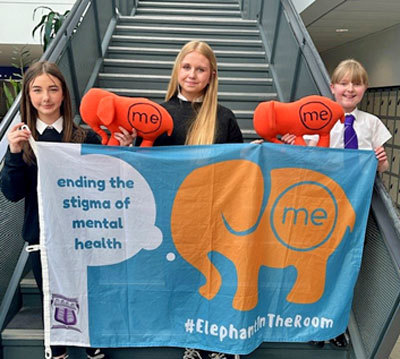
Staff created a brand ‘it’s all about me’, with ‘me’ standing for Mental Emotional. As part of the branding, staff introduced a mental health mascot ‘Elphie’, a bright orange elephant. This was designed to remind young people, families and staff that mental health should be addressed in a positive, proactive manner and not become the ‘elephant in the room’. The mascot is used in displays around the school, taken on school trips and on visits to sports competitions. This is helping to spread the message about mental health and wellbeing.
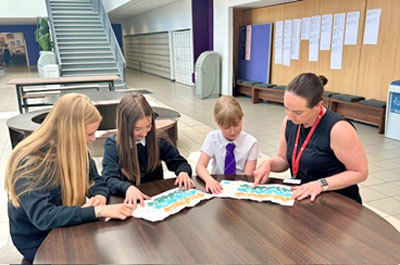
Staff and young people have implemented measures to promote positive mental health through tutor groups, assemblies, engagement activities and by using guest speakers. The school has introduced an annual mental health week.
Senior leaders have promoted training for young people and staff. In S1-S6 year groups there are Mental Health Champions who promote mental health, offer support and provide peer education. Over 20 staff have undertaken additional training to better equip them in supporting young people at points of crisis.
Staff have developed digital resources to support wellbeing. An ‘Elphie button’ on all desktops opens a wellbeing form to report any disclosures or concerns. Staff have also developed a Wallace High School mental health website which containing links, information and resources for young people, staff and families.
Staff organised an in-person conference to share good practice with other schools across Scotland. This was attended by 75 schools. This was in response to a growing interest from other schools in the work that Wallace High School was doing to promote positive mental health and wellbeing.
What the sustained impact has been
Wallace High School has been able to effectively reduce the stigma around mental health. This is evidenced in pupil surveys where responses indicate that young people are more willing to discuss their mental health. Staff also report that conversations around wellbeing have become more open. Young people, families, and staff have an increased knowledge of what mental health is and how to look after themselves and each other. Results of surveys show that the school community has a greater awareness of coping strategies and how to identify the warning signs of poor mental health. Young people are better able to identify personal coping strategies and have greater awareness of where to seek support. Learners can encourage their peers to seek support.
Young people across all year groups engage in more regular activities. For example, in tutor groups, health and wellbeing lessons and whole school activities to support better mental health.
Young people who need targeted individual support are benefiting from mental health coaching and counselling and the school reports very positive results. Staff have recorded improvements in course completion rates and attendance for young people benefitting from personalised interventions. Young people are engaging very well with support and can speak openly about how they are developing coping strategies and self-care. The school has significantly increased access to support for young people. This includes young people with suicidal thoughts. These young people receive support from staff who have undertaken additional mental health training. Support for young people is monitored by their head of year in co-ordination with pastoral care teachers. They provide frequent check-ins and support referrals to professionals. If appropriate, this is detailed in additional support plans.
School staff have provided support to other schools to develop their work on mental health and wellbeing. Some resources created in school have been adopted by a charity for national use. Young people who are ‘Mental Health Champions’ plan activities, deliver assemblies and have spoken at events across the country about their work. They are very proud of the ways in which they are supported by the school. The school recently developed and delivered a training session for staff in Spain, Italy and Finland to help them create a similar model in their schools.
Staff have increased knowledge and confidence in supporting mental health disclosures and identifying warning signs in young people and colleagues. They listen, support and signpost to appropriate resources or support. They make use of the ‘Elphie’ mental health and wellbeing forms to share information quickly. In addition, staff seek out mental health support from trained colleagues for themselves and others.
School surveys report the positive impact on families. Most respondents strongly agree or agree that Wallace High School has a culture and ethos that focuses on mental health. Most parents report that they feel confident in identifying the signs of poor mental health in their child.
Following the introduction of the programme, the school has seen an increase in attendance and positive post-school destinations. At the time of inspection attendance was inline with national expectations and almost all young people entered a positive post-school destination. There has also been a reduction in exclusions which were substantially below the national average at the time of inspection.
Gaelic version of this report
Dòigh-obrach làn-sgoile airson slàinte inntinn is sunnd a leasachadh aig Àrd-sgoil Uallais (Word)
Supporting information