

Stakeholder feedback
This chapter of the report presents analysis of responses to the Stakeholder questionnaire which covered the following nine themes:
- People involved in inspection
- Inspection frequency and selection
- Use of grades in inspection
- Notification of inspection
- Pre-inspection
- Design and content of a school inspection framework
- Reporting on the outcome of inspections
- Inspecting nursery classes
- Inspection follow-up
A total of 29 closed and 7 open questions (either standalone or asking for an explanation of views at a closed question) were asked.
Who replied to the stakeholder questionnaire
A total of 1,177 responses were received, with the majority – 1,139 responses – submitted through the Citizen Space consultation platform. A further 38 responses that were sent directly to Education Scotland varied in format, with some answering the consultation questions only, some answering the questions and providing further commentary and others submitting a statement-style response. The content of these responses has been matched to the most directly relevant question where possible and may also inform the broader themes section.
Respondents were asked a number of questions about whether they were responding as an individual, group or organisation, and their connection to the education sector (primary, secondary, independent, public sector, third sector etc). Based on their answers, respondents were placed into one of five stakeholder groups or one of seven organisation groups as set out in the tables below.
Stakeholder group respondents by type
| Stakeholder type | Number | % of Stakeholder group respondents |
|---|---|---|
| Parent or carer and young people | 322 | 29% |
| Teacher or other staff | 386 | 34% |
| Senior leader or manager | 322 | 29% |
| Local/education authority officer | 38 | 3% |
| Other | 54 | 5% |
| Total | 1122 | 100% |
The ‘Parent or carer and young people’, ‘Teacher or other staff’ and ‘Senior leader or manager’ groups were of relatively equal size with smaller numbers in the ‘Local/education authority officer’ and ‘Other’ groups.
The ‘Parent or carer and young people’ group includes respondents who identified themselves as a grandparent or other close relative of a child or young person, along with the small number of young people who responded to this questionnaire (as opposed to the Children and Young People version). These respondents have been grouped together with parents or carers as expressing the ‘customer’ perspective.
Other points to note about the stakeholder groups are:
- if someone identified themselves as a parent but also as playing another role, such as being or having been a teacher, they have been placed in the ‘Parent or carer and young people group'. (This was done because respondents tended to describe themselves as a parent first).
- the ‘Teacher or other staff’, ‘Senior leader or manager’ and ‘Local/education authority officer’ groups also include respondents who are retired from one of these roles
- the ‘Other’ group includes 15 respondents who did not provide the information which was used to decide into which group a respondent was placed
Organisation respondents by type
| Organisation type | Number |
|---|---|
| Local authority | 15 |
| Public body | 5 |
| Sector representative body or membership organisation | 9 |
| Think tank, consultancy or academia | 3 |
| Third sector, campaign group or support provider | 12 |
| Trade union | 3 |
| Other | 8 |
| Total | 55 |
‘Local authorities’ were the largest respondent group, followed by ‘Third sector, campaign group or support provider’ respondents.
There were 35 responses that made a set of connected/shared points in relation to inspection of Catholic schools. These were spread across Stakeholder and Organisation respondent groups and there was some variation in terms of text used and answers to the closed questions. For the purposes of the analysis, these responses have been placed into the appropriate respondent group rather than being analysed separately.
Focus of this section
The analysis presented in this section of the report focuses primarily on the views expressed by the 95% of respondents who fall into one of the five main stakeholder groups (Parent or carer and young people, Teacher or other staff, Senior leader or manager, Local/education authority officer and Other).
The charts in the body of the report present the views of these five stakeholder groups at the closed questions, with a full numerical breakdown for each question is available in Annex B, where responses from the organisations are also set out. Please note that the tables record only those who have answered the closed question in each case, so the totals (base numbers) may vary. The analysis relating to open questions includes comments made by all respondents, including organisations.
Before moving on to the main consultation questions, there is a brief overview of some of the broader issues raised, primarily by organisations that provided a non-standard response to the consultation.
Broader themes
Around 40 respondents made introductory or general remarks relating to the inspection regime more widely. These were primarily submitted via email and included statement-style content in addition to, or instead of, answering the specific consultation questions. Some respondents also made general comments about the inspection regime in their further comments at specific questions, primarily at Questions 3 and 9.
A range of respondents including ‘Trade union’, ‘Local authority’ and ‘Sector representative body or membership organisation’ respondents noted their disappointment with the focus of the consultation. Their comments included that it is too narrow and does not point to the more fundamental reform of the inspection regime which respondents saw as needed.
In terms of the fundamental principles that should underpin any future inspection regime, ‘Trade union’ respondents were among those suggesting that the focus should be on school improvement. They argued for a scrutiny approach framed around system design that also recognises the crucial role of local authorities as the bodies responsible for funding, staffing, supporting and challenging schools. Under the Standards in Scotland’s Schools etc. Act (2000), the provision of education in Scotland is the responsibility of local authorities. They are responsible for: meeting statutory requirements; taking forward nationally agreed policies and guidelines; spending and accountability for educational funding; and continuous improvement of services to meet the needs of local communities.
In addition to recognising the fundamental role of local authorities, there was reference to any accountability framework extending to the actions of others with responsibility for the education system. This included Government Ministers and the other children and young people services that have an impact on their learning and wellbeing. A ‘Public body’ respondent suggested that HMIE should take a more strategic approach to inspection and how it contributes to the public assurance of the quality of Scotland’s education system. Their view was that the focus of inspection should be on education service providers rather than individual schools, and that this would contribute more effectively to whole system improvement and effective system regulation.
Moving forward, it was suggested Scotland should be looking to a model of practitioner-led evaluation featuring professional collaboration and learning across settings. There were calls to invest time in developing a more collegiate approach and provide support for any change required. There was also a call for the model to be built on trust in teachers’ professional judgement extending to the improvement agenda and recognising that the quality of education in individual schools cannot exceed the capacity of the wider system to support the efforts of teachers and headteachers. A ‘Public body’ respondent highlighted the importance of ensuring that teaching standards are explicitly referenced and integrated comprehensively in the school inspection framework and system-level evaluation mechanisms.
There were also some suggestions, including from ‘Trade Union’ respondents, concerning how any new or alternative inspection regime should be framed, with the focus tending to be on the grade-based reporting system being abolished. Concerns expressed included that a grade-based approach hinders the production of valid and detailed evaluations of the performance of schools, especially those that will be of practical use to teachers with school improvement responsibilities. In terms of how there could be a greater emphasis on helping schools to improve, and ensuring the focus is on the quality of provision, suggestions included:
- shifting the emphasis onto working with local authorities to examine their systems and approaches, allowing for comparisons between and insights from different local authorities and highlighting differences across the country
- the introduction of a ‘passed/not passed’ inspection outcome system, with schools deemed to have ‘not passed’ signposted to sources of support
- looking at a balanced scorecard system, to recognise the very different contexts and challenges that schools face
There was also a call for a more effective, independent process for dealing with complaints.
A particular issue raised by some of the Catholic schools-focused submissions was the importance of the inspection regime recognising and respecting the distinctive nature of Catholic schools in Scotland. This included their status as communities of faith and learning where academic excellence, spiritual growth, and moral formation are integrated. Respondents went on to suggest that inspection teams for these schools should include members who are experienced in the culture, language, mission and aims of Catholic education. Inspection processes should also take account of existing self-evaluation frameworks (Developing in Faith and the Charter for Catholic Schools) and offer scope for schools to evidence their Catholic identity.
In addition to the inspection regime respecting differences between schools, respondents stressed the importance of considering the varied needs of children and young people. For example, a ‘Third sector’ respondent highlighted their concerns about whether the current approach addresses the needs of neurodivergent children and families across Scotland. They called for an inspection framework that is transparent, inclusive, neuro-affirming, and explicitly aligned with national guidance and children’s rights. Another ‘Third sector’ respondent called for specialist schools to be evaluated using a framework distinct from that used for ‘mainstream’ schools, with the emphasis on inclusive success measures that are central to a wellbeing-focused approach to learning. They went on to stress that neurodivergent children and young people should be enabled to provide feedback on their experience of learning and evaluation in a way that suits their communication needs.
More generally, a ‘Public body’ respondent noted that the design and implementation of school inspections have significant implications for protected characteristic groups, and that it is essential that those involved in the process fully understand and meet the requirements of the equality legal framework. They referenced the Public Sector Equality Duty (PSED) – General Duty, the Scottish Specific Duties (which are requirements intended to help listed authorities comply with the PSED General Duty), the role of Equality Impact Assessments (EQIAs) and The Fairer Scotland Duty (FSD).
People involved in inspection
The questionnaire set out that school inspections involve a range of people who each play an important role. HM Inspectors lead the inspections. Teams can also include associate assessors. Associate assessors are experienced school leaders, middle leaders or local authority staff who join inspection teams.
Members of the public who are not education professionals are also sometimes involved in inspection teams – these people are called lay members. They are trained by HM Inspectors and provide a lay person’s views on areas such as the school’s links with parents and the local community.
To build a well-rounded understanding of the school’s work, HM Inspectors meet with learners, staff, school leaders, parents and carers, local authority representatives/proprietors of independent schools, and partner organisations.
The questionnaire sought views on the range of people involved in inspection and the value they bring.
The charts presented in this section are numerical i.e. they present the number of respondents answering from each stakeholder group, and how they divided across the possible answers at each question. A full analysis of this question, which includes percentages, are available in Annex B.
Question 1.1 – To what extent do you agree or disagree that having associate assessors in inspection teams strengthens inspection?
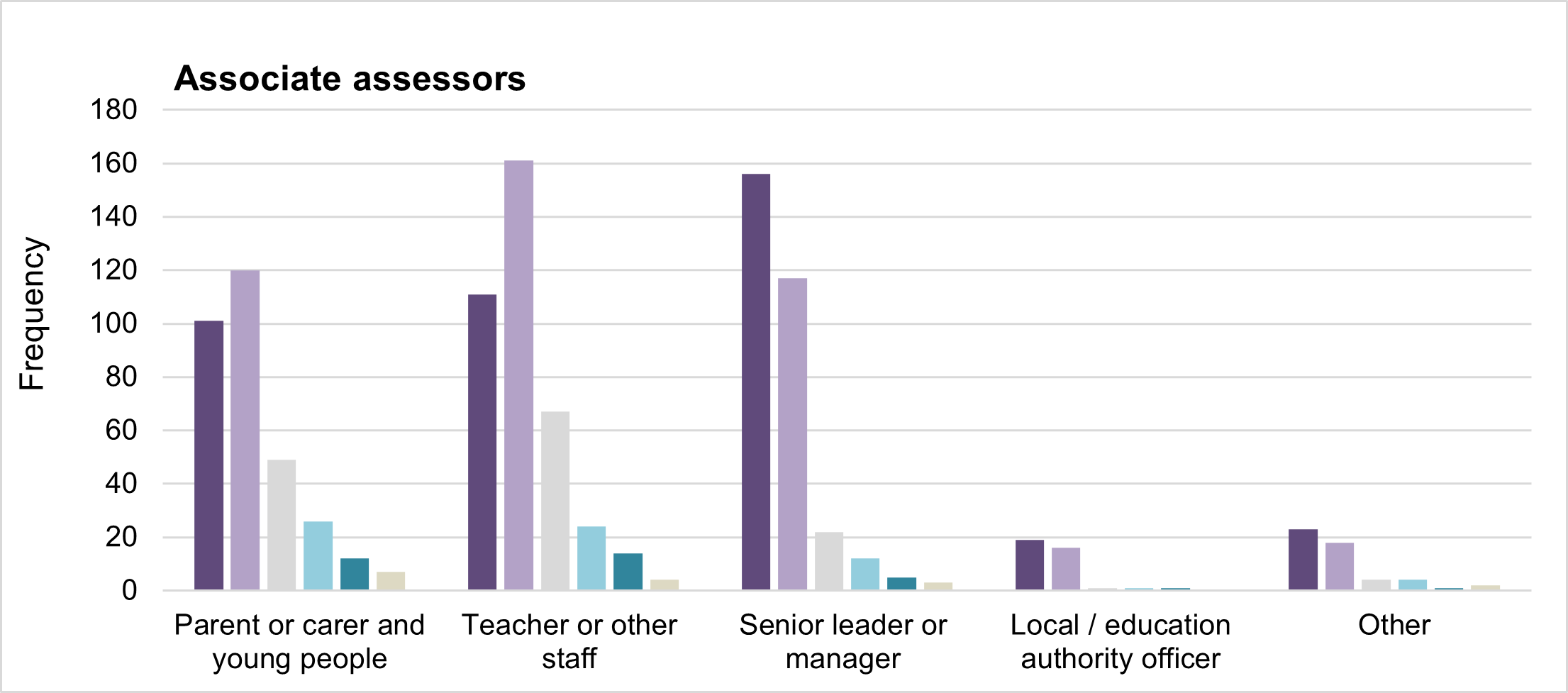
There was a clear consensus that having associate assessors in inspection teams strengthens inspections, albeit that ‘Senior leaders or managers’ and ‘Local/education authority officers’ were more likely to agree strongly than ‘Parents or carers and young people’ and ‘Teachers or other staff’. Almost all of the organisations that answered this question either agreed strongly or agreed (36 of the 40 that answered).
Question 1.2 – To what extent do you agree or disagree that lay members should be part of inspection teams?
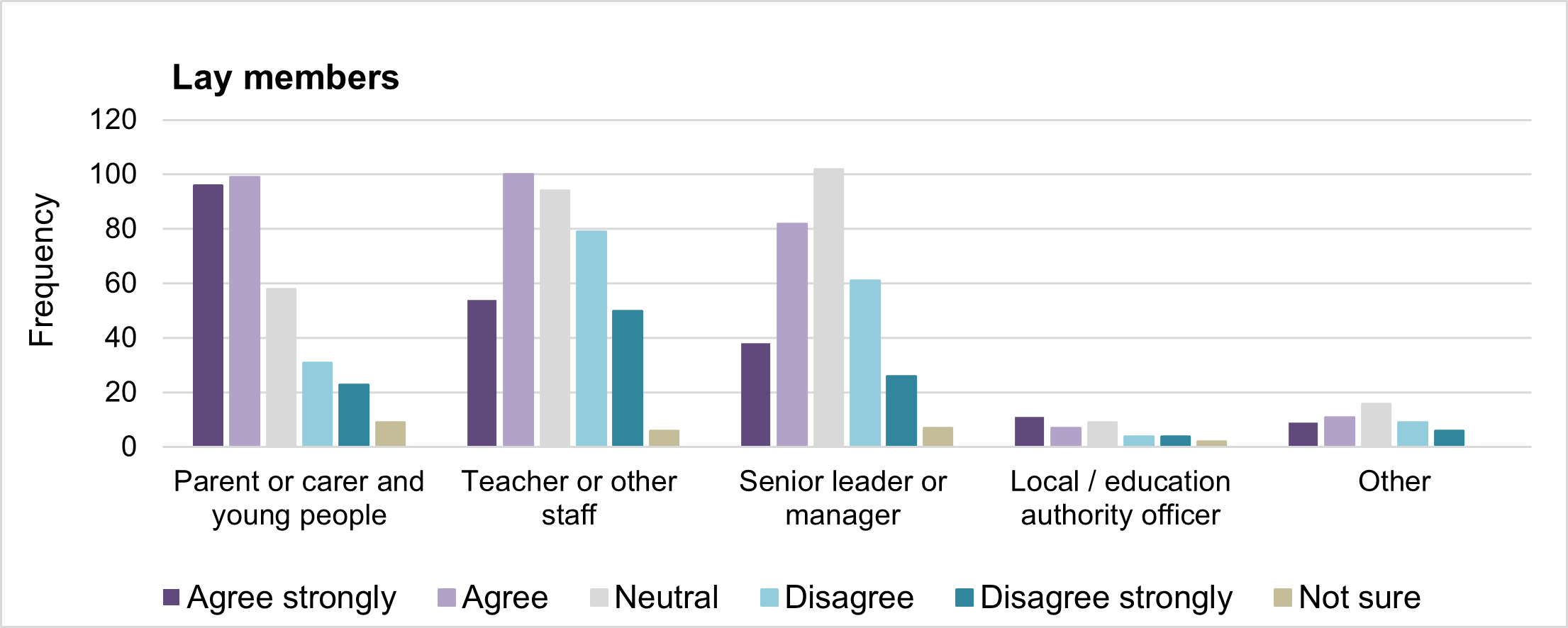
There was a more mixed position when it came to whether lay members should be part of inspection teams. Although respondents across all the stakeholder groups were more likely to agree strongly or agree, for both the ‘Senior leaders or managers’ and particularly the ‘Teachers or other staff’ groups, the number of respondents disagreeing or disagreeing strongly was relatively high. The number of respondents taking a neutral stance was also greater than at most other questions. This also applied to organisations, with 15 out of the 40 that answered neutral on this issue.
Question 1.3 – Senior leaders in schools are invited to join parts of the inspection process, such as observing learning alongside inspectors or taking part in professional discussions with the inspection team. To what extent do you agree or disagree that this strengthens inspection?
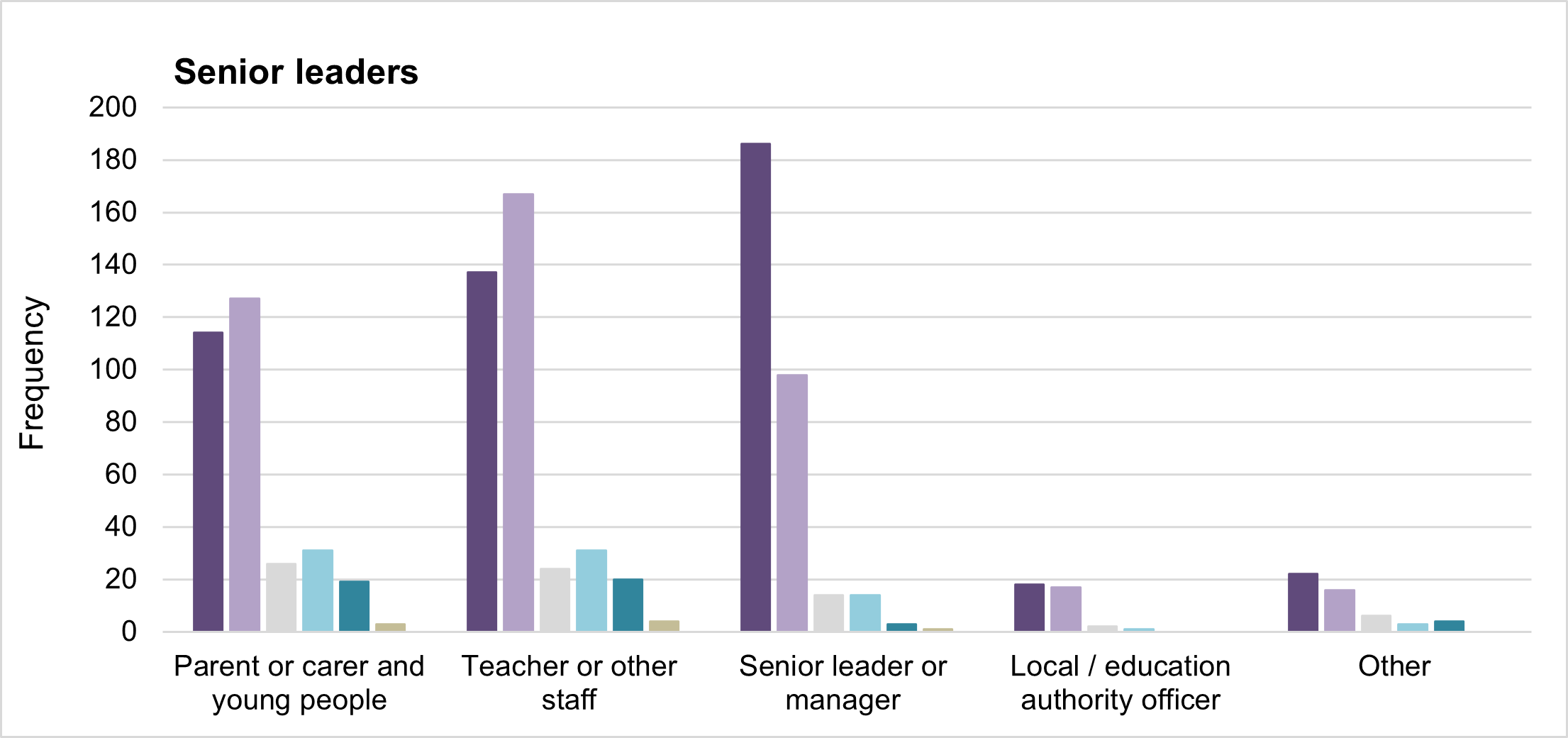
There was again a clear consensus that senior leaders being invited to join parts of the inspection process would strengthen inspections. ‘Senior leaders or managers’ and ‘Local/education authority officers’ were particularly likely to see benefits in this approach.
Question 1.4 – To what extent do you agree or disagree that local authority staff/proprietors of independent schools should contribute to school inspections by sharing relevant knowledge about the local context, including existing partnerships and support available to the school?
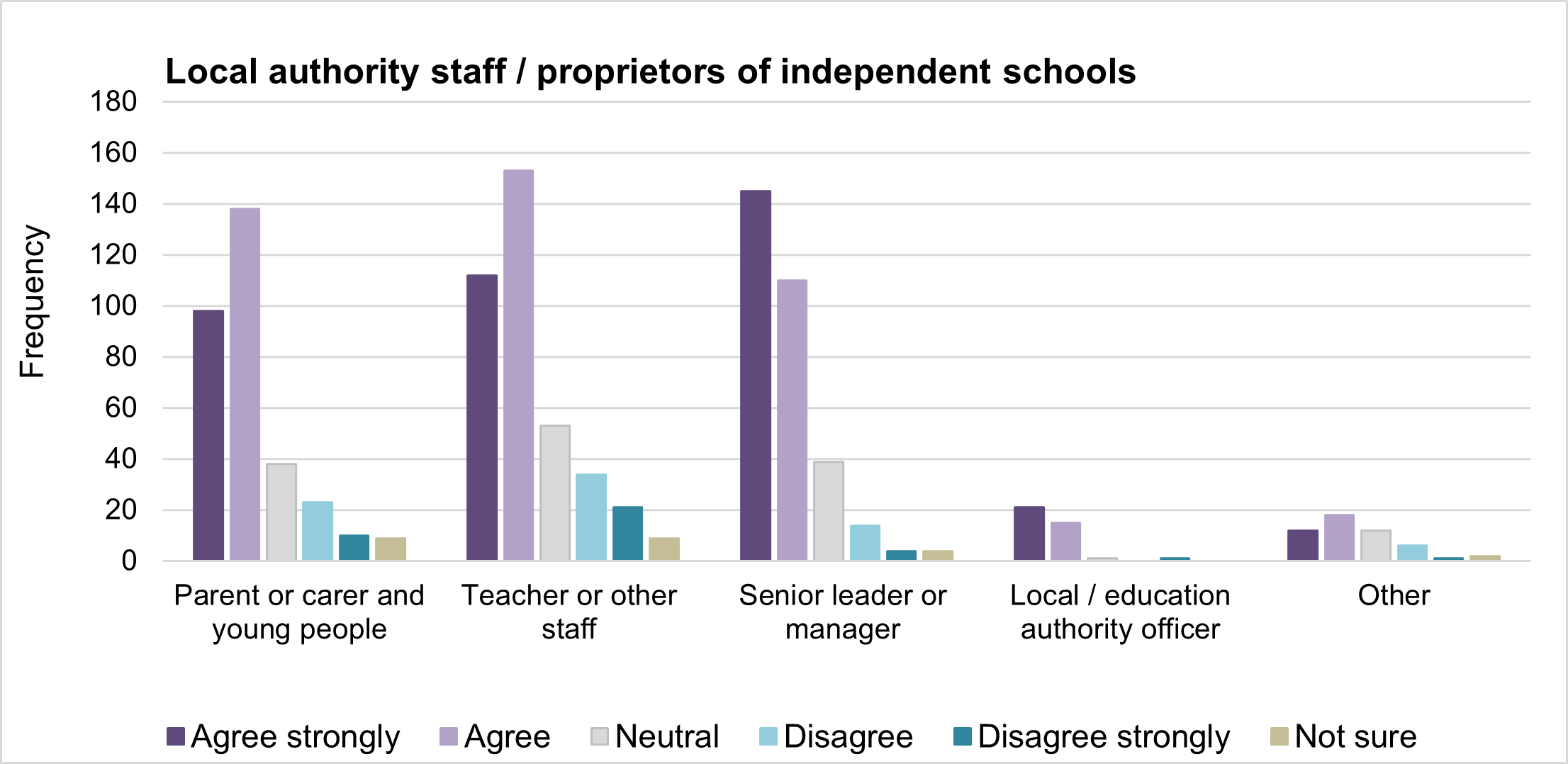
In relation to whether local authority staff/proprietors of independent schools should contribute to school inspections by sharing relevant knowledge about the local context, including existing partnerships and support available to the school, ‘Senior leaders or managers’ and ‘Local/education authority officers’ were again most likely to agree strongly or agree.
Supplementary comments
The stakeholder questionnaire did not ask for further comments at Questions 1.1-1.4. However, some issues were raised (either at other open questions or by those submitting an email response). They included that, regardless of inspection outcomes, teachers place great store on the ‘credibility’ of those by whom they are being inspected – conveyed by their professional knowledge, collegiate approach and interpersonal and communicative skills. Other points raised included that:
- if associate assessors are to be part of teams, they should have experience and expertise in the field of Catholic education in order to provide a meaningful contribution to an inspection team for any Catholic school
- retaining and expanding the associate assessor model would offer useful professional learning and development opportunities for local authority education officers
- while lay members may be able to contribute useful insights during school inspection, individuals with no background in teaching and school education or educational leadership should not encroach upon the pedagogical activities and professional domain of teachers, and the role of lay members in the construction of outputs must be made absolutely transparent
A ‘Trade union’ respondent raised a concern that what they saw as the continuation of a top-down culture is evident in the questionnaire itself and, in particular, in the question on inviting senior school leaders to join parts of the inspection process (Question 1.3 above). Their associated point was that the consultation appears to assume that teachers outwith leadership teams have nothing to offer the process.
Questions 1.5 to 1.7 focused on whether there should be increased opportunities for children and young people, school staff and parents or carers contribute to inspection. In each case, the question noted that questionnaires, focus groups, and direct conversations are already used to gather views, and that in the case of parents and carers, there is also a meeting with the Chair of Parent Council.
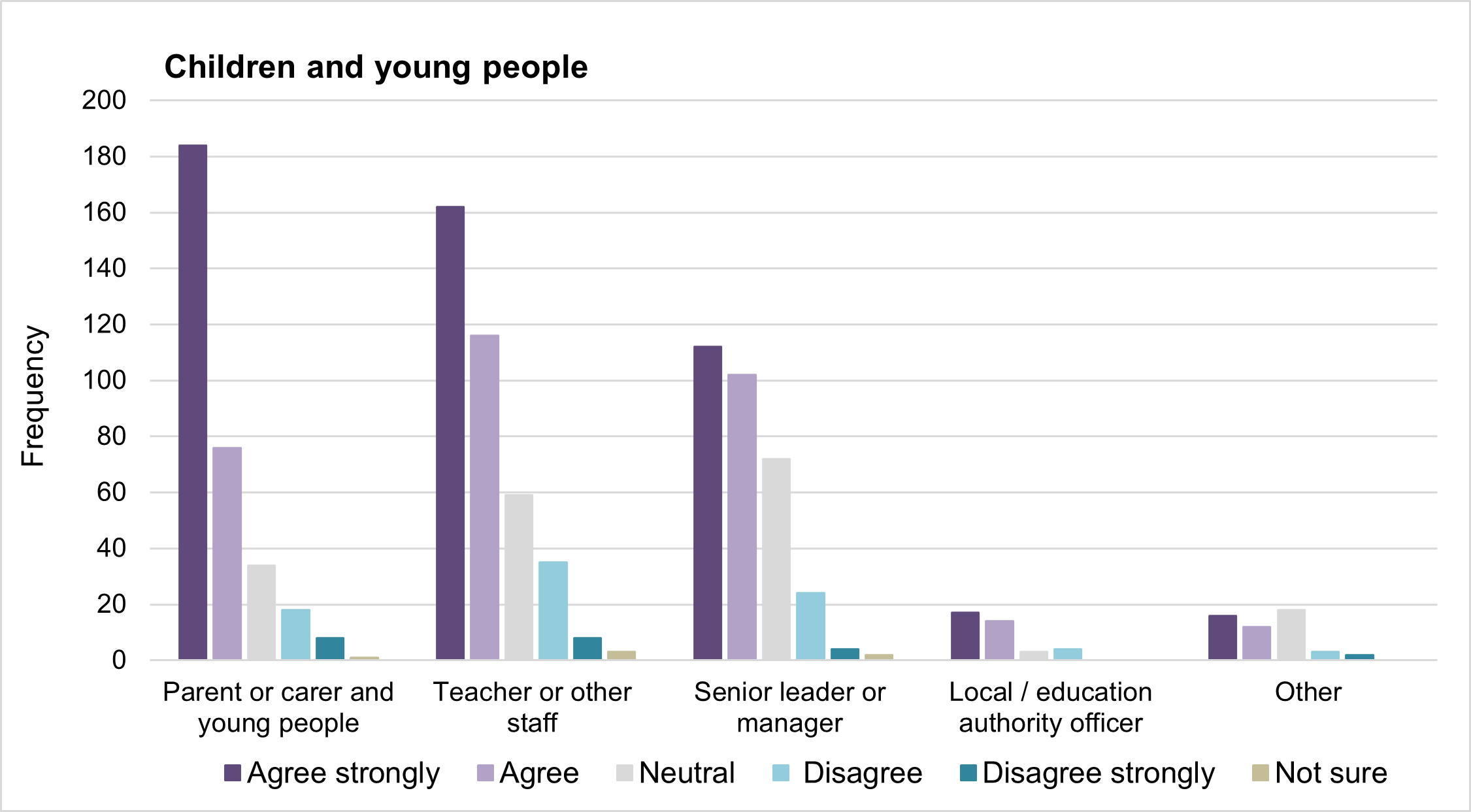
Question 1.5 – Inspectors already gather the views of children and young people through questionnaires, focus groups, and direct conversations. To what extent do you agree or disagree that children and young people should have increased opportunities to contribute to inspection?
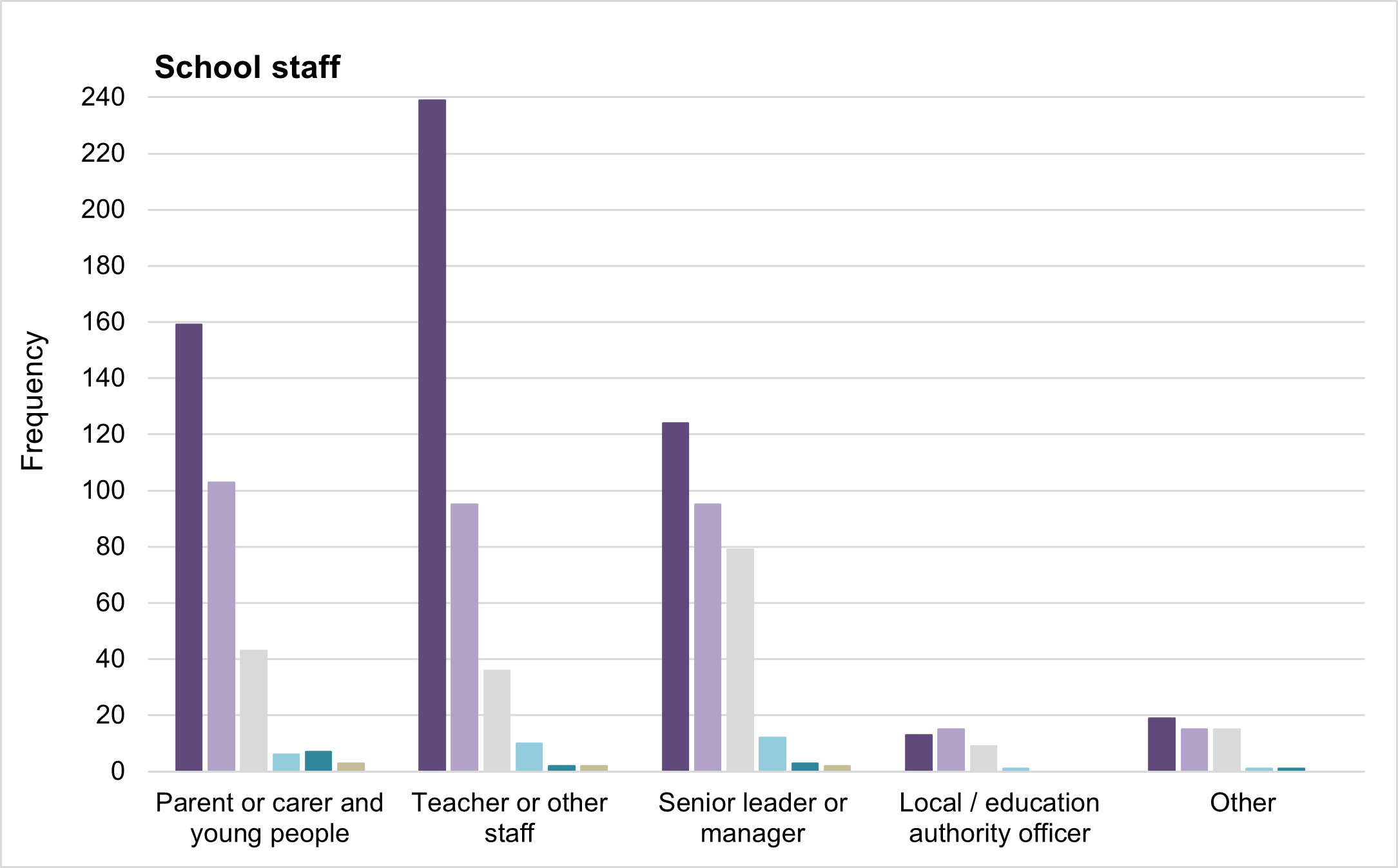
Question 1.6 – Inspectors already gather the views of staff through questionnaires, focus groups and direct conversations. To what extent do you agree or disagree that school staff should have increased opportunities to share their views during inspection?
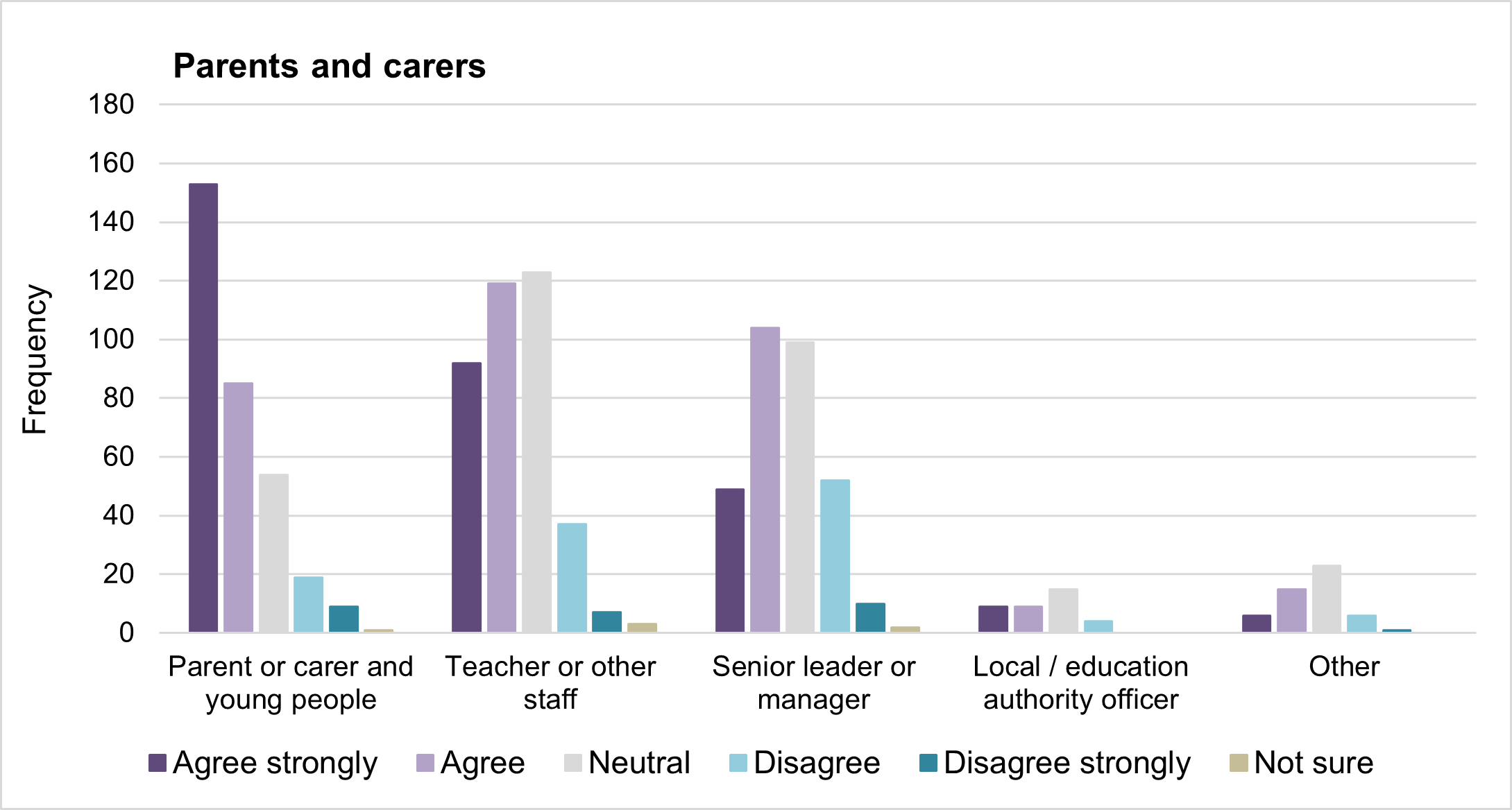
Question 1.7 – Inspectors already gather the views of parents and carers through questionnaires, focus groups and meeting the Chair of the Parent Council. To what extent do you agree or disagree that parents and carers should have increased opportunities to share their views during inspection?
Analysis
There were strong levels of support for children and young people and school staff having increased opportunities to share their views. However, the position was less clear with regard to parents or carers; although a majority either agreed strongly or agreed, views were mixed across the stakeholder groups. ‘Parents or carers and young people’ were more likely to be supportive than those in the remaining four stakeholder groups and especially compared to ‘Local/education authority officers’ and ‘Senior leaders or managers’.
This range of opinion was also reflected in the responses provided by organisations. They tended to be most supportive of increased opportunities for children and young people, followed by school staff and then parents and carers.
Respondents who had either agreed strongly or agreed at these questions were asked about approaches to ensure meaningful sharing of views. However, some of those who had either taken a neutral stance or had disagreed also made a comment at one of more of these three questions. This was often to note that they supported meaningful engagement but considered that current opportunities are sufficient and/or of high-quality. Reflecting the balance of opinion at the closed questions, this point was particularly likely to be made in relation to gathering the views of parents and carers.
It was also suggested that the focus should be very firmly on the quality of engagement, with increased opportunities only bringing real value if they are a function of quality and/or improvement.
Meaningful opportunities to share views
A frequently expressed position across Questions 1.5-1.7 was the importance of ensuring that children and young people, staff and parents or carers can meaningfully share their views during inspection.
Children and young people
Points made specifically in relation to meaningful engagement with children and young people included that children and young people having a right to participate in decisions that affect them, with the importance of an approach that aligns with UNCRC articles 12, 13, 28 and 29 highlighted. It was suggested that meaningful participation requires embedding the Lundy Model (PDF), so children have space to share their views, feel heard, and see their contributions influence outcomes. A ‘Public body’ respondent reported that in their evidence to the Education, Children and Young People Committee on the Education (Scotland) Act 2025, they called for children to be given a role in planning for and conducting inspections, along the lines of the Care Inspectorate’s young inspection volunteers.
The importance of ensuring that approaches are tailored or adaptable to the particular needs of children and young people was highlighted, including with a (continuing) focus on age-appropriate options and communication styles, and opportunities for natural, low-pressure engagement with inspection teams. ‘Teachers or other staff’ were particularly likely to point to the importance of inspection teams taking a reassuring and informal approach to engaging with children and young people.
In relation to specific needs it was noted, for example, that any language barriers should be considered and addressed, and that support should be available if children or young people need or want it. This was sometimes articulated as someone the child or young person knows providing that support and/or being present.
There were also references to all children and young people having an opportunity to be involved in sharing their views. For example, a ‘Third sector’ respondent reported that there is a perception among children and young people – a view shared by their Inclusion Ambassadors group – that only certain groups of children get picked to share their views about school as part of the inspection process. They noted their particular concerns that children and young people with ASN are often excluded from the inspection process and went on to call for the new framework and models to provide clear guidance for inspectors and schools about ensuring a diverse range of views are heard.
There were general references to a greater number of children and young people being involved, but also to the basis on which pupils would be ‘selected’ to take part. Suggestions included that:
- randomised selection or sampling could be used
- structured opportunities should ensure diverse voices are heard, including girls, boys, non-binary and trans pupils, as well as those from minority ethnic backgrounds and those with disabilities
- ensuring representation from different year groups
There was also a view, including from ‘Parents or carers and young people’, that a degree of anonymisation might be appropriate, potentially extending to staff or teachers not being present when pupils are sharing their views. This was sometimes connected to the importance of children and young people being able to express their views freely, whether they be good or bad.
A ‘Third sector’ respondent was among those suggesting that schools should actively support participation from underrepresented groups to avoid reinforcing existing inequalities, including calls for any approach to be appropriate/adaptable to the needs of children and young people with ASN and to be neurodiversity aware. It was suggested that accessible, low-pressure methods that do not rely on confidence, speech or masking should be used; multiple communication options, one-to-one or small groups, trusted adult-supported conversations, and allowing children to opt out without penalty were all proposed.
- Specific suggestions, collectively made by two ‘Third sector’ respondents, included that:
each member of the HMIE inspection team should be required to participate in neurodivergence-awareness training - HMIE should engage with the school in advance to ascertain the specific communication preferences of the children and young people with whom they wish to engage
- sensory-friendly spaces should be available
These ‘Third sector’ respondents also made suggestions specifically in relation to pupils with ASN, but which they also thought applied more generally, including that children and young people should:
- be given an information pack (that is available in easy-read format) to allay any concerns or anxieties that they could have in respect of their participation
- learners should receive information about inspection and the questions in advance
On this last point, the importance of children understanding what the purpose and focus of an inspection is, and how their views will impact on the outcome was highlighted. With specific reference to neurodivergence, a ‘Third sector’ respondent noted that providing questions in advance, in an easy-read format with visual supports and plenty of time to prepare aligns with NAIT principles of predictability and reduced anxiety and supports the Education (Scotland) Act 2025 duty to evaluate whether schools meet the needs of all learners.
In addition to commenting on the general approach to engagement, there were suggestions in terms of approaches that could be used or used more. Reflecting the earlier point about approaches being appropriate to the context, a ‘Sector representative body or membership organisation’ noted that more visual and oral approaches may work best in primary schools or ASN schools, while survey or focus group approaches could be a good way forward in secondary schools. ‘Parents or carers and young people’ were particularly likely to suggest the use of (more) creative approaches that allow children and young people to express themselves freely; there were references to presentations, videos, visual feedback walls, journals, suggestion boxes, a smiley face system, drawing, talking mats and role play.
Other approaches suggested included:
- children and young people having a role in inspection teams, possibly linked to enhanced roles for associate assessors and lay members
- including young people in learning visits, which could be linked to the Young Leaders of Learning model
- children and young people being involved in observation
- using a pre-inspection scoping meeting model led by children and young people
- learning walks involving pupils as guides
- building time for games, activities and ice-breakers into any of the opportunities that children and young people have to share their views
The importance of giving feedback to the children and young people about the outcome of the inspection, including how their feedback and contributions were used, was also highlighted. This theme is picked up again at Question 7.
Finally, there were suggestions about the themes that should be covered during the engagement and/or the questions that should be asked. General points included that there should be a move away from closed to open questions, with suggested themes or topics including:
- attainment and achievement
- wellbeing and enjoyment of school
- where appropriate, reflection on how their faith shapes their educational journey
School staff
Those who had either been neutral or disagreed that staff should have increased opportunities to share their views during inspection occasionally went on to comment that current practice works well. For example, a ‘Local authority’ organisational respondent suggested that the focus should be on maximising existing opportunities to ensure every member of staff feels confident to share their views. There was also reference to consistent use of the opportunities that are already in place, with a ‘Trade union’ respondent commenting that their members’ experiences can be variable. They explained that, at best, their members report engaging dialogue which generates validation, constructive challenge and practical support. However, in some cases, teachers report that inspection teams can be unavailable and not operate to the expected schedule.
Those who thought that school staff should have increased opportunities to share their views raised some of the same issues that had been highlighted in relation to children and young people. These included that it is critical that the voices of teachers and other school staff are heard, with ‘Parents or carers and young people’ most likely to stress this point. A ‘Trade union’ respondent noted that, ultimately, the inspection experience and outputs are about the work of the school staff team, suggesting that they should be afforded greater opportunity to engage with any process of inspection while underway and the subsequent reports flowing from it.
Other broader points made included that staff should feel listened to and able to express their views freely; this was sometimes connected to a view that any interaction should be private, and possibly anonymised, including with no management present during any face-to-face interaction. ‘Parents and carers’ and ‘Teachers or other staff’ were more likely to highlight this issue.
In relation to who should have an increased opportunity to share their views, the importance of a good range of teachers being involved was noted and sometimes expressed as anyone who wants to contribute having the opportunity. Examples given of the type of staff who should also be included were community youth workers, therapists, outreach workers, Active Schools Coordinators, part-time staff, support staff and new staff. It was also suggested that trade union representatives in schools will be able to provide a context of where staff may be reticent to come forward and speak.
Those who commented on the approaches currently being used (and referenced in the question i.e. questionnaires, focus groups and direct conversations) tended to see them as having a continuing role to play. ‘Teachers or other staff’ were particularly likely to refer to direct conversations, while ‘Local/education authority officers’ were more likely to refer to questionnaires or surveys and focus groups.
In terms of overall or additional approaches that might encourage or enable school staff to engage meaningfully, there was reference to an ‘open door’ policy so that staff can readily engage with the inspection team, and to:
- a focus on one-to-one conversations, and/or more informal or relaxed opportunities to share views, such as optional drop-in sessions
- creating space for collaborative discussions, rather than purely evaluative questioning
- considering the time and location of engagement opportunities, for example with scheduled meetings that do not encroach on breaks or fall outwith working hours, and with classroom cover available where required
- simply creating more opportunities and/or extending the time period over which the engagement takes place
There was also a suggestion that Associate Assessor Guides should be shared to ensure that all staff are clear of the more detailed expectations and to enable staff to provide the most appropriate evidence and support to the inspection team to get the best from the process.
The importance of engaging with staff regarding inspection team feedback and findings was also highlighted, particularly by ‘Senior leaders or managers’.
Parents or carers
The importance of parents or carers having their voice heard was highlighted although, reflecting the balance of opinion at Question 1.7, there were suggestions that current arrangements work well. However, there were also concerns that some parents may be hesitant or find it difficult to engage with school inspections. ‘Senior leaders or managers’ were most likely to raise this possibility, and a concern that having only a small number of parents or carers involved in school inspections may mean that the inspection team does not get a clear picture. A ‘Third sector’ organisation highlighted the need to recognise power dynamics and barriers to participation, particularly for those with protected characteristics or from marginalised communities. They went on to note that parent voices often reflect dominant groups, while parents from minority ethnic backgrounds or socio-economically disadvantaged backgrounds, those with disabilities, and single parents may face barriers to engagement.
It was suggested that there needs to be a review of the approaches used to ensure opportunities are as accessible as possible, and that a wide range of parents have the opportunity to contribute when their child’s school is being inspected. ‘Parents or carers and young people’ were particularly likely to make this point. In terms of the range of parents, it was suggested that it should extend beyond the Parent Council chair and should include, for example, after-school group leaders, parent helpers and the parents of school non-attenders. Teachers or other staff were most likely to point to the importance of a diverse group of parents being involved.
In terms of how opportunities could be improved or increased, similar themes were raised as for engagement with children and young people and school staff. These included that the approach should allow parents to express their views freely, with a connection made to opportunities to share those views privately or anonymously. ‘Parents or carers and young people’ were more likely to highlight this need.
Other suggestions included that the package of engagement activity should include opportunities for less structured, informal conversations, with open day or drop-in sessions seen as one option. ‘Local authority/education officers’ were most likely to propose that this approach be used. In terms of meeting the needs of particular groups of parents, suggestions from small numbers of respondents included that:
- when Gaelic Medium Education provision is inspected, consideration should be given to meeting representatives of local branches of Comann nam Pàrant, and inspectors should ensure that they get views from families whose children are L1 Gaelic speakers as well as families with no Gaelic in their homes
- engagement events, including focus groups, could be offered outwith the school day to allow working parents to attend more easily
- language and literacy barriers should be considered and addressed
- approaches should be neurodiversity-aware
In relation to neurodiversity, a ‘Third sector’ organisation highlighted that the parents of neurodivergent children and young people are disproportionately likely to be neurodivergent themselves. They went on to call for appropriate consideration to be given to the communication preferences of parents and guardians, including easy-read formatting and the opportunity to meet in-person to discuss a question.
Other suggestions that focused on removing barriers to parents or carers engaging with school inspections included holding virtual meetings, providing phone- or app-based options, and questionnaires or surveys being online. Less frequently made suggestions were that:
- parents or carers should be given more notice of engagement opportunities, and these opportunities should be shared more widely
- information should be shared in advance of any meetings or discussions so that parents are given time to prepare and reflect on what they want to share with the inspection team
- if focus groups are being held, numbers of participants should be kept reasonably low as speaking in larger groups can be intimidating for some
- if direct conversations are included, one-to-one should be an option
- members of the inspection team could attend activities or parent-focused events, including parent council meetings
Inspection frequency and selection
The questionnaire set out that there are around 2,500 schools in Scotland and that, currently, there is no fixed cycle for inspections. HM Inspectors carry out around 250 inspections each year, using a national sampling approach. Schools can also be selected for inspection as a result of risk. This means that, on average, a primary, secondary or special school may be inspected once every 10 years, although some schools may wait longer. Some people feel that not being inspected for a long time can lead to uncertainty or create anticipation and a sense of pressure when inspection does occur.
Under the Education (Scotland) Act 2025, Scottish Ministers will be required to set a minimum frequency for school inspections by regulation. The Chief Inspector of Education will then be responsible for determining how often inspections happen in practice, provided the minimum is met.
The questionnaire sought views on how often school inspection should take place and whether all schools should be visited within a defined period.
The charts in this section and the remainder of the report show responses as a percentage.
Question 2.1 – To what extent do you agree or disagree that the current sampling model, where around 10% of schools in Scotland are inspected each year, should continue?
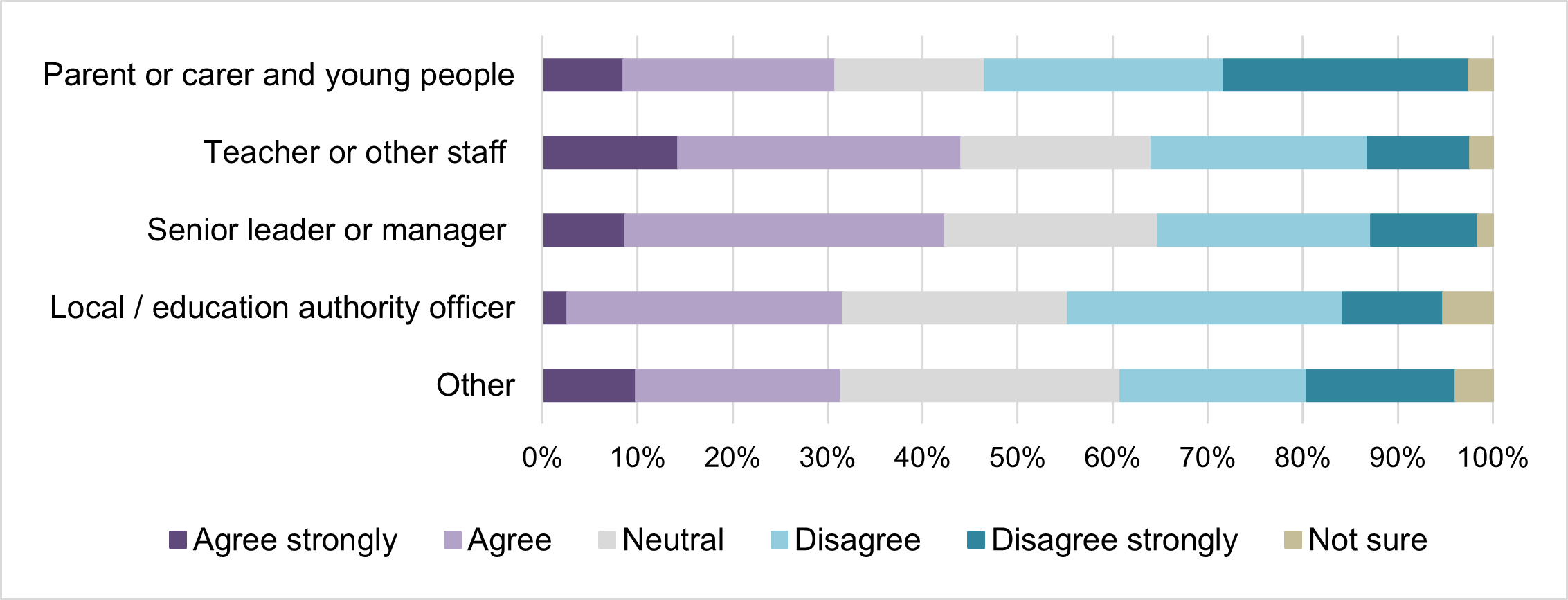
Views about whether the current sampling model should continue were mixed. ‘Teachers or other staff’ and ‘Senior leaders or managers’ were more likely to agree strongly or agree (44% and 43% respectively), than those in the other stakeholder groups. Across the stakeholder groups there were a relatively high proportion of respondents taking a neutral position (ranging from 16% to 29%).
A majority (51%) of ‘Parents or carers and young people’ disagreed or disagreed strongly that the current sampling model should continue.
The next question asked about how schools should be selected for inspection. The options given were:
• sampling-based, with schools continuing to be selected using a national sampling approach, based on levels of risk, performance or context
• fixed cycle, with every school inspected within a fixed national cycle (e.g. every 5-7 years)
• a combined approach, with a clear cycle for all schools, with additional inspection based on risk
Question 2.2 – In your view, how should schools be selected for inspection?
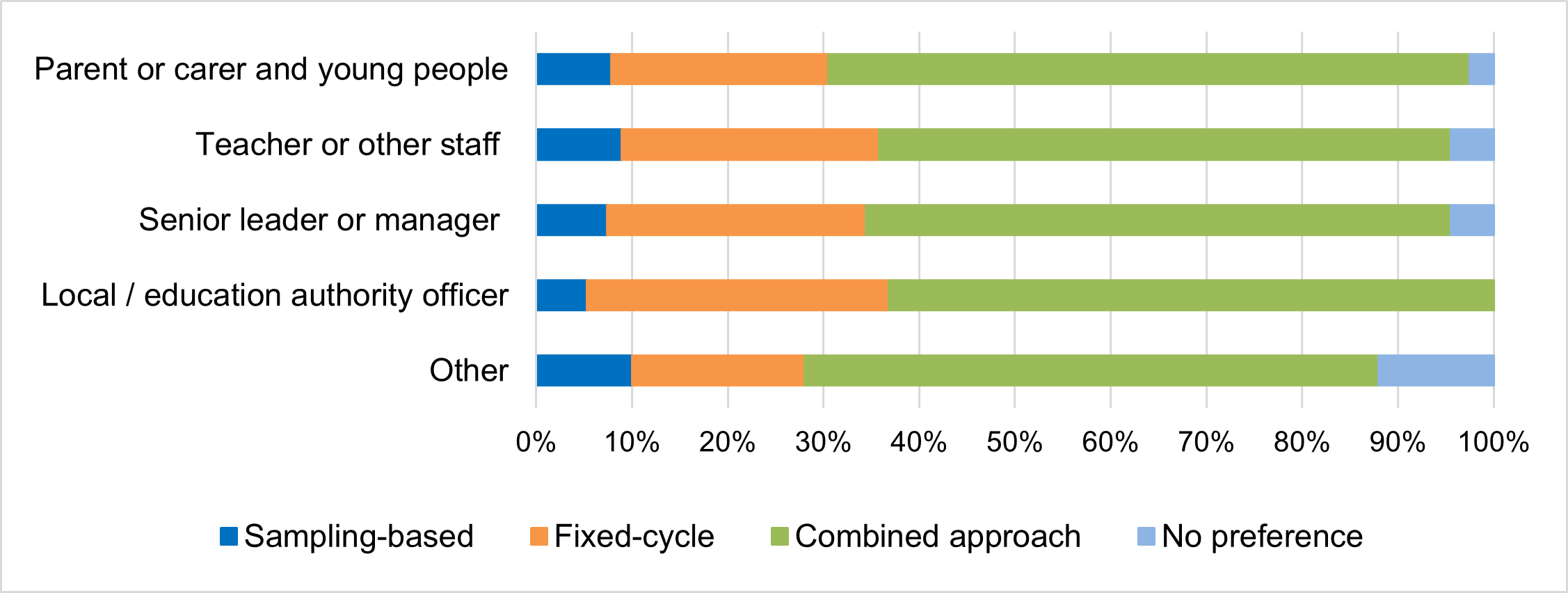
Respondents were most likely to favour the combined approach and a majority in each stakeholder group preferred this approach (ranging from 67% of ‘Parents or carers and young people’ down to 60% of ‘Teachers and other staff’ and ‘Other’ respondents).
In terms of the other options, a fixed cycle approach was the second most popular approach across each of the stakeholder groups, with support for a sampling-based approach limited.
Question 2.3 – In future, how often do you think each school should be inspected?
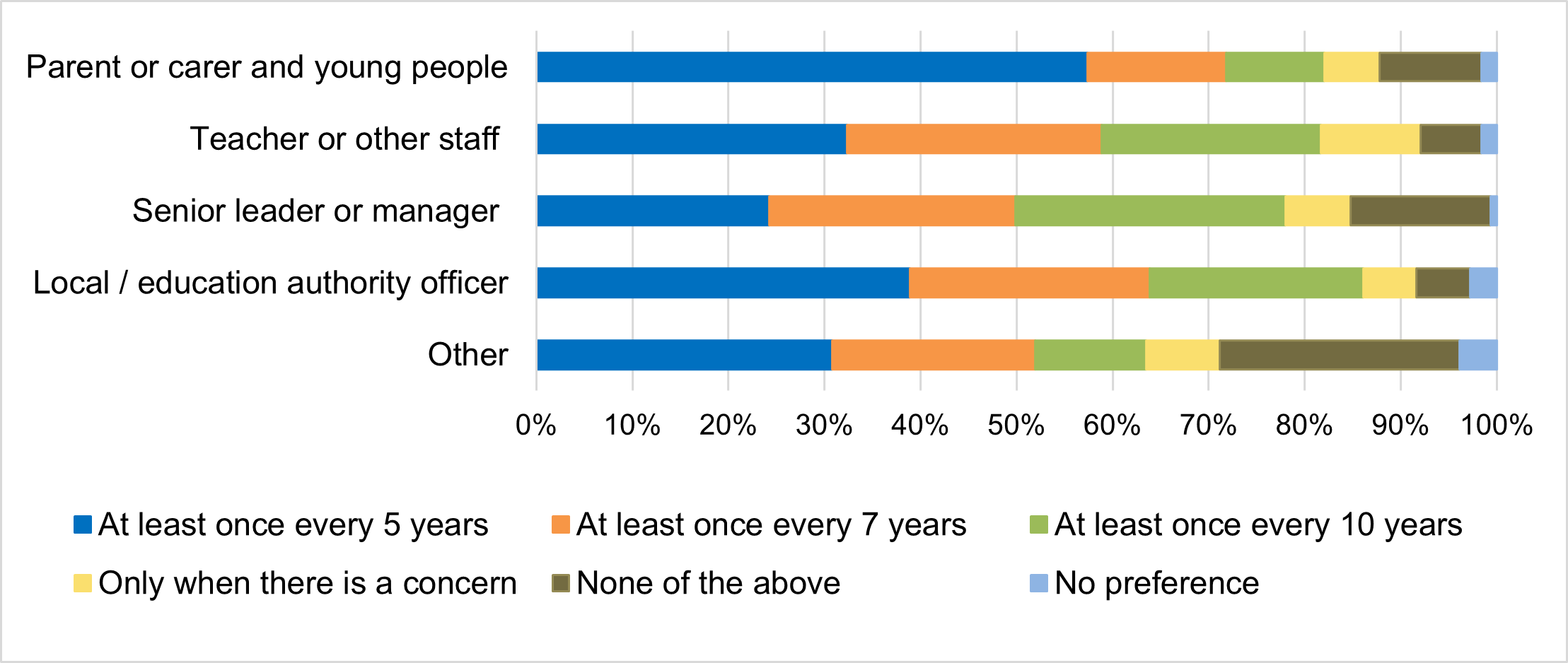
Views were mixed in relation to how often each school should be inspected. ‘Parents or carers and young people’, ‘Teachers or other staff’ and ‘Local/education authority officers’ were most likely to favour inspections being carried out at least once every 5 years (with support ranging from 57% of ‘Parents or carers and young people’ down to 32% of ‘Teachers or other staff’).
‘Senior leaders or managers’ were the only stakeholder group in which respondents were more likely to favour inspections being at least once every 10 years, albeit they were relatively evenly divided across the three timescale related options (at 28% for 10 years, 26% for 7 years and 24% for 5 years).
There was very limited support for an approach based on inspecting only when there is a concern.
Do you have a different view on how often inspections should take place?
Overall, the most frequent point – raised particularly by ‘Senior leaders and managers’ – was a desire for change to the model currently used to evaluate Scotland’s schools. There were related references to the negative impacts the inspection process can have on staff wellbeing and to disruption of the working of the wider school, along with calls for a more supportive approach to the process. ‘Teachers and other staff’ and ‘Senior leaders and managers’ were most likely to raise these issues. An associated view was that the way the question has been framed seems to assume that the current model will be retained.
Among respondents proposing different numbers of years between inspections to those offered in the questionnaire, suggestions included that inspections should be carried out more often than once every 5 years, with every 3-4 years, then every 1-2 years the most frequent proposals. Both suggestions were made most often by ‘Parents or carers and young people’. Other, less frequently made, suggestions included that there should be:
- a clear, fixed frequency for inspections
- an inspection at least once per cohort of children at each level, so that each child experiences an inspection at primary school and at secondary school; this proposal came particularly from ‘Parents or carers and young people’ and from ‘Local authority’ respondents
- variation in frequency between schools, with less frequent inspections for institutions that are performing well, and more frequent inspections for those where there are concerns; ‘Teachers and other staff’ were more likely to make this suggestion
- triggers for inspection related to changes in the circumstances of a school, including high staff turnover and changes in leadership, suggested by ‘Teachers or other staff’ and ‘Parents or carers and young people’
- scope for the frequency of inspections to be increased in response to concerns or complaints, suggested most frequently by ‘Parents or carers and young people’
- inspections that are more frequent than at present but shorter/less onerous, potentially triggering a further, more extensive visit where concerns are found; ‘Senior leaders and managers’ and ‘Teachers and other staff’ were more likely to make this suggestion
In relation to the last point, a ‘Local authority’ respondent suggested that, as an alternative to varying the length/scope of an inspection, consideration should be given to a mix of announced and unannounced visits. Further comments on the notice period for inspections are covered at Question 4.1.
There were also references to the role of the local authority in assessing the quality of provision, including that the inspection process should be left to local authorities (whose own systems and capacity should be approved and monitored). Greater emphasis on local partnership approaches was also proposed, including a small number of ‘Local authority’ respondents and a ‘Sector representative body or membership organisation’ suggesting sharing the information used to identify risk.
Use of grades in inspection
HM Inspectors currently use a six-point grading scale to provide a high-level summary of how well a school is performing in key areas:
| Grade | What it means |
|---|---|
| Excellent | Outstanding and sector-leading |
| Very good | Major strengths |
| Good | Important strengths, with some areas for improvment |
| Satisfactory | Strengths just outweigh weakness |
| Weak | Important weaknesses |
| Unsatisfactory | Major weaknesses |
Grades are published in the school’s inspection report and are intended to provide a clear and consistent way of reporting findings. The questionnaire sought views on the use of the six-point grading to summarise how good a school is and whether this approach should be kept.
Question 3.1 – To what extent do you agree or disagree that using grades helps provide a clear overview of how well a school is doing?
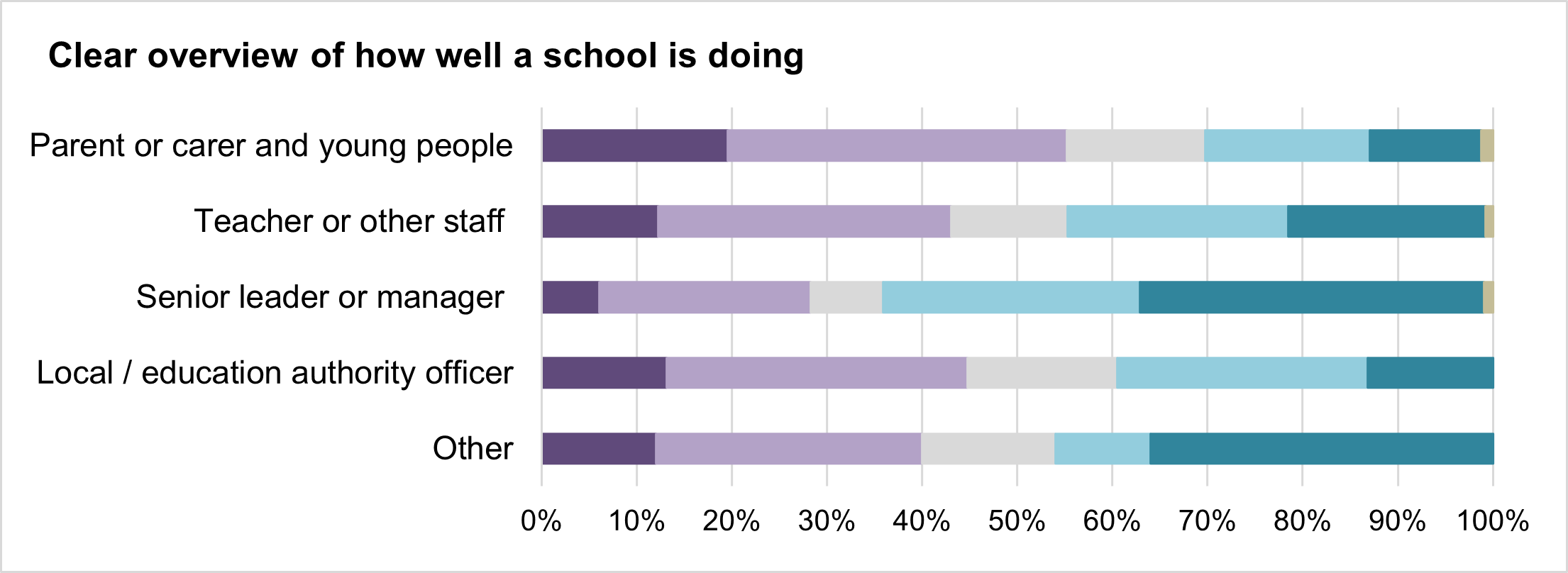
A majority of ‘Parents or carers and young people’ (56%) either agreed strongly or agreed that using grades helps provide a clear overview of how well a school is doing, but a majority of ‘Senior leaders or managers’ disagreed or disagreed strongly (63%). ‘Teachers or other staff’ and ‘Local / education authority officers’ were relatively evenly divided on the issue.
Question 3.2 – To what extent do you agree or disagree that grades help schools, parents, and local authorities/proprietors of independent schools understand what needs to improve?
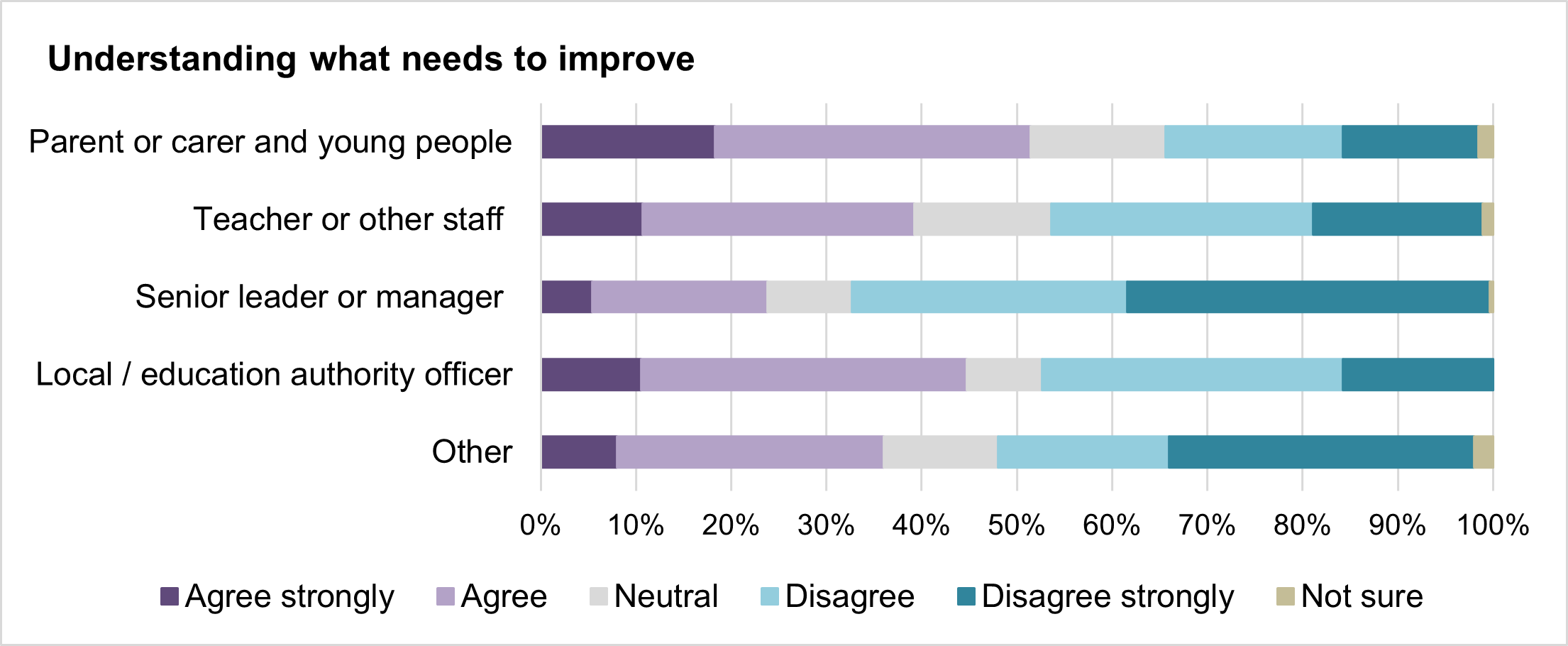
Similarly, a majority of ‘Parents or carers and young people’ (51%) either agreed strongly or agreed that using grades helps with understanding about what needs to improve, but a majority of ‘Senior leaders or managers’ disagreed or disagreed strongly (67%). ‘Teachers or other staff’ and ‘Local / education authority officers’ were again relatively evenly divided.
Views were mixed across these two questions, with little or nothing in the way of clear consensus around whether using grades helps provide a clear overview of how well a school is doing or helps with understanding about what needs to improve.
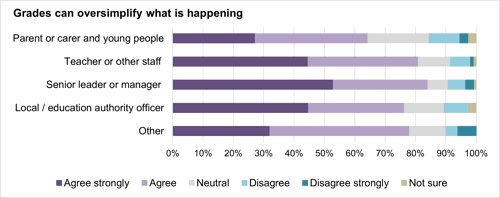
Question 3.3 – To what extent do you agree or disagree that grades can oversimplify what is happening in a school?
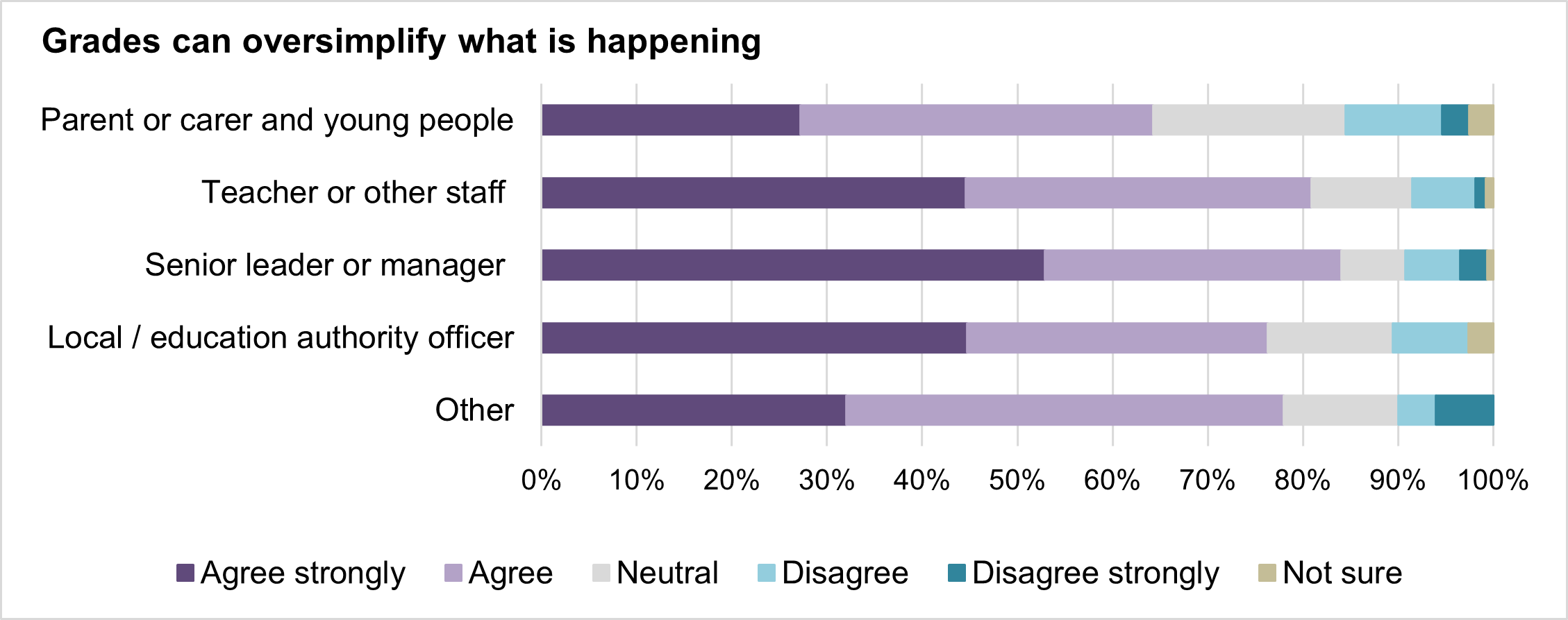
Overall, there was clear agreement that grades can oversimplify what is happening in a school. ‘Senior leaders or managers’ were most likely to agree strongly or agree (84%) followed by ‘Teachers or other staff’ (81%).
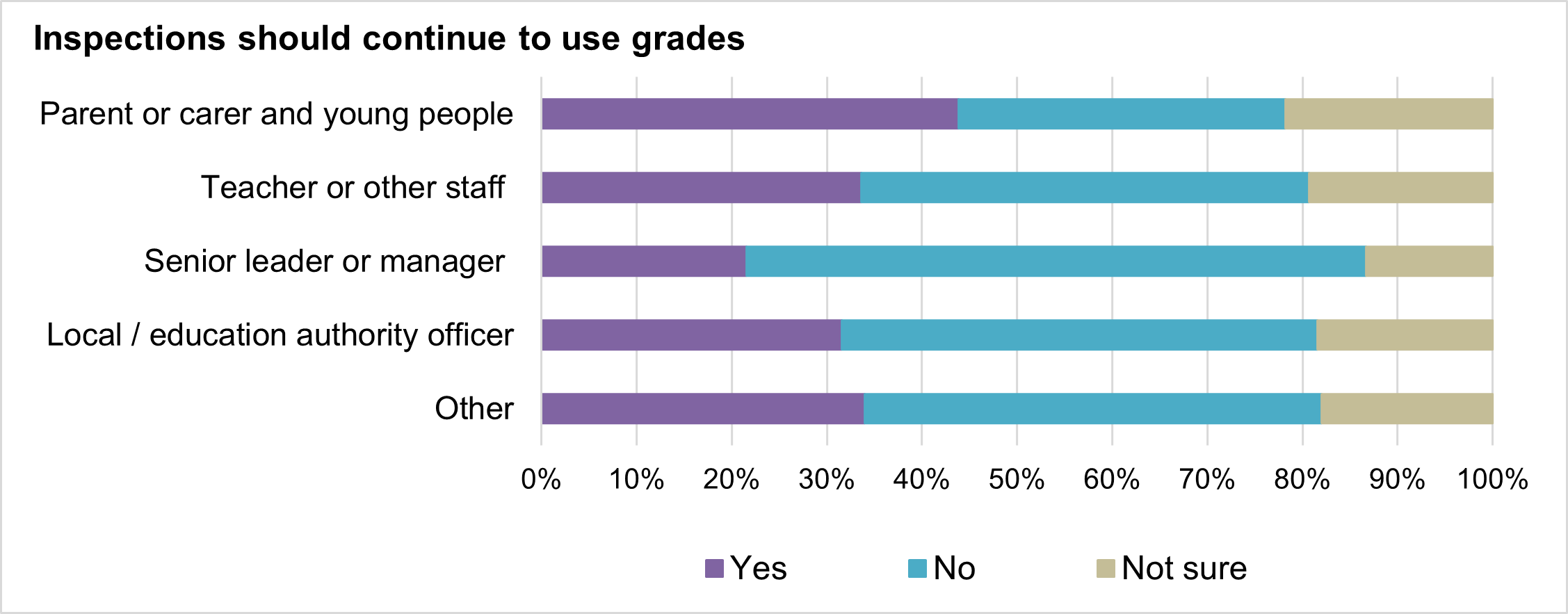
Question 3.4 – Do you think school inspections should continue to use grades to summarise how well a school is performing?
Overall, there was clear agreement that grades can oversimplify what is happening in a school. ‘Senior leaders or managers’ were most likely to agree strongly or agree (84%) followed by ‘Teachers or other staff’ (81%).
The balance of views was less clear when it came to whether school inspections should continue to use grades to summarise how well a school is performing, although the general consensus tended to be not. ‘Senior leaders or managers’ were particularly likely to think that they should not continue to be used. ‘Parents or carers and young people’ were the only stakeholder group in which more respondents thought grades should continue to be used to summarise how well a school is performing than not (44% and 34% respectively).
Question 3.5 – If grades continue to be used, what should happen to the current six-point scale?
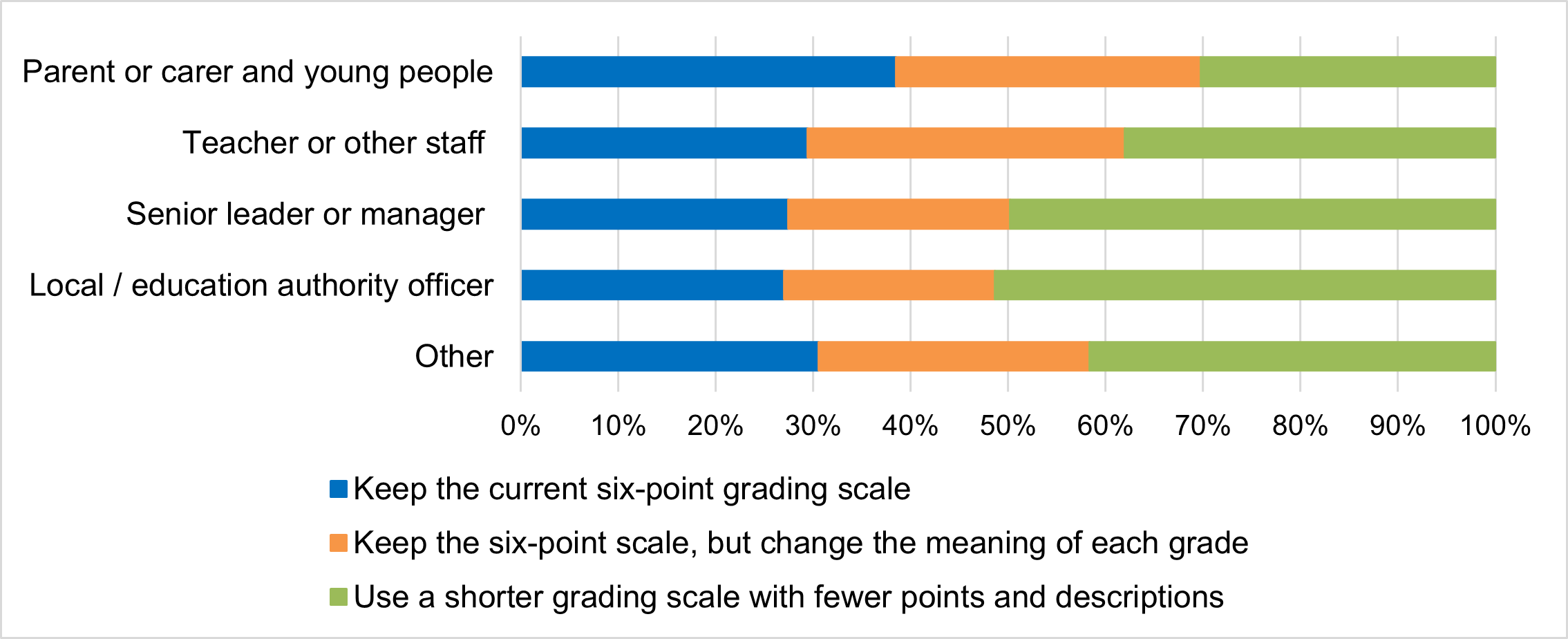
There was no clear consensus at this question, although overall a slight preference for using a shorter grading scale if grades do continue to be used. Half of ‘Senior leaders or managers’ and a majority of ‘Local/education authority officers’ favoured using a shorter grading scale with fewer points and descriptions (50% and 51% respectively).
‘Parents or carers and young people’ were the only stakeholder group for which the most popular choice was keeping the current six-point grading scale (preferred by 38%).
Question 3.6 – If school inspection no longer used grades to evaluate and report on key areas, how should inspection reports show the quality of education in a school?
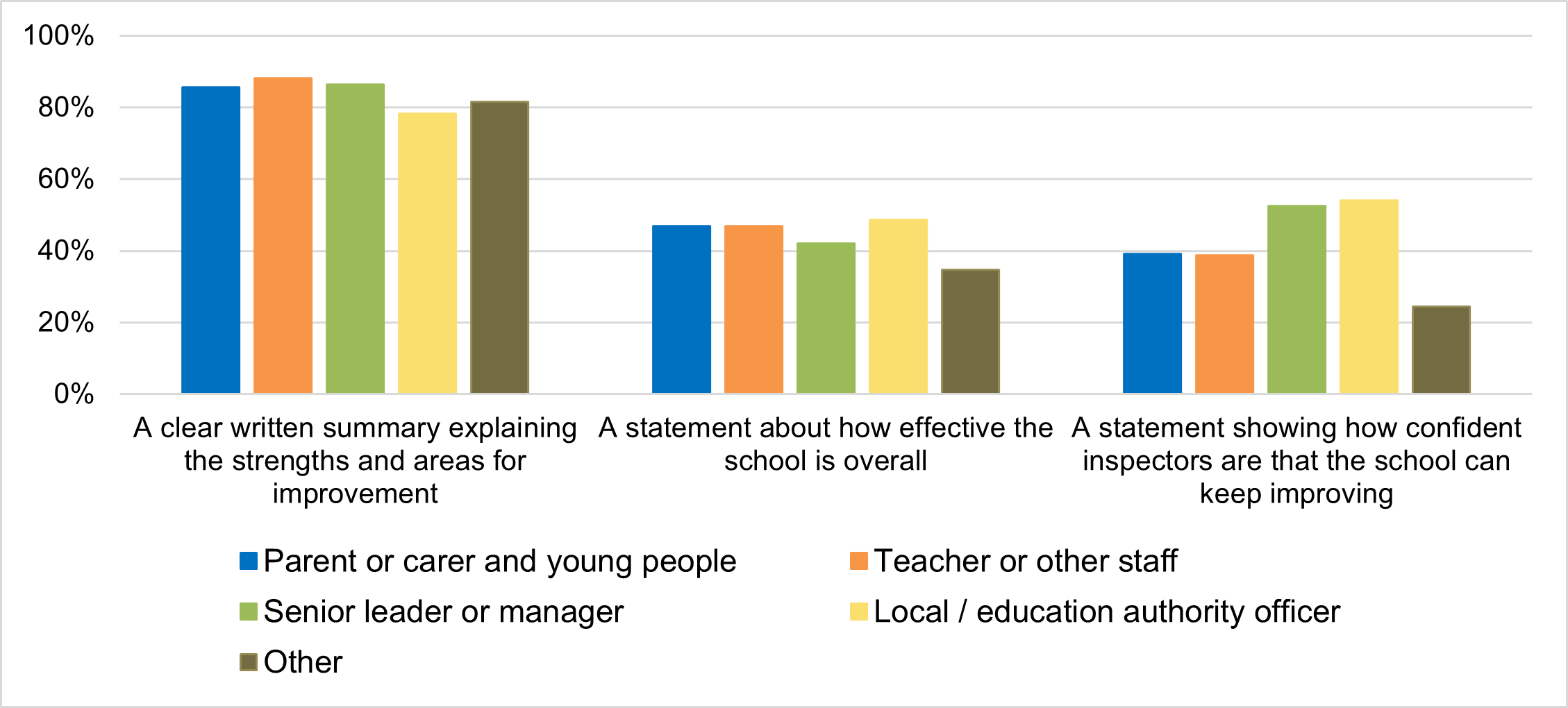
In terms of how inspection reports should show the quality of education in a school, use of a clear written summary explaining strengths and areas for improvement was the most popular choice across the stakeholder groups; 88% of ‘Teachers or other school staff’ supported this approach, dropping only to 78% of ‘Local/education authority officers.
With respect to the other two options, ‘Parents or carers and young people and ‘Teachers or other staff’ were slightly more likely to favour the inclusion of a statement about how effective a school is overall than a statement showing how confident inspectors are that the school can keep improving. The converse was true of ‘Senior leaders or managers’ and ‘Local/education authority officers’.
Other views on how reports should show the quality of education in a school
Among those commenting on how inspection reports should show the quality of education in a school in the absence of grades, the most frequent suggestion was that the report should set out the local context and the challenges faced by a school – for example, in terms of the catchment’s socio-economic status or of funding constraints. ‘Senior leaders or managers’ were particularly likely to highlight this issue.
Other points relating to the nature of the inspection report included that it should be written in clear English, and constructive/supportive in tone. The need for consistency in both approach to inspection and messaging in the report was also highlighted, including by a ‘Local authority’ and a ‘Think tank’ respondent.
‘Senior leaders or managers’ and ‘Sector representative body or membership organisations’ were among those calling for the report to document the school’s story and the journey that it is on. Examples included highlighting the extent of improvement since the last inspection, or reflecting a school’s denomination, where relevant. Separate reports for Gaelic- and English-Medium education were requested where both are provided by the same institution.
In terms of potential elements of a report there was support, from across a range of respondent groups for recording:
- the strengths of a school and what it is doing well
- practice worth sharing
- areas for improvement/development
- the next steps, including achievable goals
In relation to the last point, two ‘Local authority’ respondents asked for clarity on roles of the local authority and/or HMIE in delivering improvements and providing support going forward.
Suggestions with respect to additional elements, proposed in particular by ‘Third sector’ respondents, included:
- input from children and young people about their school
- a statement summarising what the school is doing to raise wellbeing among pupils
- evaluation of the extent to which all learners’ needs are being met, including the school’s practice for autistic and neurodivergent pupils
- a statement on the accuracy of the school’s self-evaluation
It was also suggested that, alongside the HMIE report there should be a response from the school, including an action/improvement plan.
Notification of inspection
Currently, a school is given two-and-a-half weeks’ notice of an inspection. This enables the inspection team to plan the inspection activities alongside the headteacher and to give staff time to complete pre-inspection paperwork. It also provides time for parents, pupils, staff and partner organisations to complete pre-inspection questionnaires and for the inspectors to collate and analyse responses.
The questionnaire sought views on whether the current notification period is appropriate.
Question 4.1 – How much notice do you think should schools receive before an inspection?
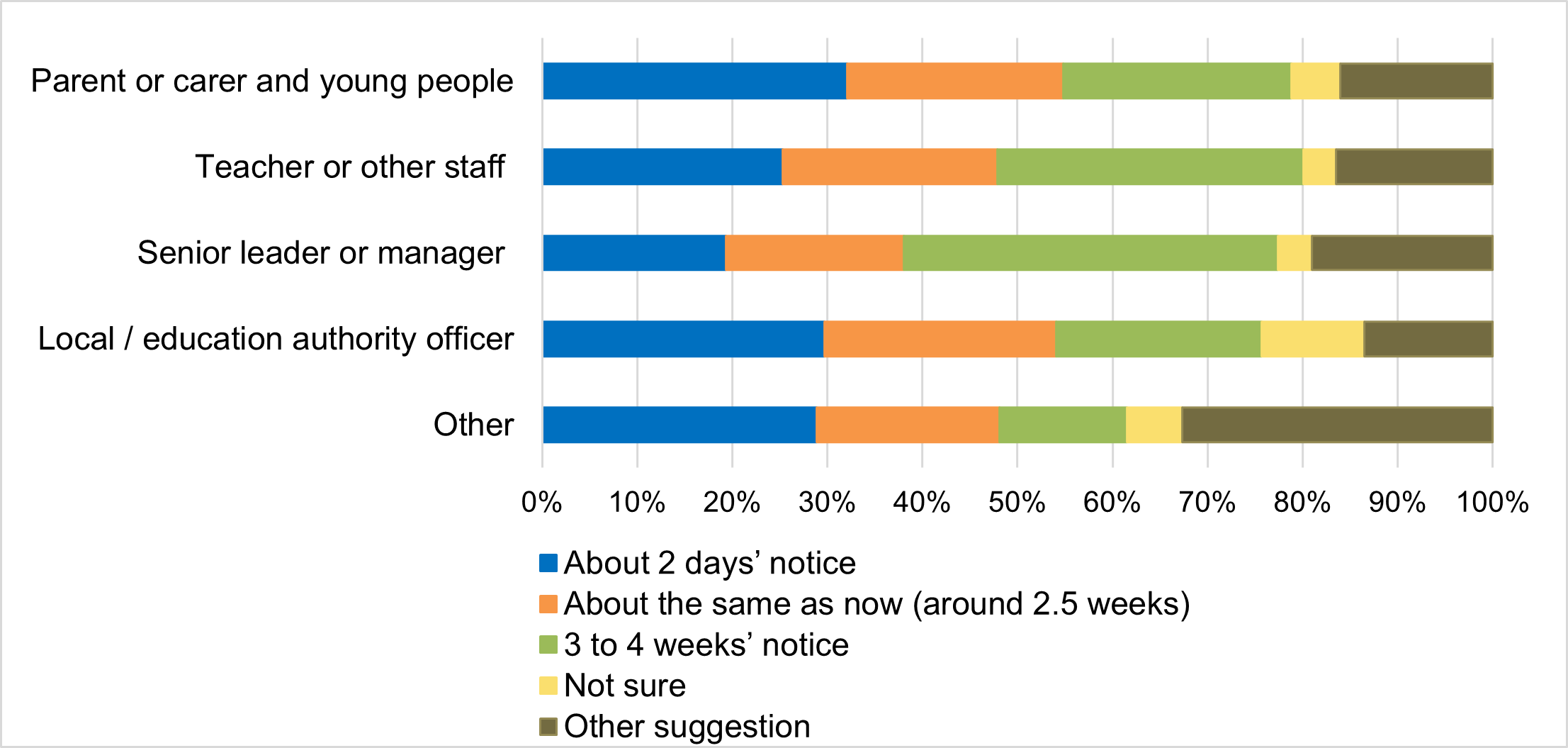
There was no clear consensus around any one of the three notice periods suggested, with ‘Parents or carers and young people’ and ‘Local/education authority officers’ most likely to favour a school being given about 2 days’ notice while ‘Teachers and other staff’ and particularly ‘Senior leaders or managers’ were most likely to prefer the 3 to 4 weeks’ notice option.
Among other suggestions made, the most frequent view – expressed particularly by ‘Parents or carers and young people’ followed by ‘Teachers and other staff’ – was that inspections should be unannounced. Reasons for this position tended to reflect those given by respondents who supported a 2-day notice period – namely allowing inspectors to get a picture of more ‘normal’ life at a school, and relieving staff of the additional workload and stress associated with preparing for an inspection over a longer period. The model used by the Care Inspectorate was referenced as an example of this type of approach.
A few respondents proposed other notice periods including:
- 1 week (suggested particularly by ‘Local/education authority officers)’
- 1–2 months
- 3 months or a term
It was also suggested that a school could be advised that they will be inspected within the next year, coupled with shorter notice of the exact timing, or that a fixed schedule would allow a school to know approximately when it will be visited.
The extent to which the model for future inspections should determine the notification period was also highlighted, particularly by ‘Senior leaders or managers’, with some respondents noting that their answer to the question would depend on the model going forward. Others, from across a range of respondent groups, suggested that a minimal notice period would require a change in the extent of pre-inspection paperwork required of schools or highlighted the limitations that could be placed on stakeholder involvement if there is little or no time to set up meetings. In particular, two ‘Third sector’ respondents noted that facilitating meaningful participation by children and young people takes time, and that time is needed to ensure the wellbeing of neurodivergent children who need stability to feel safe. A few respondents – particularly ‘Parents or carers and young people’– suggested a mix of brief, short-notice or unannounced inspections to supplement more in-depth inspections for which longer notice is given.
With respect to the timing of inspections there was a call to avoid periods immediately after holidays. This issue was raised most frequently by ‘Senior leaders or managers’. It was reported that, at present, a school may receive notification just before a holiday that an inspection will take place early in the following term, meaning that staff spend their break on preparation.
Pre-inspection
Before an inspection takes place, HM Inspectors ask the school’s senior leadership team to complete a self-evaluation summary using selected quality indicators from How Good Is Our School? (4th Edition).
This summary highlights the school’s own view of what it does well, how it knows this and what it is working to improve. Schools are also asked to share pre-inspection questionnaires with learners, parents, staff, and partners. The responses go directly to the inspection team. These steps help inspectors understand the school’s context, performance, and the views of its community before their visit begins.
The questionnaire sought views on what happens in the time before an inspection takes place.
Question 5.1 – To what extent do you agree or disagree that the self-evaluation summary helps make sure that inspection starts with the school’s own view of its strengths and development areas?
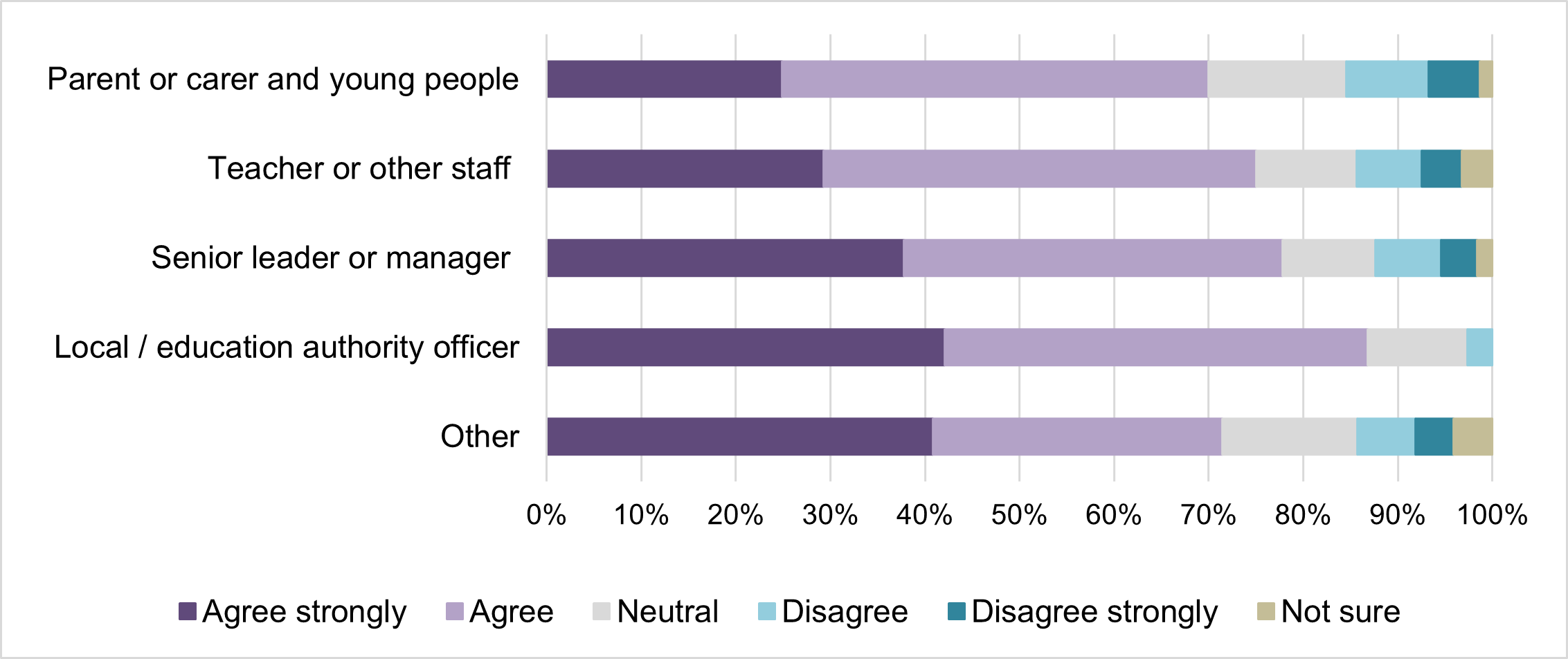
Overall, a majority agreed strongly or agreed that that the self-evaluation summary helps make sure that inspection starts with the school’s own view of its strengths and development areas; levels of agreement ranged from 87% of Local/education authority officers’ to 70% of ‘Parents or carers and young people’.
Question 5.2 – To what extent do you agree or disagree that schools should be able to use existing documents – like their Standards and Quality Report and their School Improvement Plan – instead of writing a separate self-evaluation summary for inspection?
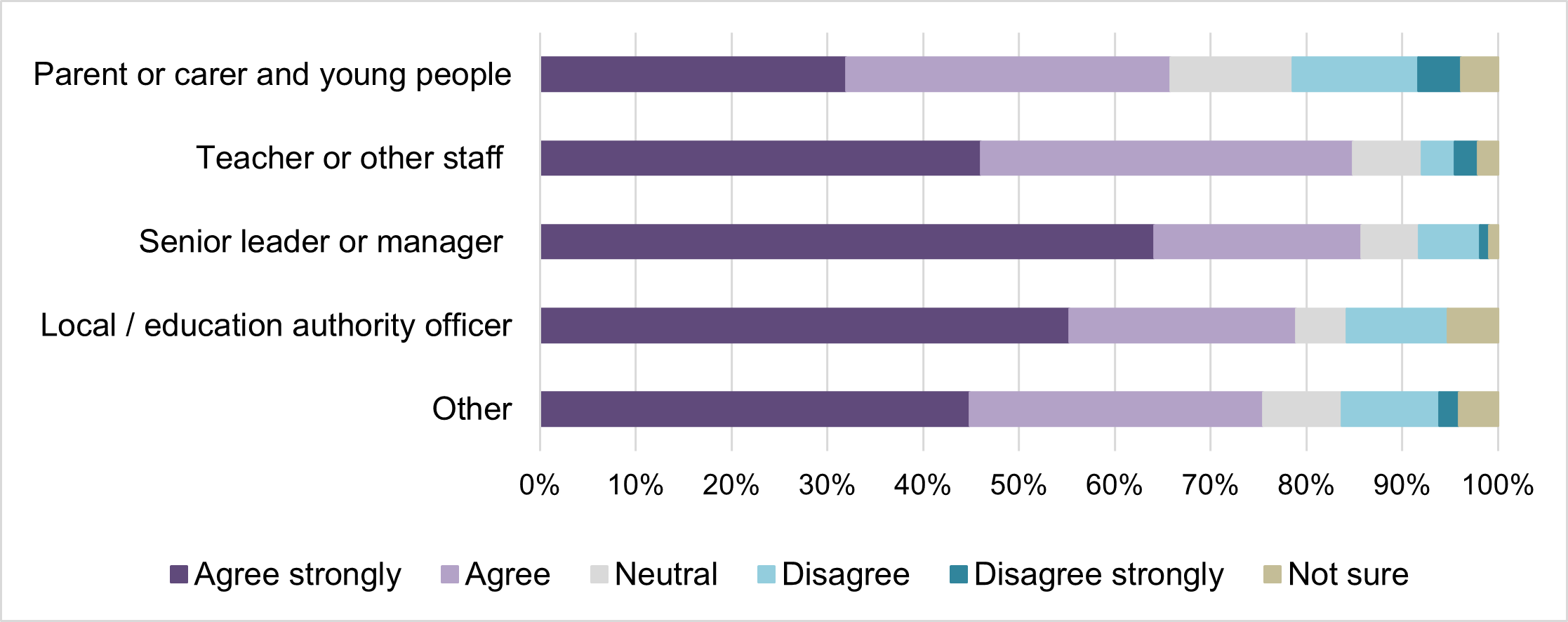
Schools being able to use existing documents – like their Standards and Quality Report and their School Improvement Plan – instead of writing a separate self-evaluation summary for inspection was also supported by most respondents. The proportion of respondents agreeing strongly or agreeing with this approach ranged from 86% of ‘Senior leaders or managers’ to 66% of ‘Parents or carers and young people’.
Question 5.3 – How important is it to gather views from each of the following groups before an inspection?
The charts below cover each of the four groups in turn: children and young people, school staff including support staff, parents and carers, and organisations and partners who work with the school.
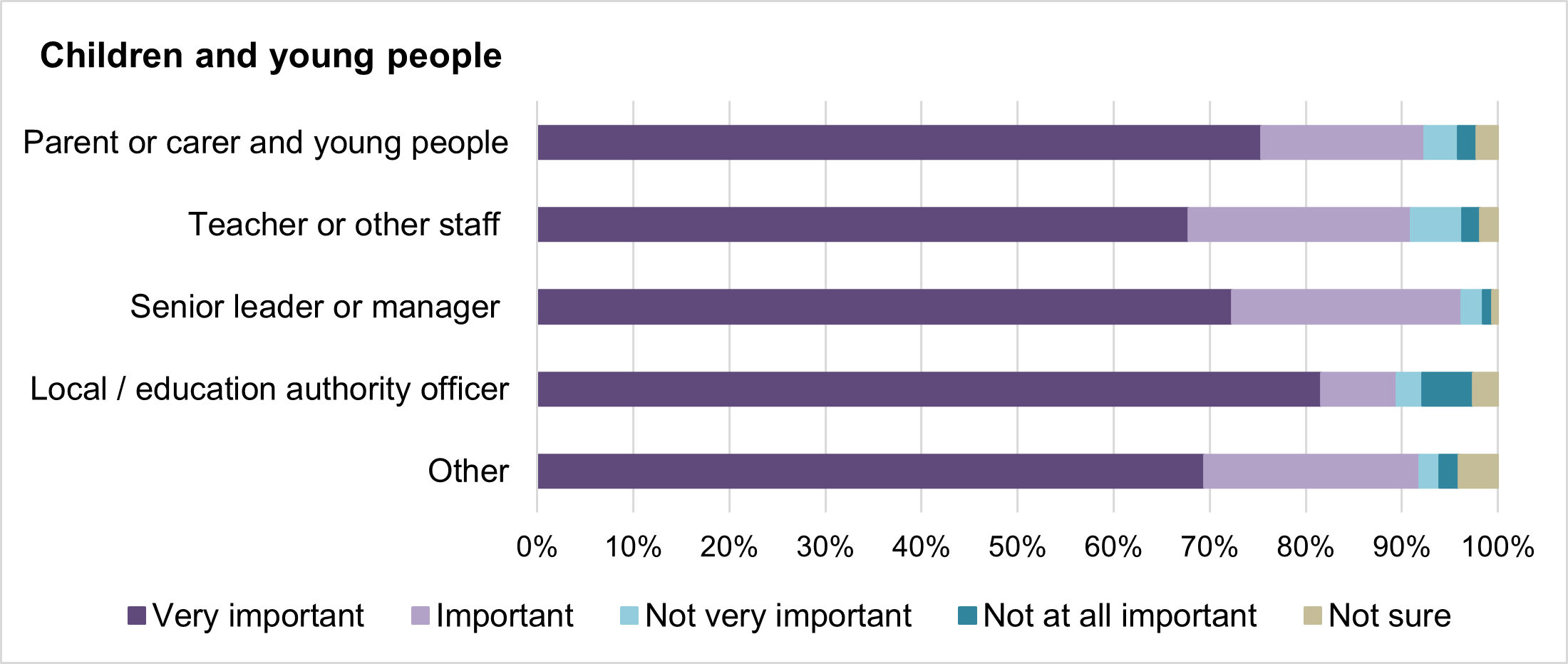
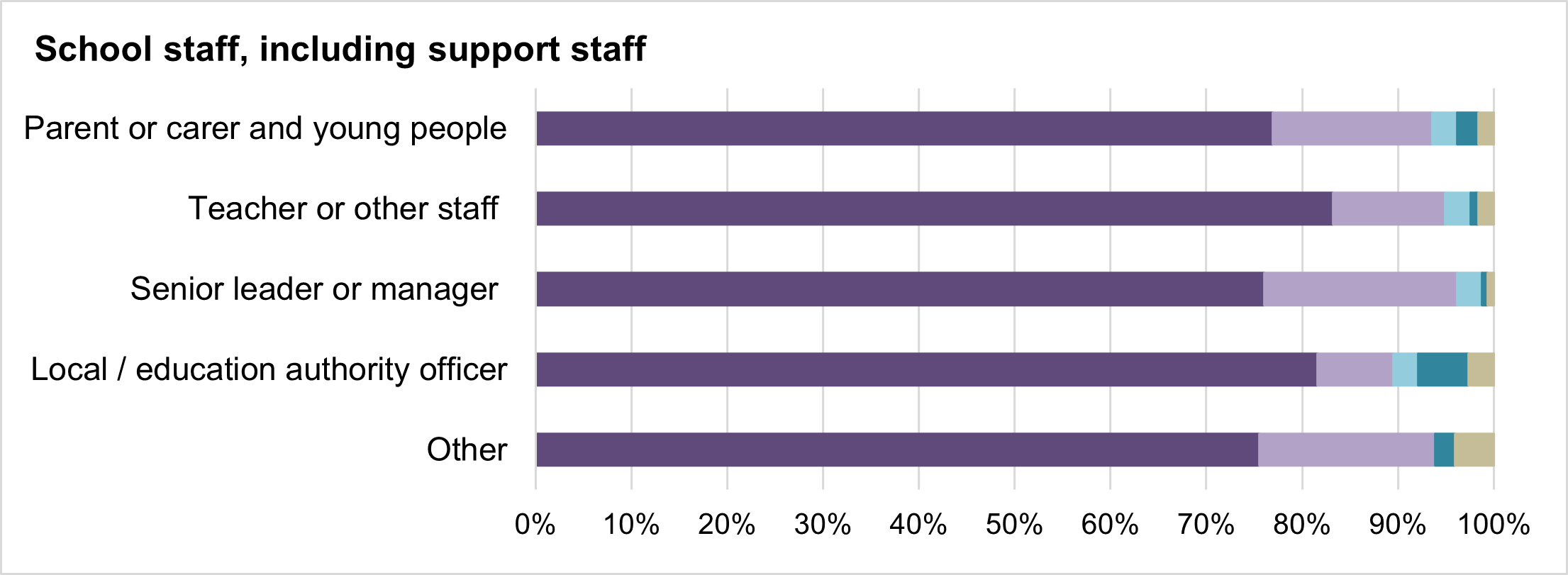
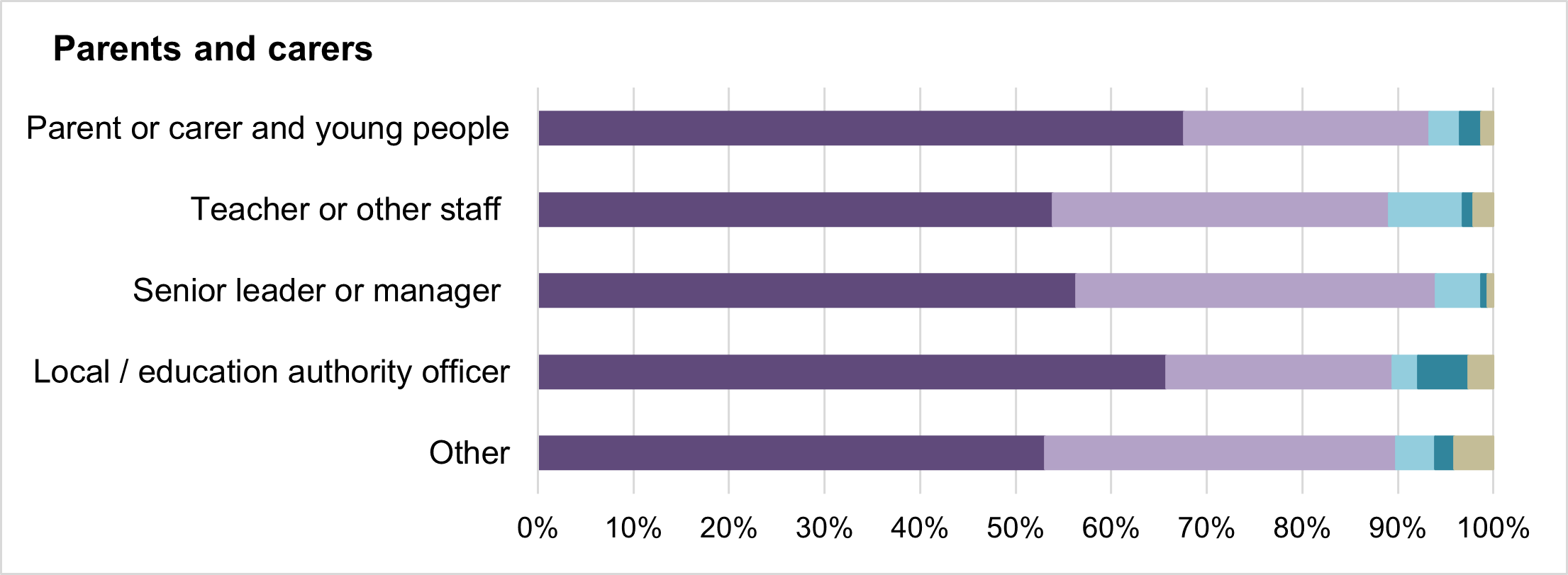
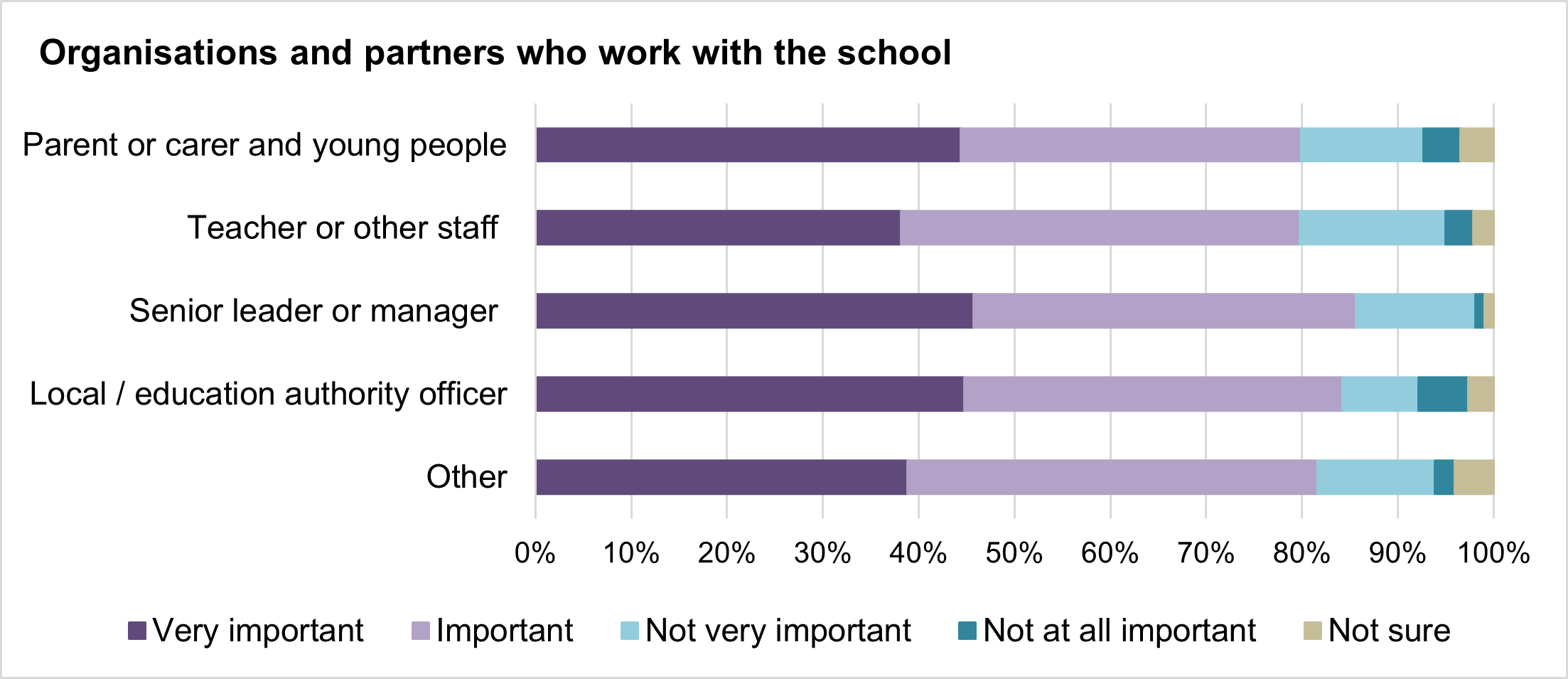
Overall, almost all respondents thought it was very important or important to gather views of ‘children and young people’, ‘school staff, including support staff’ and ‘parents and carers’, and most thought it was important to gather the views of ‘organisations and partners who work with the school’. Gathering the views of ‘children and young people’ and ‘school staff, including support staff’ tended to be seen as very important.
Design and content of a school inspection framework
The questionnaire explained that HM Inspectors use a framework, How Good Is Our School? (4th Edition), to ensure a consistent approach to evaluating the quality of education in schools, including primary, secondary, and special schools. Inspectors also use How Good Is our School? alongside the Advice on Gaelic Education when inspecting Gaelic Medium Education. The same framework is also used by schools to support their own self-evaluation, helping them reflect on what they do well and where they can improve. This shared approach ensures a common understanding of what high-quality education looks like across the education system. The framework includes a set of ‘quality indicators’ that cover key areas such as learning and teaching, leadership, wellbeing, and raising attainment.
How Good Is Our School? has not been updated since it was launched in 2015.
The questionnaire sought views on the format, purpose and content of a new school inspection framework.
Question 6.1 – Which of the following best describes your view on the format of a new school inspection framework?
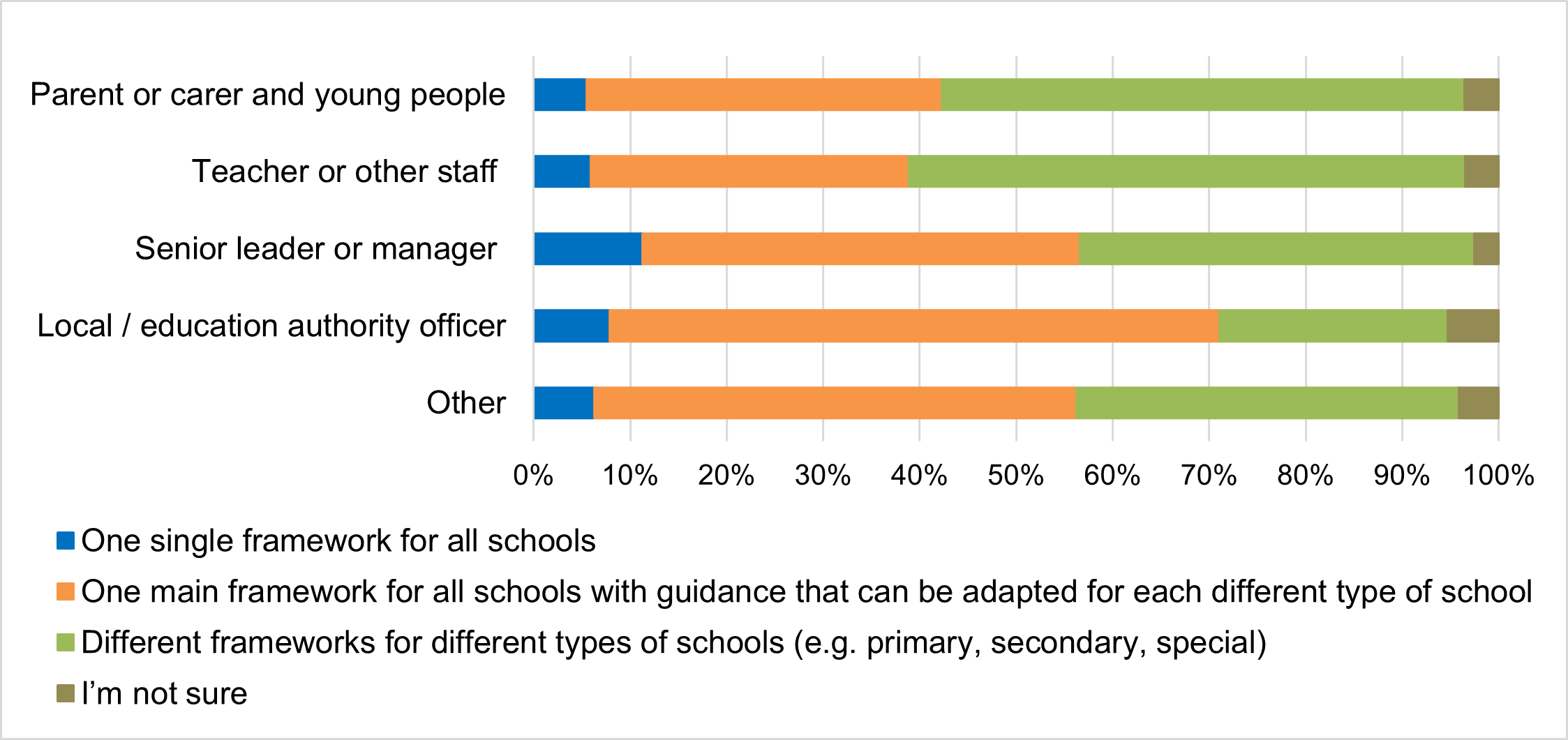
While there was very limited support for having one framework for all schools, opinion varied in relation to the other two options.
‘Local/education authority officers’ and ‘Senior leaders or managers’ were more likely to favour having one framework for all schools with guidance that can be adapted for each different type of school; levels of support for this option stood at 63% and 45% respectively.
‘Teachers or other staff’ and ‘Parents or carers and young people’ tended to prefer different frameworks for different types of school, with levels of support at 58% and 54% respectively.
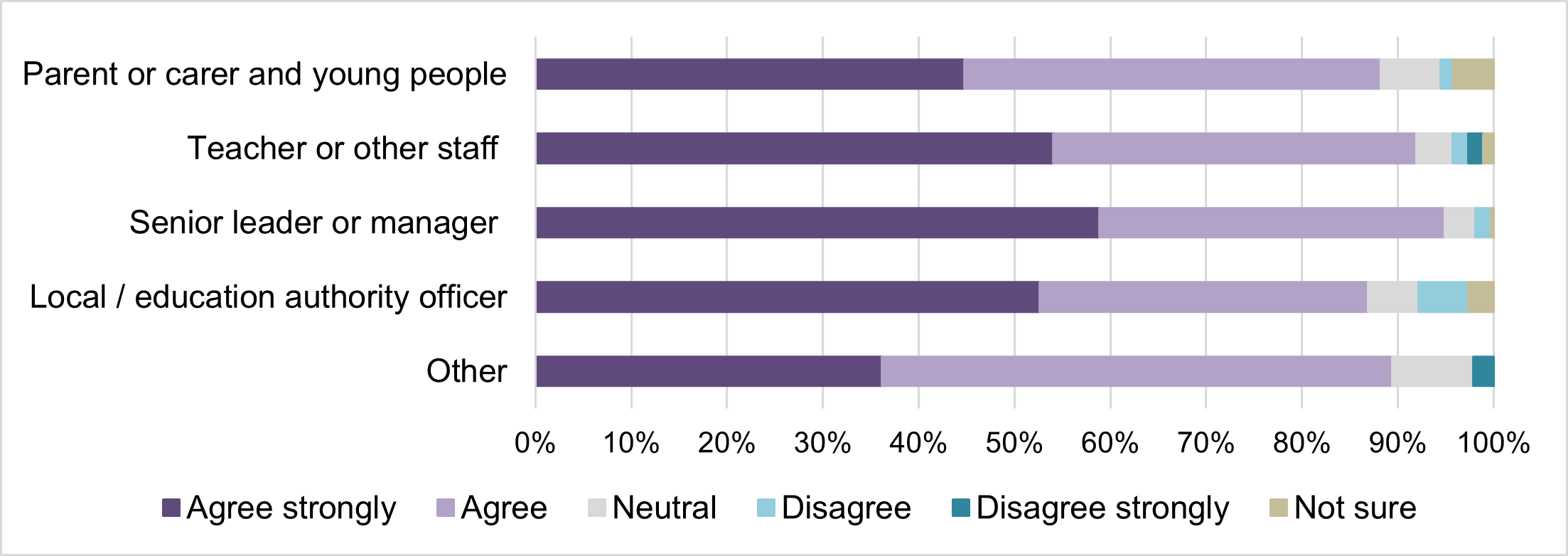
Question 6.2 – To what extent do you agree or disagree with the following statements about a school inspection framework?
It is helpful to use the same framework for both inspection and self-evaluation
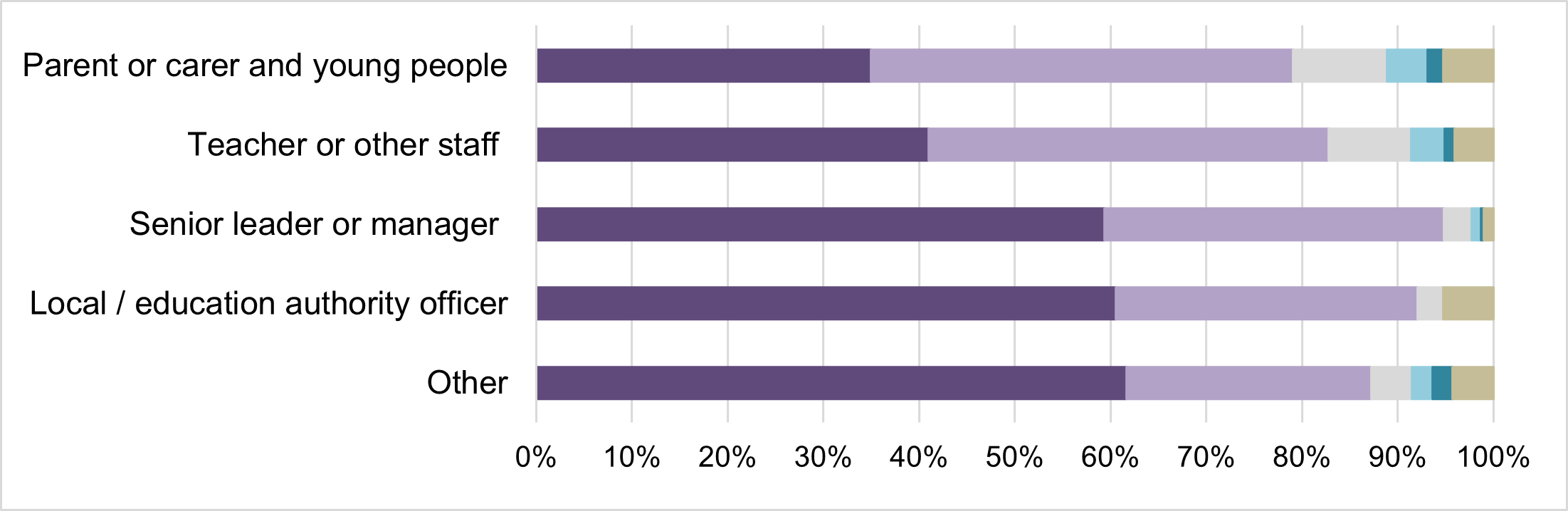
Annual (or more regular) updates to the framework would help schools use it more effectively
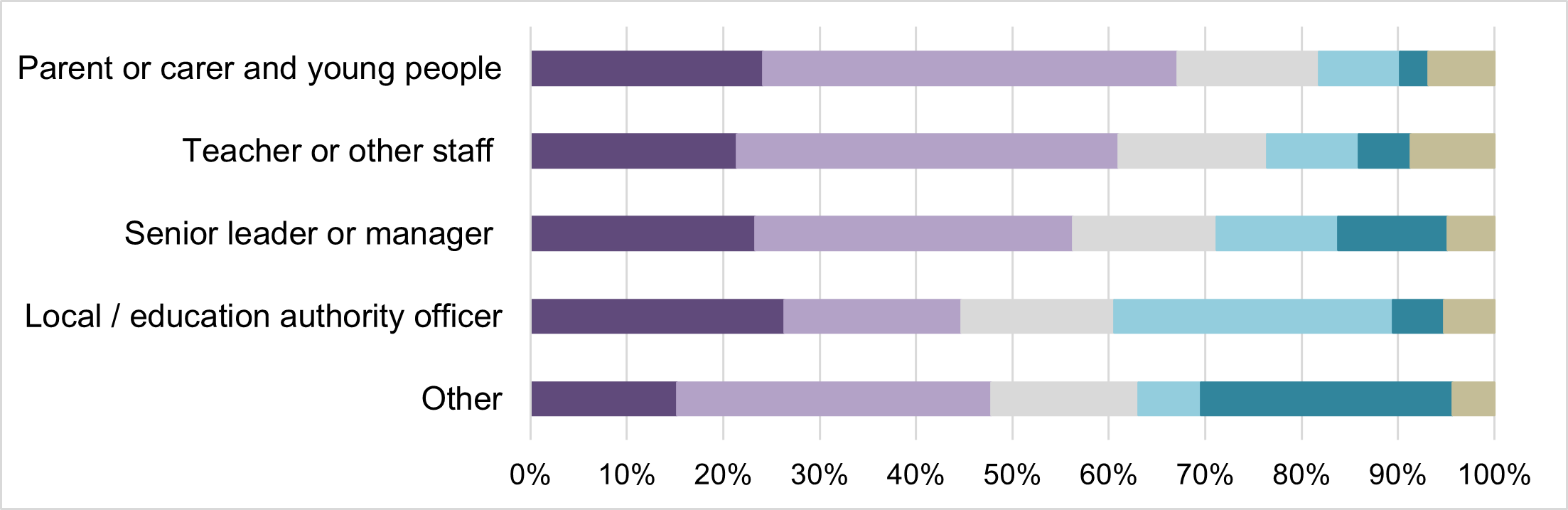
Including examples of effective practice would make the framework more useful
Analysis
Respondents across all the stakeholders groups were likely to agree strongly or agree that it would be helpful to use the same framework for both inspection and self-evaluation and that including examples of effective practice would make the framework more useful.
Opinion was more varied when it came to whether annual (or more regular) updates to the framework would help schools use it more effectively. While a majority of ‘Parents or carers and young people’, ‘Teachers or other staff’ and ‘Senior leaders or managers’ thought they would, only a minority of ‘Local / education officers’ (44%), thought so and a relatively high proportion of this group (34%) either disagreed or strongly disagreed that annual or more regular updates to the framework would help schools use it more effectively.
Question 6.3 – How important do you think each of these areas is for inclusion in a school inspection framework?
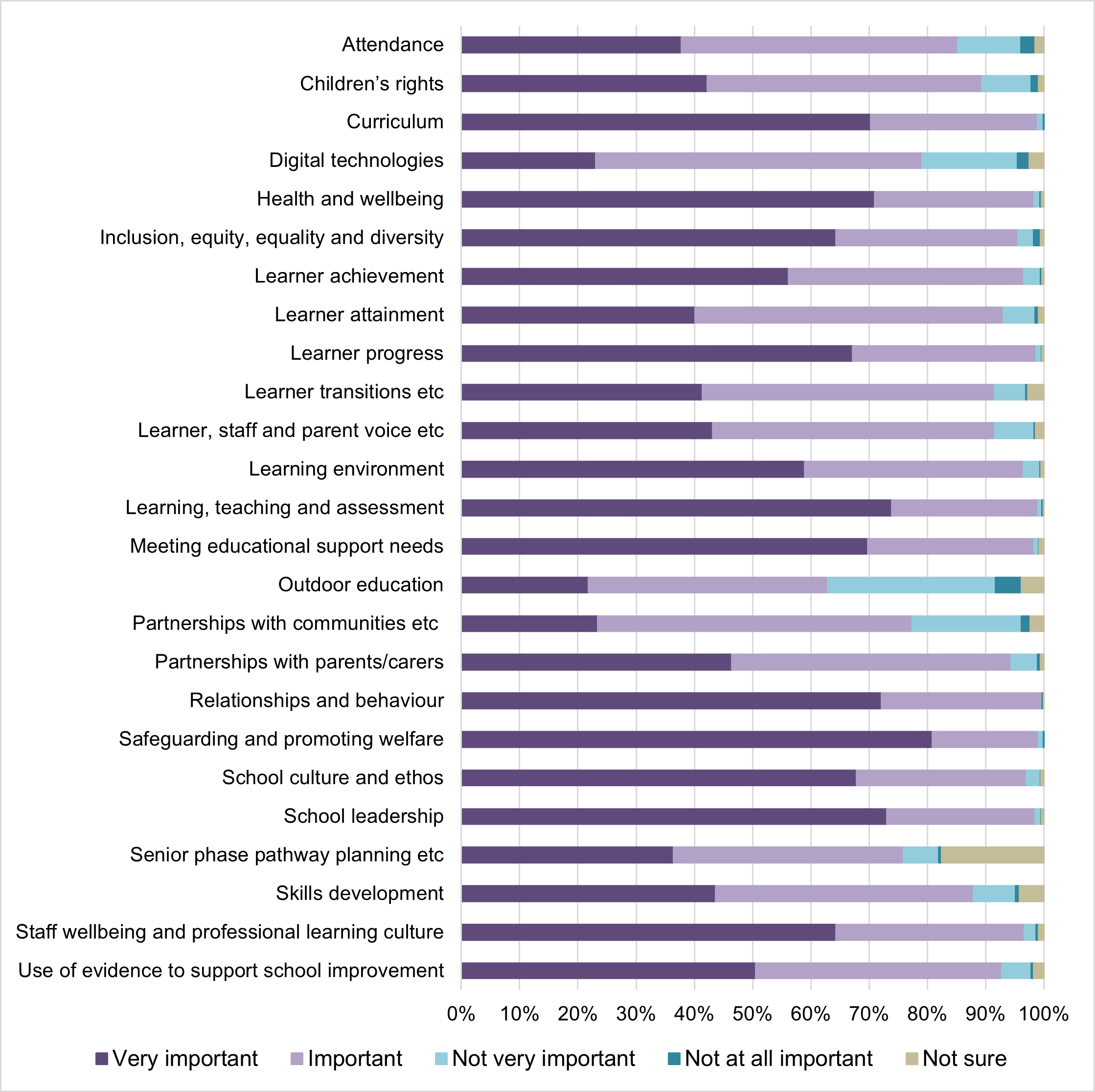
Question 6.3 asked respondents about the importance of 25 different areas being included in an inspection framework. The chart presented below presents summary findings only. A breakdown for each area by stakeholder groups is included in tables in Annex B.
A small number of the area descriptions in the above chart have been abbreviated in the chart above as follows: ‘Learning transitions etc’ for ‘Learner transitions and planning for progression to positive post-school destinations’; ‘Learner, staff and parent voice etc’ for ‘Learner, staff and parent voice in shaping and evaluating school improvement’; ‘Partnerships with communities etc’ for ‘Partnerships with communities, other services and organisations’; and ‘Senior planning pathway etc’ for ‘Senior phase pathway planning and vocational learning’.
All 25 areas were seen as very important or important by the majority of respondents. This was particularly the case for ‘learning, teaching and assessment’, ‘relationships and behaviour’ and ‘safeguarding and promoting welfare’, all three of which were seen as very important or important by 99% of respondents.
Although still seen as very important or important by a clear majority, ‘outdoor education’, ‘partnerships with communities, other services and organisations’ and ‘digital technologies’ were more likely to be seen as not very important or not at all important than other areas.
Respondents were most likely to be unsure about the importance of the ‘Senior phase pathway planning and vocational learning’.
When asked whether there were any areas that were not listed but that should be included in the inspection framework, the most frequently made suggestions were:
- ASN-related support and experience; ‘Parents or carers and young people’ and ‘Teachers or other staff’ were particularly likely to make this suggestion
- moral, spiritual, and social education; this was highlighted across respondent groups
- staffing levels, absence rates and retention information; ‘Senior leaders or managers’ and ‘Teachers or other staff’ were most likely to make this suggestion
Other areas put forward included: local authority performance and support; the local context, including the socio-economic profile of the area; resources, including funding and spending levels; quality assurance practices; Learning for Sustainability; and creativity and the use of creative approaches.
Reporting on the outcome of inspections
HMIE is reviewing how inspection findings are reported and shared following school inspections. Currently, HM Inspectors publish:
- a short letter for parents and carers, summarising strengths, areas for development, and inspection grades
- a separate, detailed report for the school, setting out the full findings
- collated results from the pre-inspection questionnaires
This section of the questionnaire asked whether this approach continues to meet the needs of different audiences, or whether it should change. It was looking to understand:
- whether inspection findings should be presented differently for different audiences
- how inspection findings can be made more accessible and useful to children and young people
- how reporting can better support the purposes of inspection as set out in the Education (Scotland) Act 2025
The questionnaire noted that respondents’ views will help HMIE decide whether to retain the current reporting model or introduce changes to improve clarity, accessibility, and impact.
Question 7.1 – How should inspection findings be presented to different audiences? Please select the option which best reflects your view.
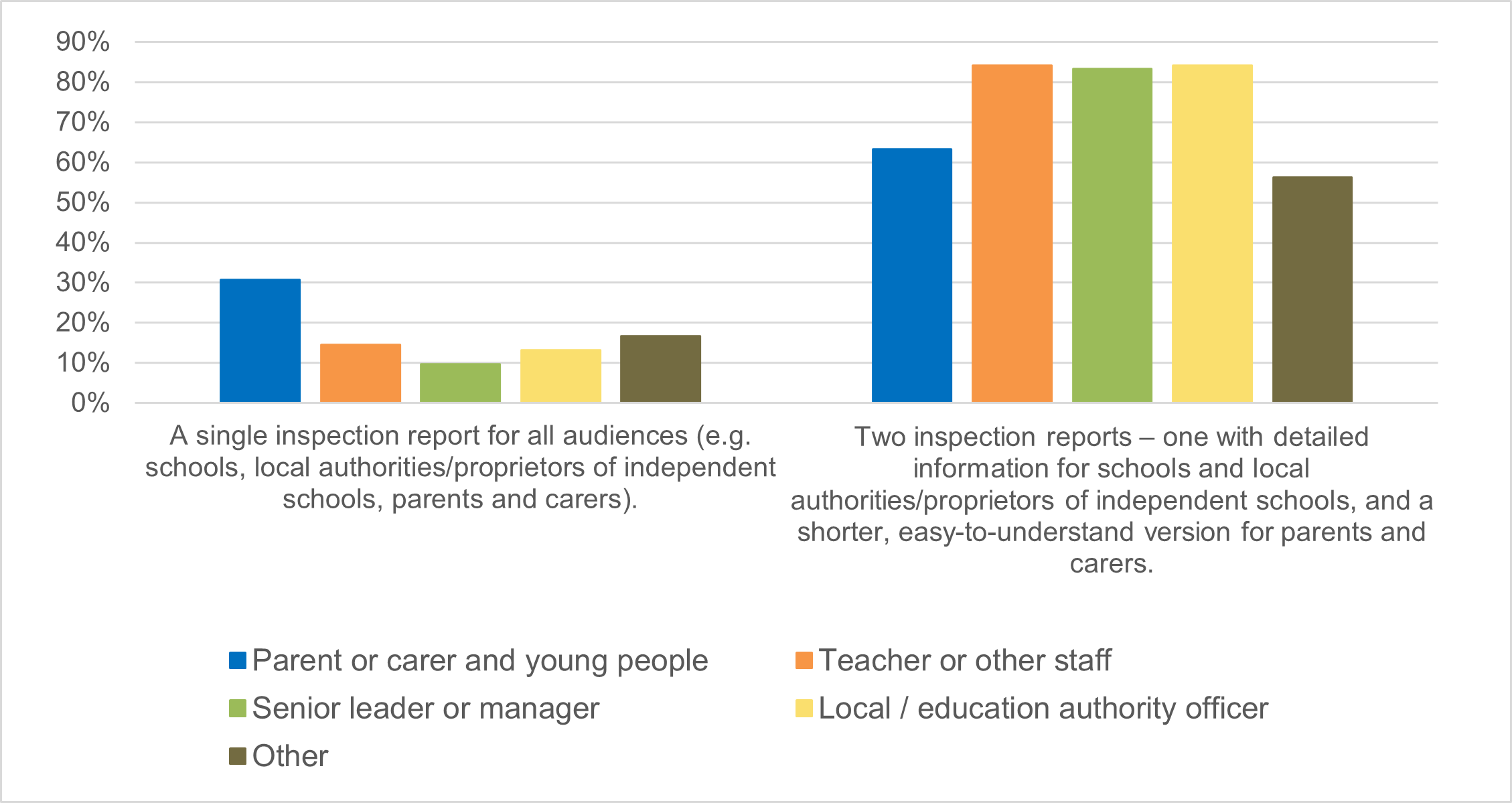
Respondents had a clear preference for there being two inspection reports – one with detailed information for schools and local authorities/proprietors of independent schools, and a shorter, easy-to-understand version for parents and carers. However, there was some support for a single inspection report from those in the ‘Parent or carer and young people’ stakeholder group, with around 1 in 3 (31%) preferring this option.
Respondents who preferred an ‘Other’ approach and went on to give further information, were most likely to favour the inspection being presented through the two inspection reports specified, but with other routes or mechanisms also available for sharing the findings with different audiences. ‘Local/education authority officers’ were particularly likely to make this suggestion, with references to children-friendly or easy-read versions of written reports, video or in-person presentation of findings, and materials that are adaptable and can be tailored to audiences’ particular needs. The range of suggestions made very much reflected those highlighted by respondents at the next question in relation to sharing findings with children and young people.
There were also suggestions that the two-report approach is a reasonable one, as long as both are published and available to anyone who wishes to see them; ‘Parents or carers and young people’ were most likely to make this point. This was associated with a broader point that transparency is key, with everyone having a right to access all findings from the inspection.
A number of the other points made also addressed either to whom information should be available or the content of one or both of the reports proposed in the question. Suggestions included that there could be a single report for everyone, but that it should be written in a way that makes it accessible to a wider audience, including through the use of key findings or a summary.
An alternative perspective was that a single report cannot meet the needs of all audiences, and that parents or carers are more likely to engage with a shorter report setting out key messages than a longer version that includes all the information and feedback that is important to schools and the local authority.
Question 7.2 – What do you think are effective ways of sharing inspection findings with children and young people?
In relation to effective ways of sharing inspection findings with children and young people, respondents made suggestions relating to the best format or media for sharing views, the style and content, and the best dissemination routes.
- In terms of formats, the most frequently made suggestions were:
- in person presentations or meetings, with an opportunity to discuss and share views on the findings
- a written report / feedback document
a video / digital message, with references to the use of social media (via a podcast, using TikTok or Instagram style reels etc.)
Other formats referenced included: comic strips, infographic or animations; sketch notes; posters or leaflets; via letter or email; through a newsletter or a notice board; and using PowerPoint and slides.
There was also a suggestion that the same methods or similar approaches to those already being used could be deployed, with specific reference to ‘How Good Is Our School’ and ‘2 stars and a wish’.
The importance of any approach being child friendly and age appropriate was also highlighted, and it was also noted that, where appropriate, the findings should be tailored to meet children’s particular needs. In terms of content, there was reference to:
- summary findings only, with simple, clear messages
- explaining what inspectors looked at and what the findings mean for them as pupils
- covering what is good and working well as well as what is not working well and any improvements required
It was also noted that the findings should acknowledge the contribution that children and young people made to the inspection and make clear how their views and experiences have been taken on board.
Those who commented on who should lead on sharing inspection findings with children were most likely to suggest that school staff should be involved, but inspection team or pupil-led presentation of findings were also suggested. These suggestions were sometimes linked to findings being shared at school assemblies.
Question 7.3 – What makes an inspection report useful to you?

Question 7.4 – Which three features of inspection reporting do you think matter most?
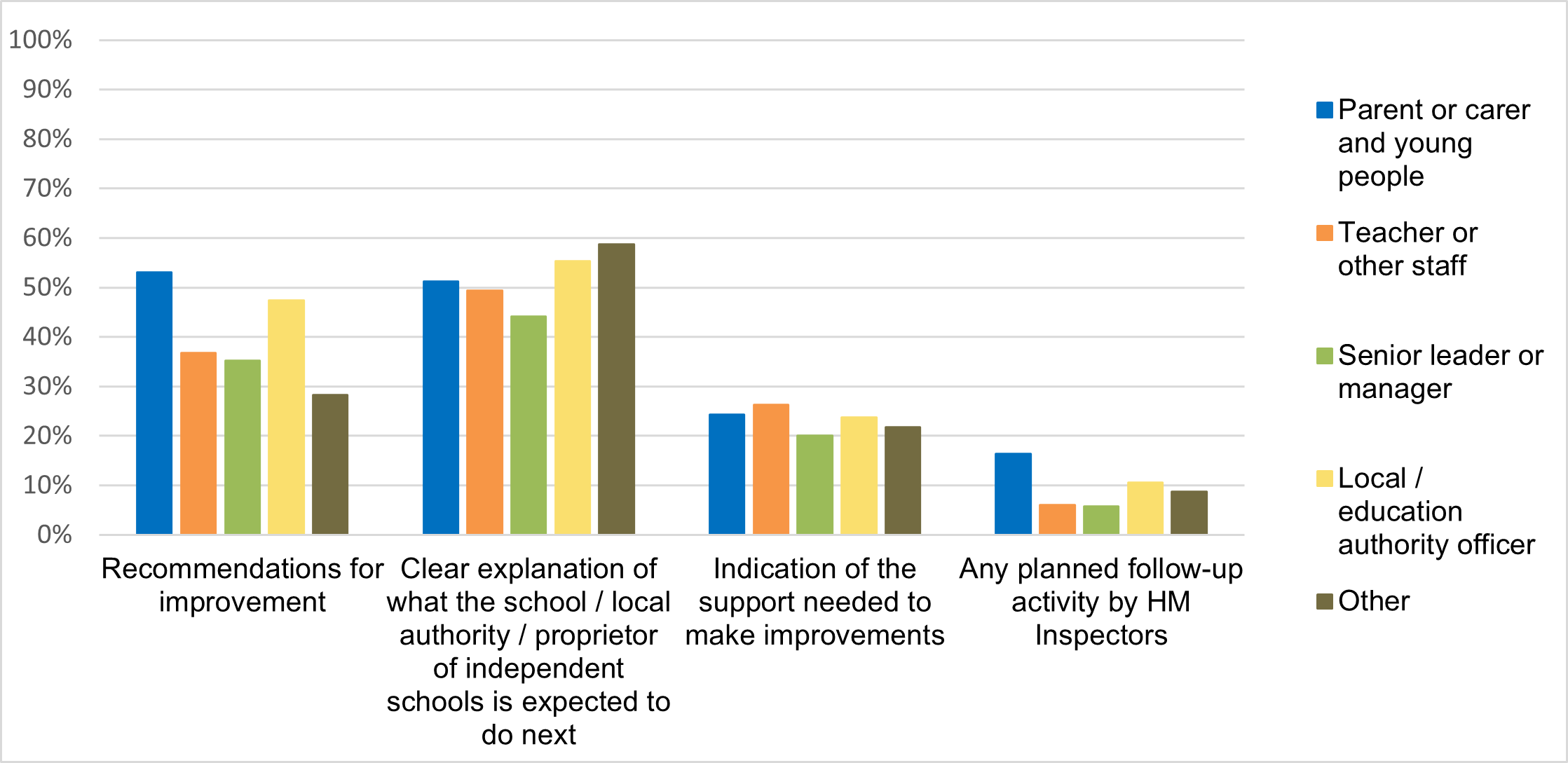
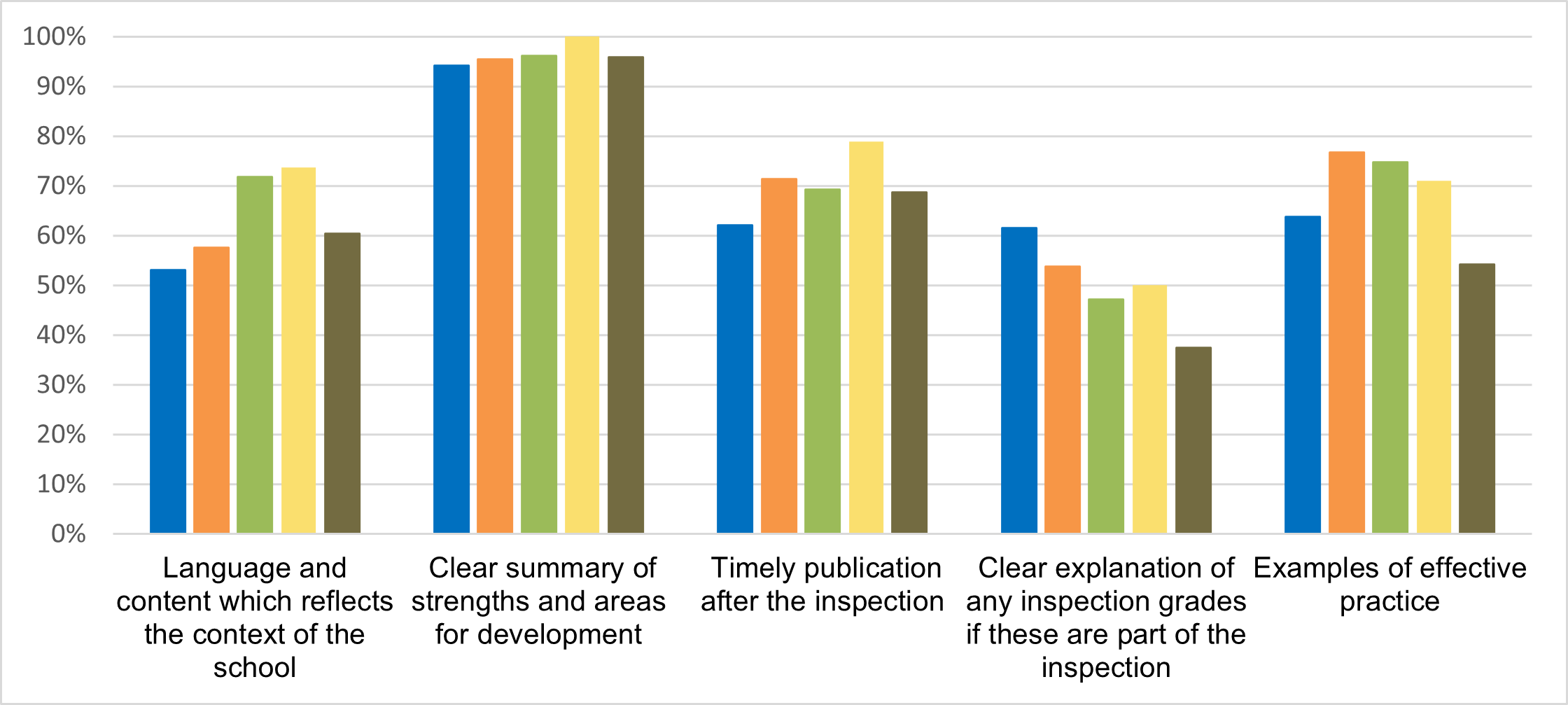
A ‘clear summary of strengths and areas for development’ was considered useful by almost all respondents (95% overall and ranging between 94% of ‘Parents or carers and young people’ up to 100% of ‘Local / education authority officers’). It was also most likely to be selected as one of the three features that matter most, with 88% of all respondents putting it as one of their top three priorities.
Across the other features, in each case a majority of respondents thought they would be usefully included – ranging from 76% for a ‘clear explanation of what the school / local authority / proprietor of independent schools is expected to do next’ down to 53% for a ‘clear explanation of any inspection grades if these are part of the inspection’.
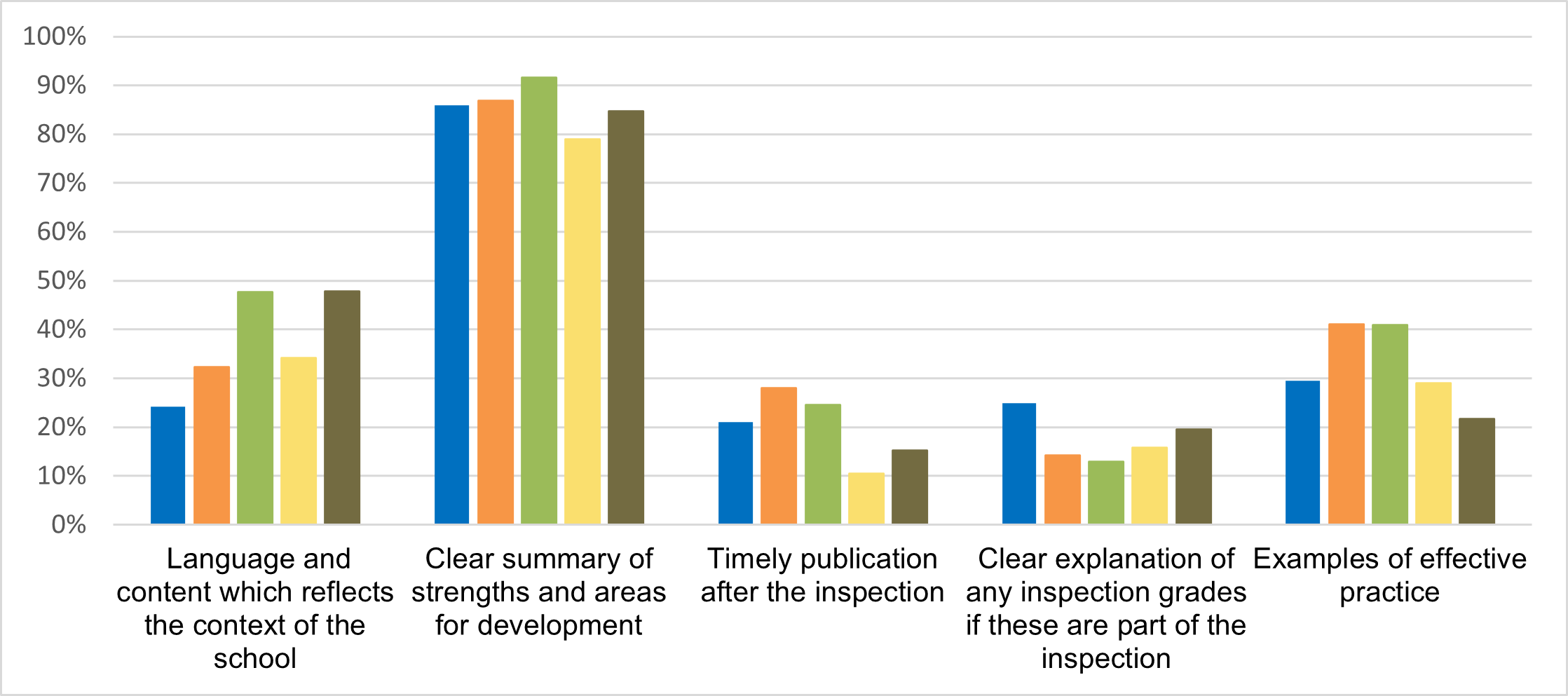
As noted above, respondents were most likely to select a ‘clear summary of strengths and areas for development’ as one of the features that matter most (chosen by 88%), followed by ‘clear explanation of what the school / local authority / proprietor of independent schools is expected to do next’ (chosen by 49%) and ‘recommendations for improvement’ (chosen by 41%).
The different stakeholder groups tended to hold quite similar views – for example, a ‘clear summary of strengths and areas for development’ was most likely to be chosen as a top priority by each group (ranging from 92% of ‘Senior leaders or managers’ to 79% of ‘Local / education authority officers’). However, there were some areas in which there were (relatively small) variations in views. For example:
- ‘Senior leaders or managers’ were more likely to select ‘language and content which reflects the context of the school’ as being one of the features that matters most
- ‘Parents or carers and young people’ and ‘Local / education authority officers’ were more likely to put ‘recommendations for improvement’ in their top three than ‘Teachers or other school staff’ and ‘Senior leaders or managers’
- ‘Teachers or other school staff’ and ‘Senior leaders or managers’ were more likely to put ‘examples of effective practice’ in their top three than ‘Parents or carers and young people’ and ‘Local / education authority officers’
Respondents were also given an option to identify any ‘other’ features of inspection reporting that were not on the list but which they thought would be useful. Relatively few specific suggestions were made, but small numbers of respondents did suggest the following additional features might be valuable:
- constructive and practical feedback or guidance on how to improve and suggested timescales for improvements to be delivered
- an explanation of the local authority’s role and responsibilities, for example in relation to funding and staffing levels and how the local authority can support schools to succeed
- summary information on the views expressed by pupils, parents or carers and school staff, including how these have informed inspection findings
In the event of a follow-up inspection, a follow-up report setting out progress against any areas of improvement was also suggested.
Drawing the themes together, a ‘Trade union’ respondent commented that the inspection report would be useful if it performs a formative function rather than a summative judgement about a school’s performance at one moment in time. They went on to suggest that this means understanding the current context of a school, including the resources available to it and the parameters it is operating in locally.
Inspecting nursery classes
Some schools include nursery classes. These are inspected using the new, separate Quality improvement framework for the early learning and childcare sector developed by HM Inspectors and the Care Inspectorate. This framework is in use from September 2025. If a nursery class has been inspected by the Care Inspectorate within the last 18 months, it may not be included in the school inspection. This arrangement will continue. When HM Inspectors do include a nursery class as part of a school inspection, it currently receives a separate grade and summary of inspection findings.
The questionnaire noted that this consultation exercise does not cover a new joint framework or inspection arrangements. It did seek views specifically on whether nursery classes should continue to receive separate grades and summary of findings when included in a school inspection.
Question 8.1 – To what extent do you agree or disagree that, when a nursery class is included in a school inspection, its evaluation should be reported separately from the rest of the school?
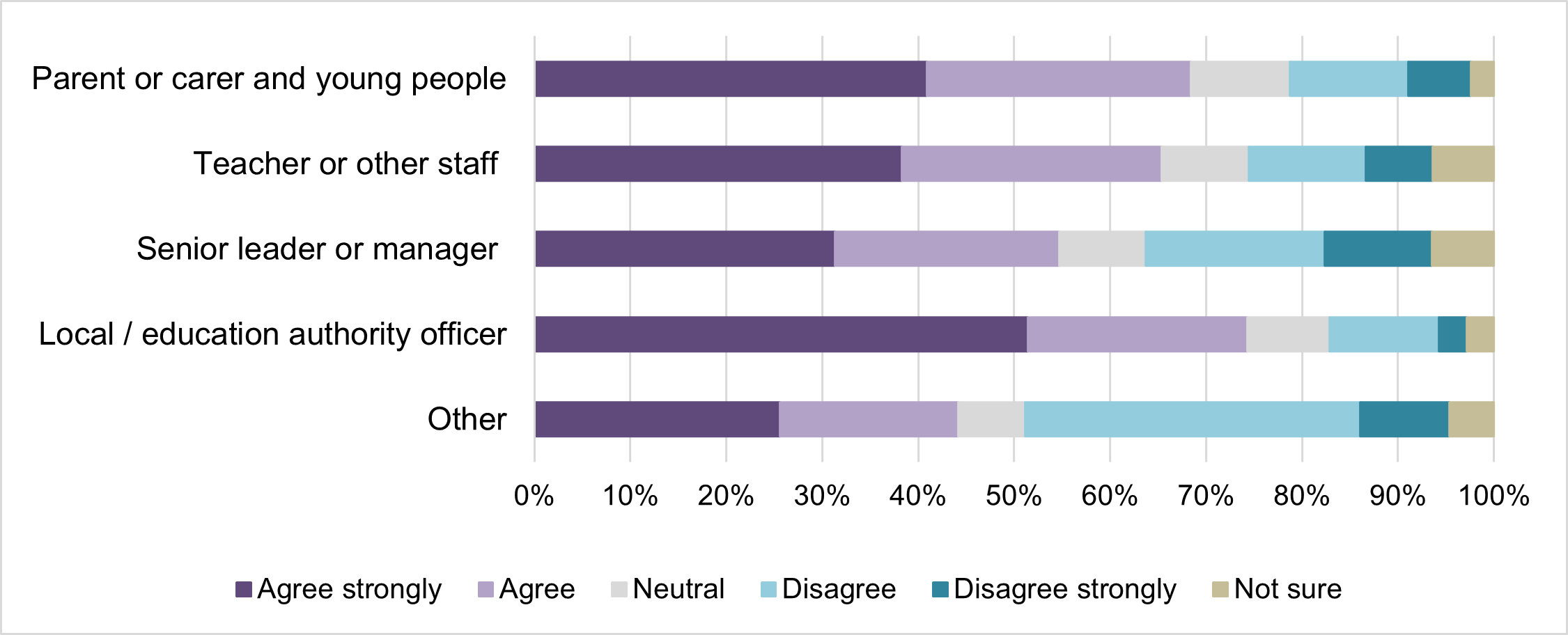
Overall, respondents tended to agree that, when a nursery class is included in a school inspection, its evaluation should be reported separately from the rest of the school. ‘Local authority / education officers’ were particularly likely to agree strongly agree or agree with the approach, with ‘Senior leaders or managers’ less likely to agree strongly or agree.
Inspection follow-up
School improvement is based on the principle that schools continuously evaluate their own work, set priorities, and take action where improvement is needed. This process is supported by local authorities / proprietors of independent schools. Currently, as part of inspection, HM Inspectors consider how well a school can lead its own improvement independently and/or supported by the local authority / proprietors of independent schools. Where an inspection team identifies that a school is not providing a sufficient quality of education, HM Inspectors continue to engage with the school. This may include a follow-up inspection.
The questionnaire sought views on how HM Inspectors should engage with schools after an inspection.
Question 9.1 – In what circumstances do you think HM Inspectors should engage with a school after an inspection?
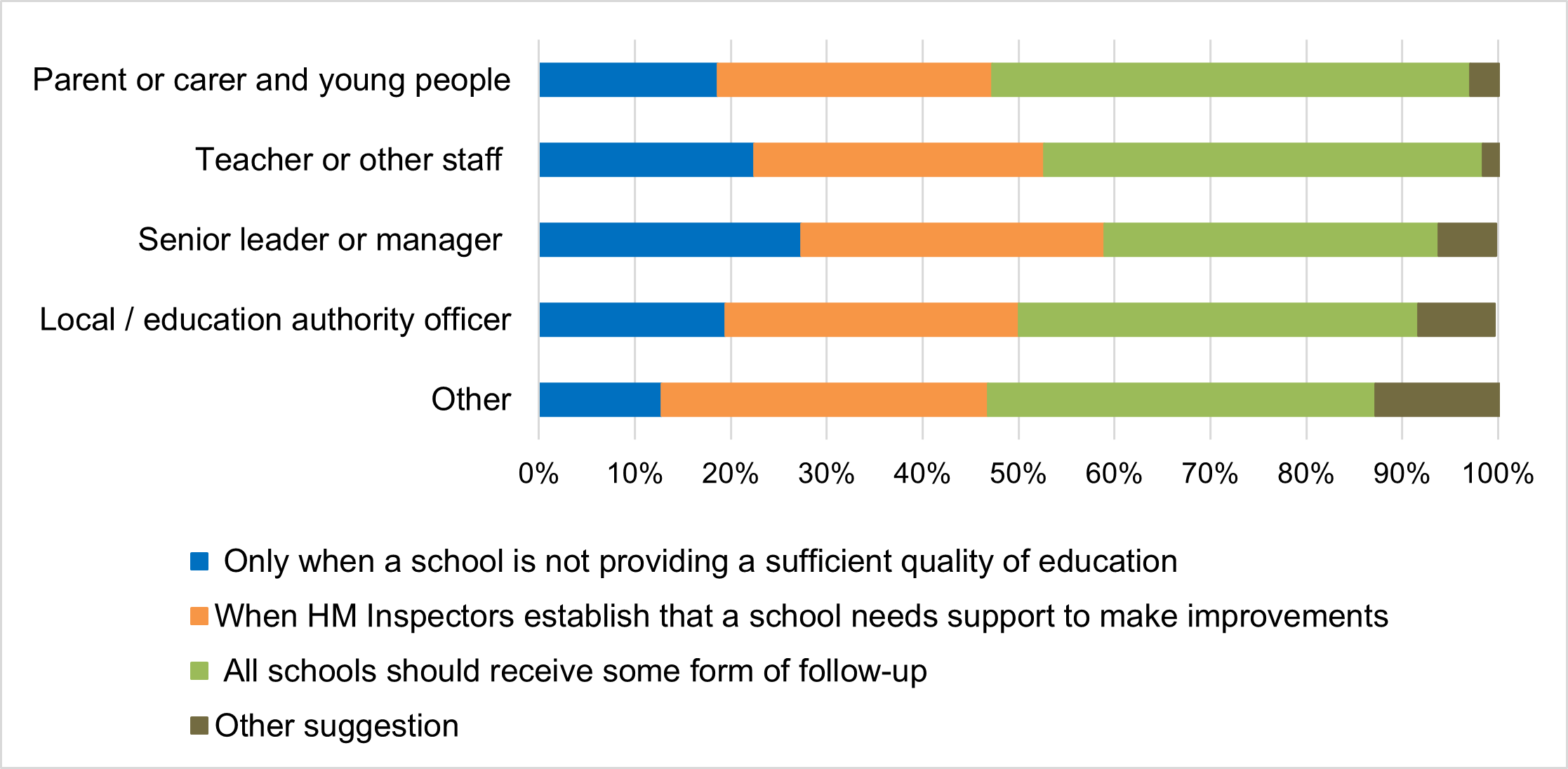
Across all the stakeholder groups, respondents were most likely to think that all schools should receive some form of follow-up after an inspection. ‘Parents or carers and young people’ were particularly likely to favour this approach. Other stakeholders groups, and especially ‘Senior leaders or managers’ were more evenly divided across the three options set out.
Other suggestions made, albeit raised by relatively small numbers of respondents, included that:
- more than one of the options presented in the consultation paper will be needed
- the nature of engagement should depend on the inspection model going forward with scope for engagement to take different forms if the model is rethought
- post inspection support and driving improvement should come from the local authority rather than HMIE, or should be decided in discussion between the school, local authority and HMIE
- HMIE should be involved in follow-up if a school has no credible plan for improvement, if the school leadership team is not thought capable of taking forward improvements or if the local authority cannot provide adequate support
- no return HMIE visits should be arranged since these add to stress
Points on specific circumstances in relation to post inspection follow-up included that:
- this should take place whenever a report raises concerns about inclusion, children’s rights, or how the school understands and responds to neurodivergent learners
- churches should be involved in follow-up if support is needed in relation to the religious nature of a school
It was also observed that, as well as addressing any problems, follow-up could be used to ensure that examples of best practice are captured and shared.
There was also a view, particularly from some ‘Senior leaders or managers’ that HMIE should generally have a more proactive relationship and better dialogue with schools, including to provide advice and support at all times. Related suggestions included that schools should have an opportunity to provide feedback on their experience of the inspection process, and that HMIE inspectors could come into schools to demonstrate the teaching practice they recommend. ‘Local authority’ respondents suggested:
- ongoing HMIE engagement with schools as ‘critical friends’ to support improvement activity alongside the authority
- annual engagement between HMIE, head teachers and local authorities that could identify themes for consideration, linked to national thematics and national messaging from inspection