

Children and Young People feedback
The views of children and young people on school inspections were an important part of the consultation process. This section of the report presents a question-by-question analysis of the answers children and young people gave as part of the consultation.
The questionnaire covered the following eight areas:
- Section 1: What do inspectors look at when they inspect schools?
- Section 2: People who are involved in school inspection
- Section 3: How often schools are inspected
- Section 4: When schools are told inspectors are coming
- Section 5: Information before an inspection takes place
- Section 6: How inspectors describe how well a school is doing
- Section 7: How children and young people find out what inspectors said
- Section 8: Follow up inspection and support
A total of 14 closed and three open questions (either standalone or asking for an explanation of views at a closed question) were asked. In addition, two of the closed questions included an ‘Other’ option, with respondents asked to make suggestions.
Children and young people wishing to respond could access both the main questionnaire (PDF) and also an easy-read version of the questionnaire (PDF).
The introduction to the questionnaire made it clear that the views of children and young people are valued because of their experiences and the insights they have into school life. It stressed that children and young people can make a difference, by helping inspectors see what is working well and what needs to change and shaping school inspections in future.
Involving children and young people with additional support needs
The children and young people questionnaire incorporated a range of universal accessibility supports, including a video animation on how inspection currently works, with audio and captioned text, and the provision of easy‑read and British Sign Language materials, to enable inclusive engagement.
In addition, during the online consultation period, HM Inspectors held 12 in-person discussions to find out the views of children and young people with additional support needs (ASN). A total of 46 children and young people took part in these sessions. Each discussion was tailored to meet the communication needs of the participants. As shown in the photograph, HM Inspectors used a range of resources including paper-based questionnaires, expression boards, vote boards and contextual symbol sets to engage with participants. They also provided scribe and reading support.
Feedback from the discussions is highlighted at relevant questions from the online questionnaire. A minority of participants at the focus groups completed the online questionnaire with the support of adults and HM Inspectors and their responses are included in the overall analysis
Who replied to the children and young people questionnaire
A breakdown of the number of responses according to place of learning is set out in the table below.
Children and Young People respondents by learning place
| Where you learn | Number | % of total |
|---|---|---|
| Primary school | 314 | 65% |
| Secondary school | 131 | 27% |
| Special education school | 3 | 3% |
| Independent school | 4 | 1% |
| Other | 20 | 4% |
A total of 482 responses were received to the children and young people online questionnaire. The largest number of these were from those at primary school – 314 responses – with a further 131 coming from those at secondary schools. There were smaller numbers from both special education schools, and independent schools. The ‘Other’ group (20 respondents) includes respondents from colleges, people not in education just now and some who did not answer the question. Around half of those indicating ‘Other’ either preferred not to say or chose not to give any answer about the place they go for learning.
Respondents were asked whether they were a child or young person answering for themselves, or an adult answering on behalf of a school-age child. Sixty-seven of the 482 responses were by an adult answering for a child. Their answers at open questions were often more detailed than those of the children and young people. Where this is the case, key points have been summarised at the end of each section of the consultation feedback.
Children and Young People respondents by child / young person or adult
| Where you learn | I am a child or young person answering for myself | I am an adult answering on behalf of a school-age child | Total |
|---|---|---|---|
| Primary school | 279 | 35 | 314 |
| % of primary school who answered | 89% | 11% | - |
| Secondary school | 115 | 16 | 131 |
| % of secondary school who answered | 88% | 12% | - |
| Special education school | 11 | 2 | 13 |
| Independent school | 2 | 2 | 4 |
| Other | 8 | 12 | 20 |
| Everyone who answered | 415 | 67 | 482 |
| % of everyone who answered | 86% | 14% | - |
Children and young people were also asked where they lived. Those that answered this question lived in one of 30 of Scotland’s 32 local authority areas. The three areas with the highest number of respondents were Angus, South Lanarkshire and Midlothian. There were no respondents from Perth and Kinross or Renfrewshire.
Further information about who responded, along with a full set of results at the closed questions, are available at Annex A.
What do inspectors look at when they inspect schools?
The first section of the questionnaire focused on what inspectors look at when they visit a school, to have a good understanding of how well children and young people are learning and how teachers are helping them. Children and young people were asked about the things they think are the most important for inspectors to look at if they were visiting their school. A list of 18 different options were given, with answer choices ‘Important’, ‘Not important’, and ‘I’m not sure’.
Question 1.1 – Look at the list below and tell us how important each one is to you. Choose one of the options for each answer. If you don’t know, just select the option, ‘I’m not sure’
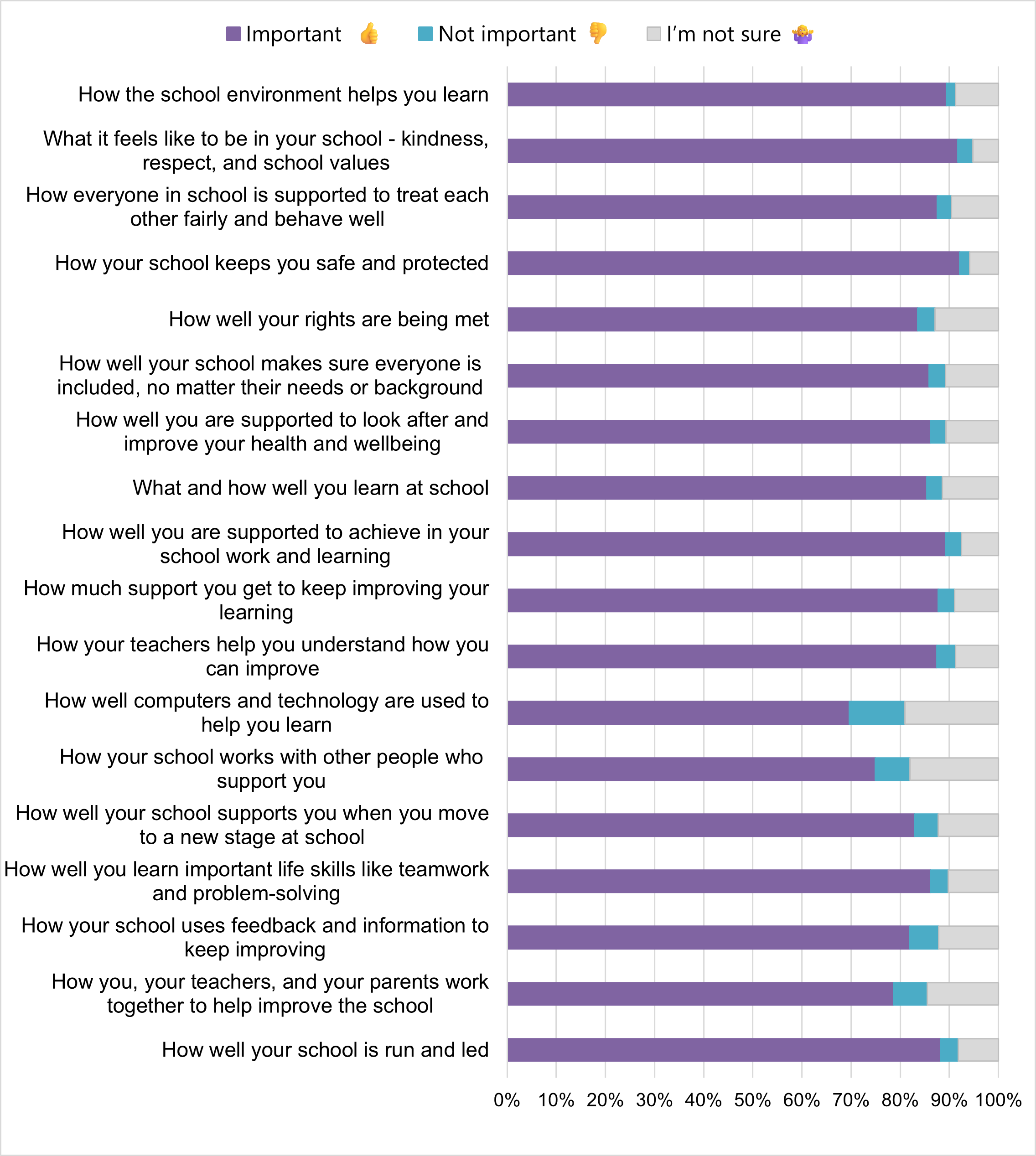
This chart shows the overall answer for each option at Question 1. The answers for each option depending on where people go to learn, are shown in Annex A.
All the options scored highly in terms of importance, with ‘What it feels like to be in your school’ and ‘How school keeps you safe and protected’ most likely to be important to children and young people. Almost all of the people who answered – more than 9 out of 10 – thought these were important.
Although still seen as important by a majority or most, ‘How computers and technology are used to help you learn’ and ‘How your school works with other people who support you’ also had the most children and young people who were either not sure or who did not see these options as important.
There were no particular differences in how children and young people from primary schools, secondary schools, special education schools and independent schools answered this question.
Question 1.2 – Do you think there are any important areas missing from the list that you think inspectors should look at when visiting a school? If you do, please write your ideas in the box below.
Children and young people were asked if there were any important areas they thought were missing from the list of options and that inspectors should look at when visiting schools.
The answers often talked about the physical school environment and particular parts to which inspectors should pay attention. These included classrooms, toilets, canteen areas and outside spaces, including playgrounds. School lunches were mentioned, including how healthy these are. The cleanliness of spaces used by children was also raised as something inspectors should be aware of. Primary school children wrote about the importance of access to outdoor spaces and opportunities for outdoor learning.
Children and young people in both primary and secondary schools raised issues connected to overall wellbeing. Primary school children referred to classroom noise, and pupil behaviour. They spoke about inspectors finding out how happy children are, and how they feel. Bullying and mental health issues were raised by a few young people in secondary school.
The relationship between teachers and children and young people was also seen as important. This included how supported pupils feel, with children and young people concerned that teachers may behave differently when inspectors are in school.
Looking at how pupils’ views are listened to, not only in the classroom but also in other situations, was seen as important. How schools encourage pupils to interact and collaborate with each other, and promoting positive relationships between pupils and teachers, were also seen as important.
Some of the other things that were raised, but less often, were:
- the availability of school clubs, and how well schools deliver specific activities, such as sports
- the availability of resources, including information technology-related resources
More detailed comments from adults responding to the Children and Young People questionnaire on behalf of a child included:
- inspectors looking into the training that school staff are given to care for children with complex medical needs within ASN schools, and the ratio of staff to pupils in these settings
- the level of understanding a school has of neurodiversity and the impact on how children and young people learn
- the distinctive nature of Catholic schools and the need to include faith-based learning and the religious ethos of these schools as part of the school identity in inspection
Feedback from ASN discussions
Communication - Participants in ASN discussions talked about the importance of HM Inspectors communicating with them using a wide range of approaches, to ensure they could take part in inspections.
Wellbeing - Important areas for children and young people in special school settings included having time to eat and drink together, being given choices for meals, friendships, support to meet their sensory needs, help with dealing with emotions, exercise, and support to manage sounds around them.
Learning, life and work - When asked to think about skills for learning, life and work, children and young people with ASN shared about ways in which they learn how to manage their emotions, express themselves, problem solve in real-life settings and develop their hobbies and interests.
What and where you learn - Children and young people shared the importance of HM Inspectors observing learning in school but also understanding how they learn in real-life contexts in the local community.
People who are involved in school inspection
The questionnaire explained that, when inspectors visit a school, they want to find out what is working well and what could be even better by interacting with different people. The list below gives details of who may currently take part.
- Children and young people, who share their views so inspectors can understand what school is like for them.
- School leaders, like the headteacher or depute headteacher, who talk to inspectors, join meetings, and sometimes visit classes with inspectors.
- Other people who work in education, but not at the school being inspected (for example, staff from another school or the local council), who may take part in a school inspection by joining discussions or visiting classes.
- Adults from the wider community who have different jobs (not in education), and who live and work in the community. They are specially trained to support inspectors and give a different point of view in a school inspection.
Children and young people were asked to give their views on who should be involved in school inspection.
Question 2.1 - Do you think it is a good idea for these groups to help inspectors understand how well your school is doing during the inspection of your school?
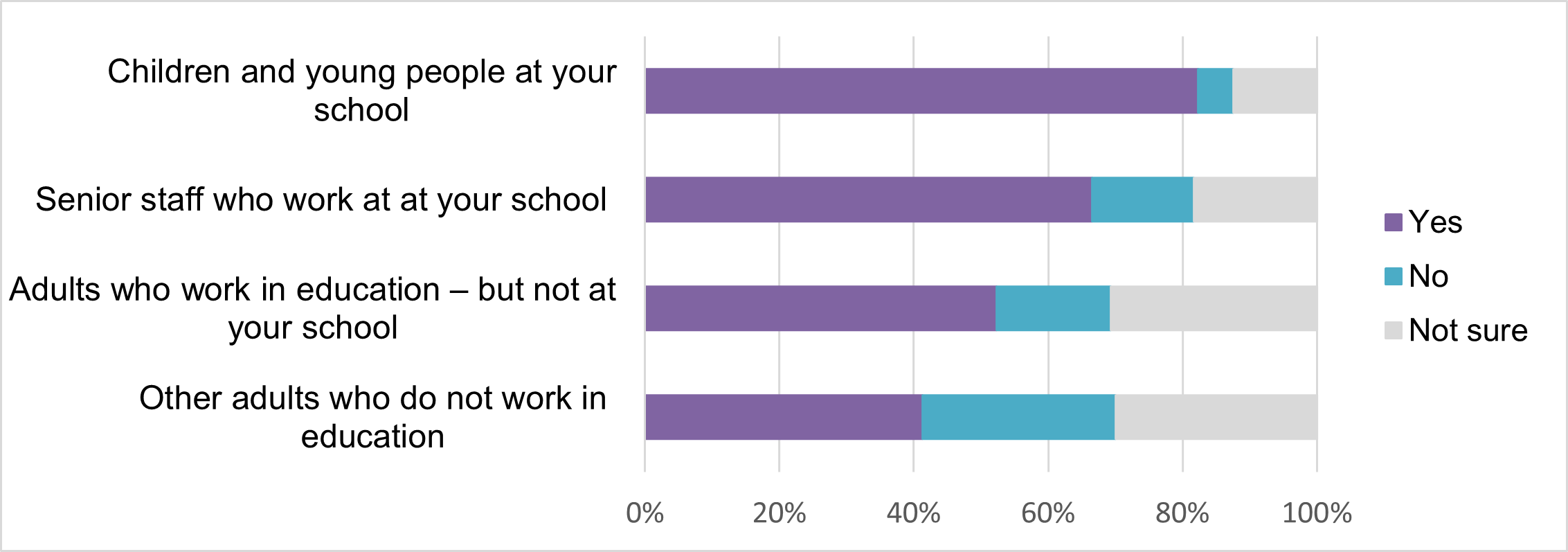
This chart shows the overall answer for each option at Question 2. Answers depending on where people go to learn, are available in Annex A.
Most children and young people thought it was a good idea that they should help inspectors understand how well their school is doing. A majority also thought that senior staff helping was a good idea, although secondary school pupils were less likely to think so than primary school pupils.
Children and young people were less sure about whether adults who work in education but not in their school and adults from the wider community should be involved.
Feedback from ASN discussions
Children and young people taking part in the ASN discussions gave examples of people who help them and who they thought should be included in school inspection. They mentioned speech and language staff, parents, occupational therapists, physiotherapists, coaches, nurses, school staff and teachers.
How often schools are inspected
Children and young people were asked their views on how often schools should be inspected.
Question 3.1 - How often do you think a school should be inspected? Choose the one answer that you think is best.
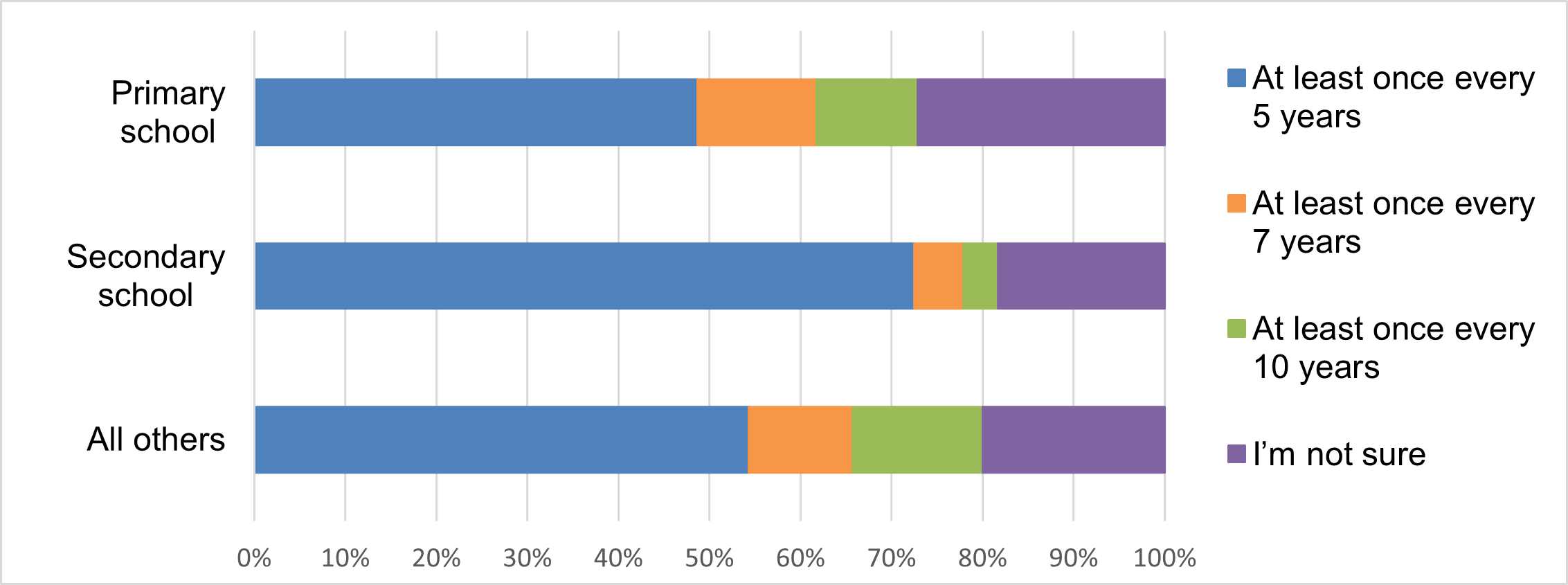
This chart shows the different answers that primary and secondary school pupils gave to this question. The ‘All others’ group on the chart combines the answers from the other three groups – Special education schools, Independent schools and other types of respondents.
Schools being inspected at least once every 5 years was the most popular choice, particularly among secondary school pupils. A majority of children and young people attending a special education school (part of the ‘All others’ group on this chart) also chose at least once every 5 years.
There was not much support for either the at least every 7 years or every 10 years options.
A follow up question asked children and young people if they had a different view on how often inspections should take place. Annual inspections, or an inspection at least once every 2 years, were the most frequent suggestions. Reasons given for annual inspections included to ensure all schools are performing at a consistent level and standard.
More detailed suggestions from adults responding on behalf of a child included:
- more frequent inspections, but these being shorter and more focused
- unannounced inspections to give an accurate picture of school performance
- annual inspection for ASN schools, given the vulnerability of pupils and to reassure parents
- inspection frequency linked to the circumstances, for example if there is a change of headteacher
When schools are told inspectors are coming
At present, inspectors usually tell a school that they will be coming to inspect about two-and-a-half weeks beforehand. Children and young people were asked for their views on when schools should be told that inspectors are visiting.
Question 4.1 - If inspectors were coming to your school, when do you think your headteacher should be told?
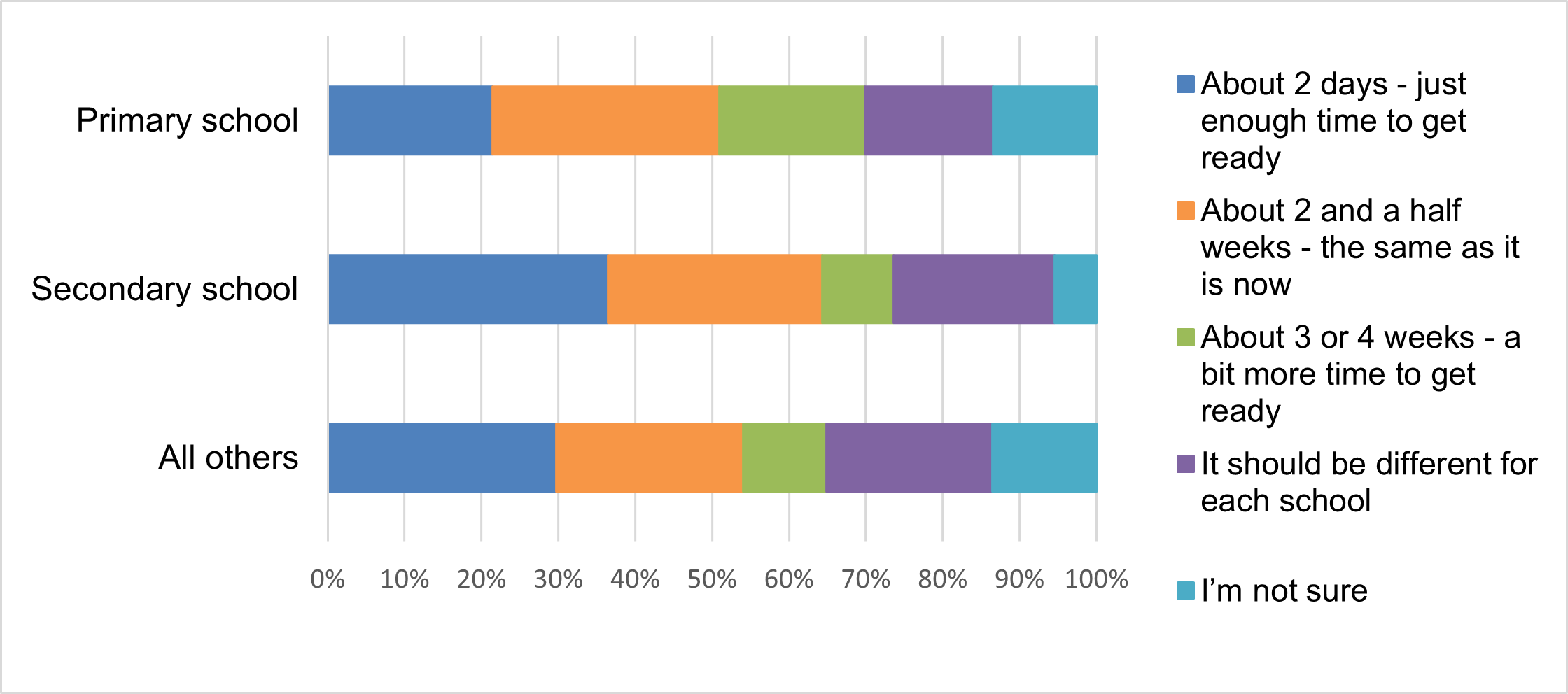
There was quite a mixed picture at this question and, overall, children and young people did not have a clear preference. Primary school children were slightly more likely to think that ‘about 2 and a half weeks’ was the best option. Secondary school pupils were slightly more likely choose ‘about 2 days’.
Children and young people responding from special education schools (part of the ‘All others’ group on this chart) were most likely to think the time given should be ‘different for each school’.
Information before an inspection takes place
Before inspectors visit a school, they will ask different people what is going well and what could be better. For example, the headteacher, children and young people, and parents are always asked to share their views before the inspection.
Children and young people were asked for their opinion on inspectors asking for the views of different people before they visit a school. They were also asked the best ways for them to hear the views of children and young people at the school.
Question 5.1 – Do you think it is a good idea for your headteacher to tell inspectors what they think is going well and what could be better before the inspection starts?
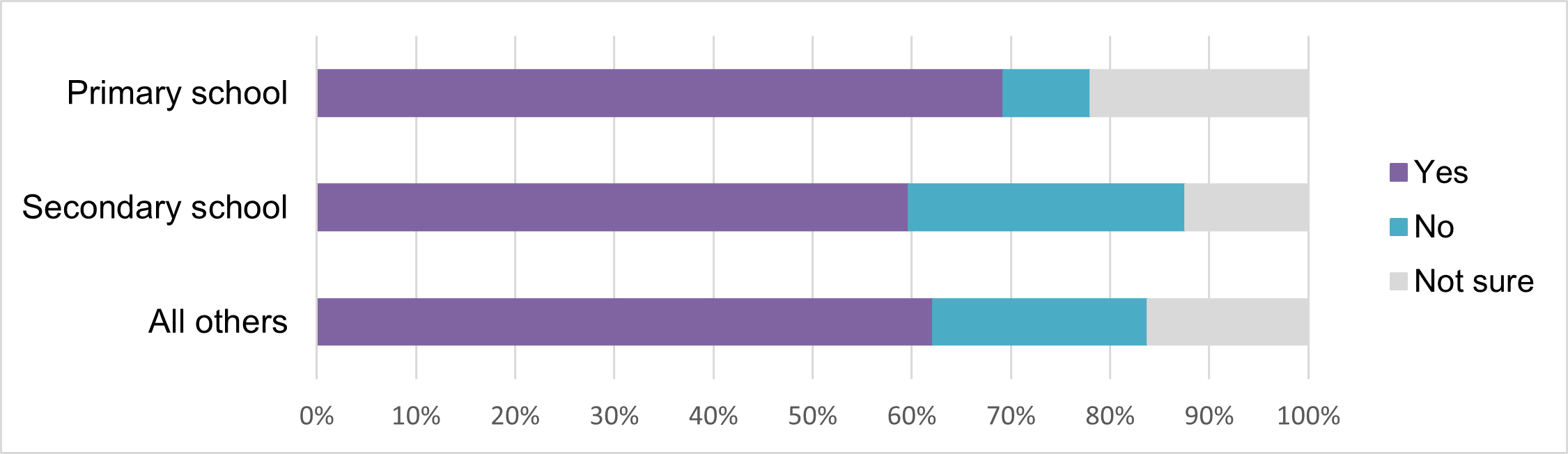
A majority of children and young people thought it would be a good idea for their headteacher to tell inspectors what they think is going well and what could be better before an inspection starts. Primary school pupils were more likely to think this than secondary school pupils.
Question 5.2 – Do you think it is a good idea to ask children and young people in your school what they think is going well and what could needs to improve before the inspection starts?
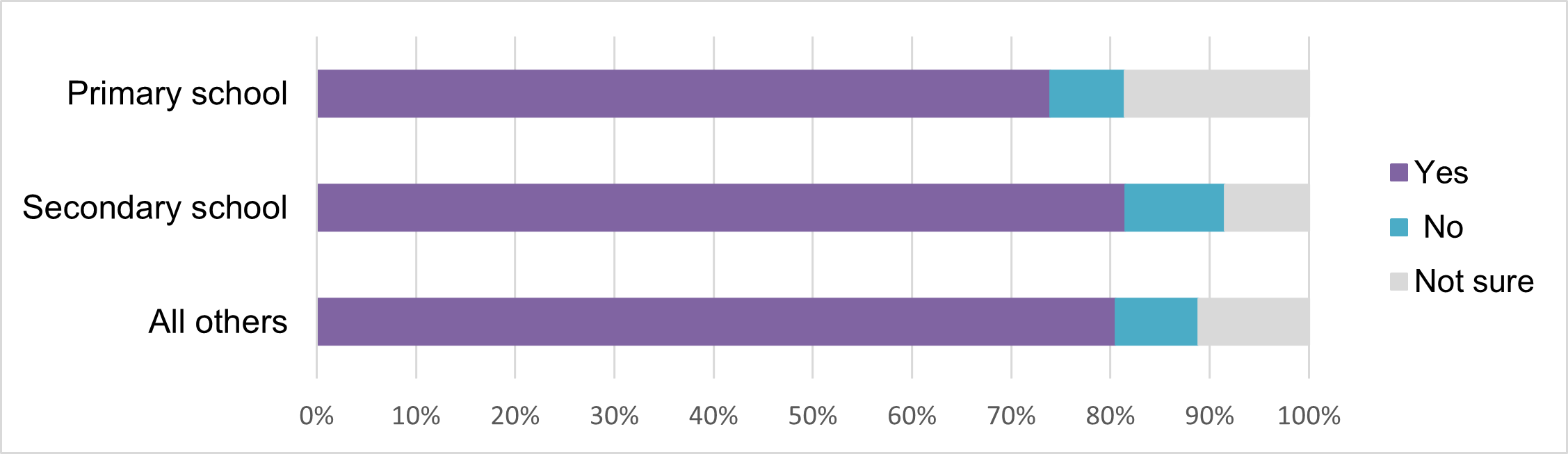
Children and young people were even more likely to think it was a good idea that they are asked what is going well and what needs to improve before the inspection starts. Secondary school pupils were particularly keen to be able to share their views and experiences.
Question 5.3 – What do you think would be the best way for inspectors to find out what children and young people think about their school before they visit it? You can choose more than one option.
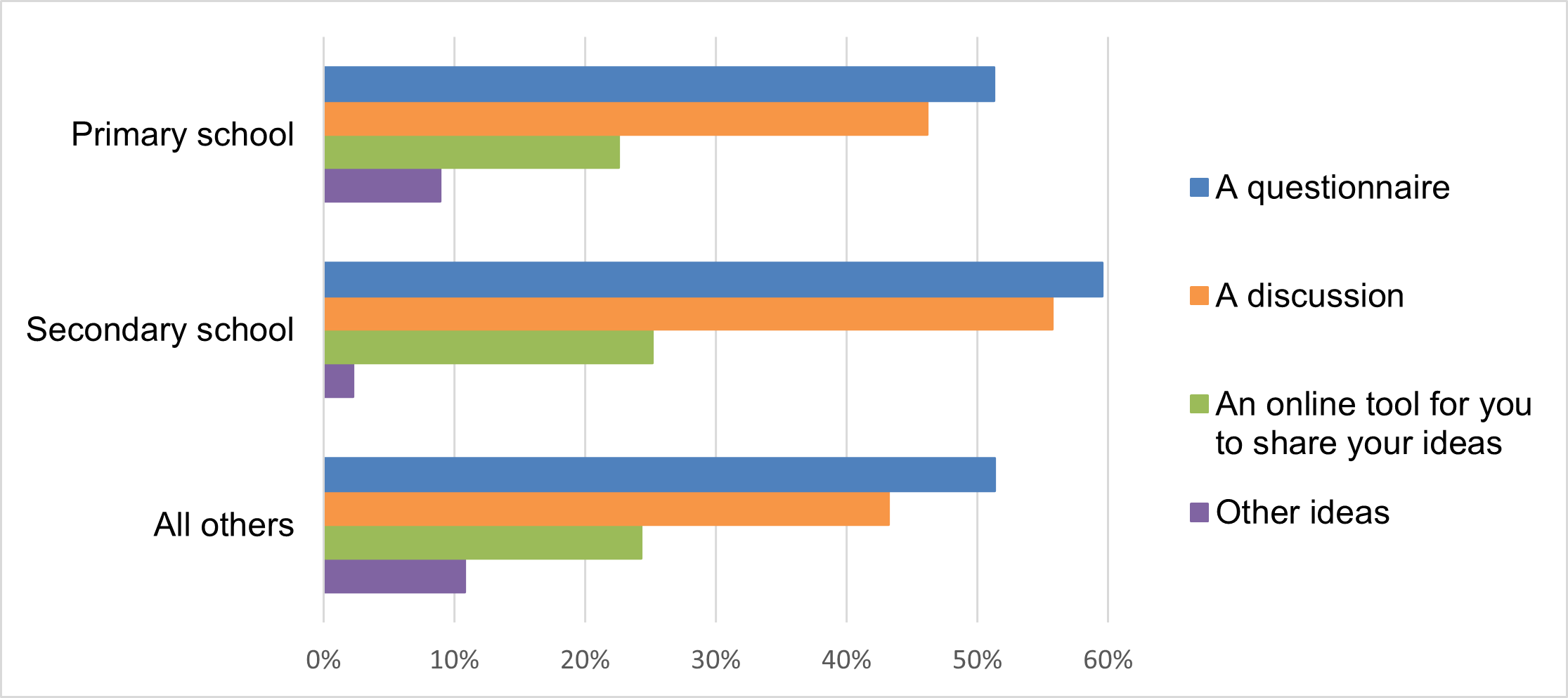
Children and young people were given three options for how inspectors could find out what they think about their school before a visit. A questionnaire and a discussion were more popular methods than an online tool.
Children and young people could also suggest other options. Their ideas included that both a questionnaire and a group discussion could be used, or that a discussion would be better for younger children, with a questionnaire for older pupils.
Others were interested in an online app or a website, commenting that this would allow children and young people to give their views privately, without being under time pressure.
Other ideas included online video calls and thinking about ways of using school assemblies.
Points made by adults responding on behalf of children included that:
- school staff should not be present so that children feel free to speak
- an online tool for parents to complete with children would avoid class teachers influencing responses
- children and young people participating in discussion groups should be chosen randomly rather than by the school staff
- some children may need the support of someone they know to help them share their views
- visual aids should be provided for children who are non-verbal
How inspectors describe how well a school is doing
When inspectors visit a school, they write a report saying what the school is doing well and what could be better. Inspectors use one word (or grade) to describe how well different parts of the school are doing. The grades are: Excellent, Very Good, Good, Satisfactory, Weak, or Unsatisfactory.
Children and young people were asked for their views on inspectors using these words (grades) to describe how well different parts of a school are doing.
Question 6.1 - Do you think it is a good idea for school inspectors to use one-word grades to describe how well a school is doing after they have visited it?
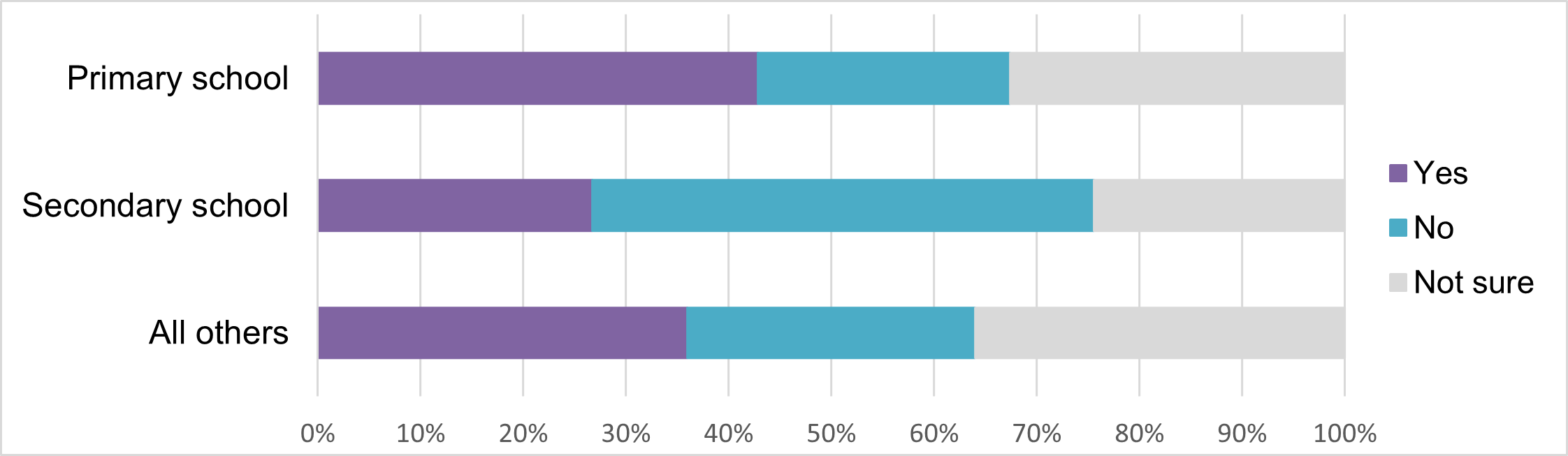
Children and young people had quite mixed views on whether it is a good idea for school inspectors to use one-word grades to describe how well their school is doing, with more unsure about this issue than at most other questions.
Primary school pupils were more likely to think using one-word grades is a good idea; around 4 in 10 (43%) chose this option. However, almost half of secondary school pupils (49%) did not think one-word grades were a good idea.
How children and young people find out what inspectors said
After inspectors have visited a school, they write a letter to parents or carers to tell them what they have found. They also write a report for the school to help them make the school better.
Children and young people were asked for their views on the best ways for children and young people to hear what inspectors thought about their school after the inspection has finished.
Question 7.1 – Do you think it is a good idea that inspectors prepare a report for children and young people after their school has been inspected, telling them what is going well and what needs to improve in their school?
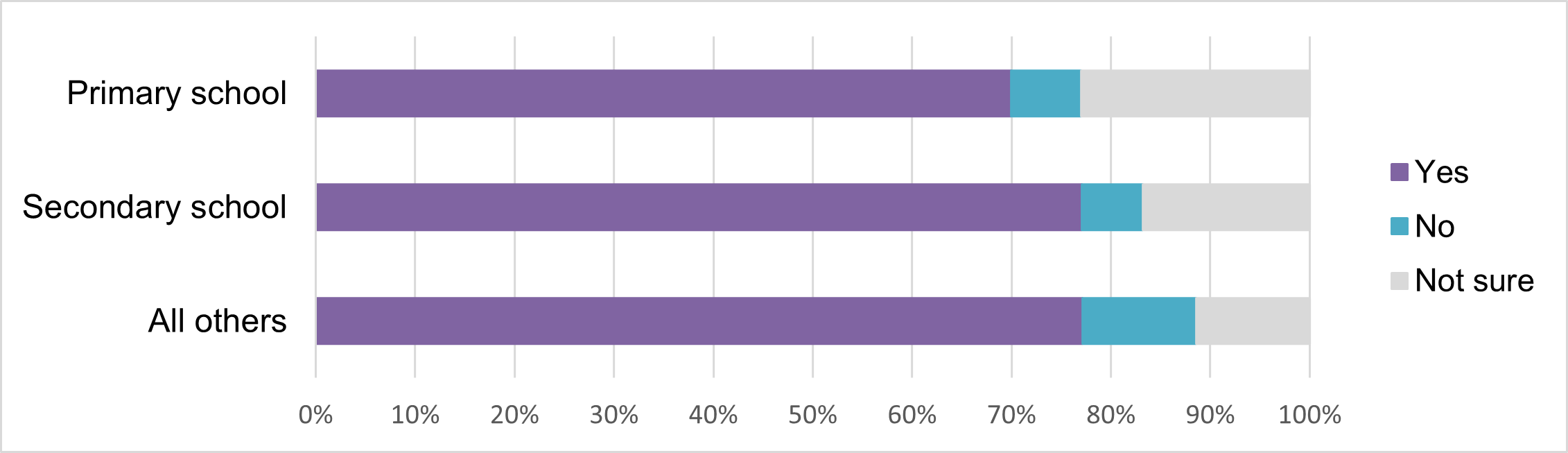
Overall, a majority of children and young people thought it would be a good idea for inspectors to prepare a report for children and young people after their school has been inspected. Secondary school pupils were slightly more likely to think it is a good idea than those at primary school.
Question 7.2 – What do you think would be the best way for inspectors to tell children and young people how well their school is doing after the inspection? You can choose more than one option.
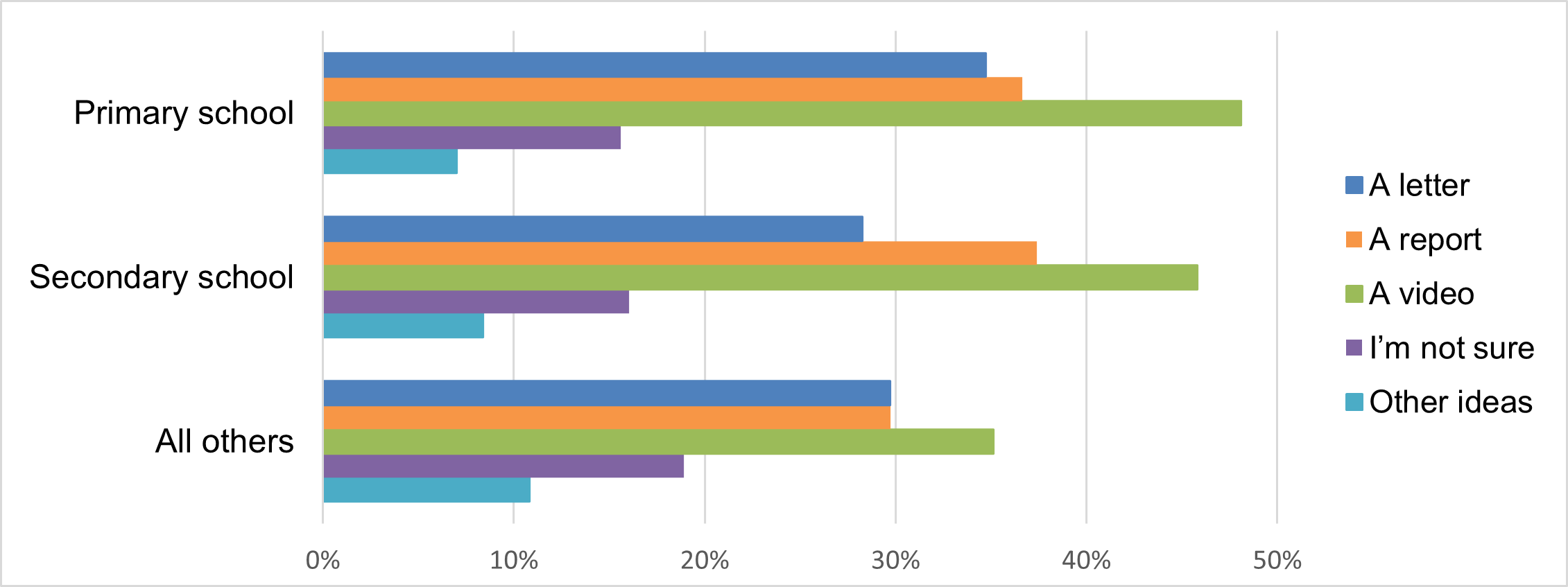
Children and young people were most likely to think that a video would be the best way for inspectors to tell them how their school is doing, although there was also support for either a report or a letter. If reports are provided, it was suggested that these should be child-friendly and easy to read.
Children and young people could also suggest other ways for inspectors to tell them how well their school is doing. Some of those who wrote a comment explained why a video would be a good idea, including that it would suit all ages and levels of understanding and could be made engaging. There were also suggestions that if reports are provided, these should be child-friendly and easy to read.
Other ideas included using social media such as Instagram and Facebook or providing in-person feedback, perhaps at a school assembly on the day, or sometime afterwards.
Feedback from ASN discussions
Children and young people thought HM Inspectors should talk to pupils before they leave the school, to give them feedback about the inspection and how it went.
They stressed how important it is for HM Inspectors to use their preferred methods of communication. Suggestions for pupil-friendly ways to share inspection feedback included using videos, accessible letters, and summary information about strengths and areas for development.
Follow-up inspections and support
Sometimes, if inspectors find that a school has lots of things that need to get better, they may come back later to see what has improved. Children and young people were asked for their views on inspectors coming back to see what has improved in a school, and how they could be involved in showing what has changed.
Question 8.1 - Do you think it’s a good idea for inspectors to come back to your school to see if things have improved, if there were lots of areas that needed to get better?
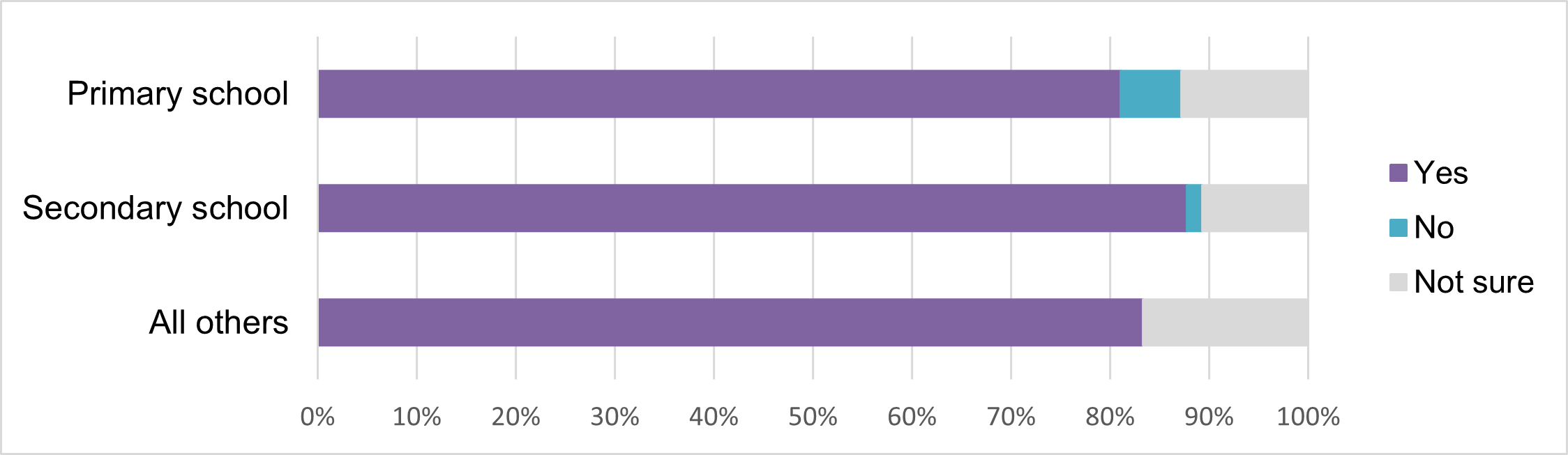
Most children and young people thought that, if there were lots of areas that needed to get better, it would be a good idea for inspectors to come back to their school to see if things had improved. Only a few thought it was not a good idea.
Question 8.2 - Do you think it is a good idea for children and young people to be involved in helping inspectors understand what has improved, if they need to come back to your school again?
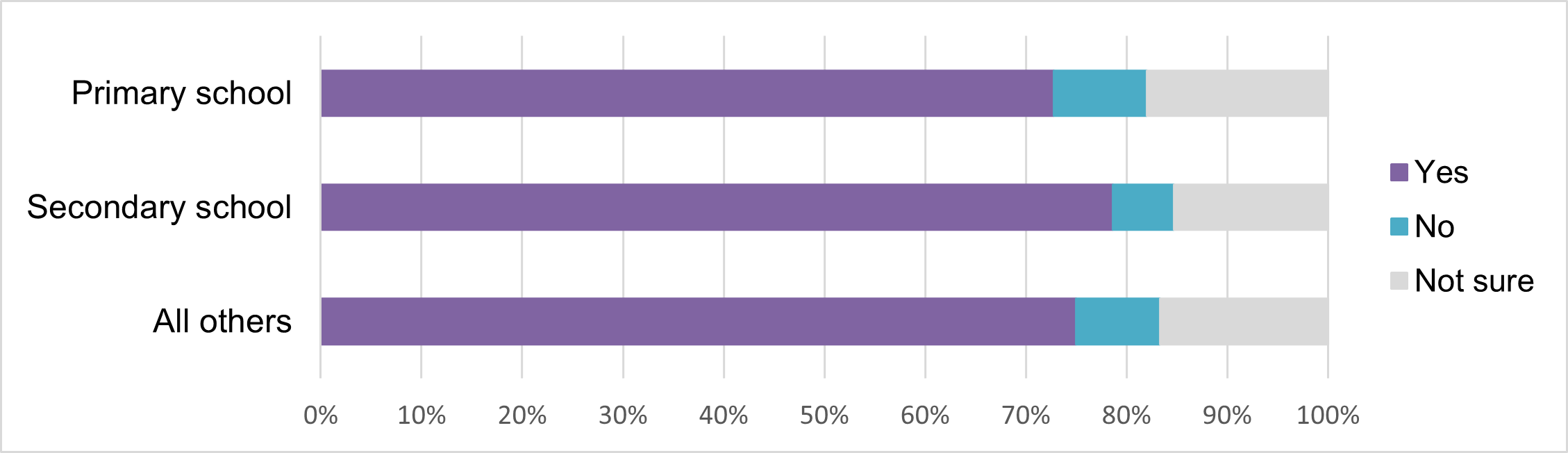
Overall, most children and young people also thought that it would be good idea for children and young people to be involved in helping inspectors understand what has improved.
Final question
Children and young people were asked if they had any other ideas about how school inspections in Scotland could work in the future.
Their ideas included having unannounced inspections (where inspectors do not let staff know they are going to visit) to make sure that inspectors can see what the school is normally like, rather than the school being able to prepare.
Other ideas, all made by small numbers of children and young people, included:
- inspectors introducing themselves to children at school assembly or in an informal meeting/greeting before the inspection
- inspectors spending more time in classes
- drop-in sessions where pupils and inspectors can meet
- inspectors talking to a sample of pupils from each year group including about wider aspects of their education, such as clubs and initiatives they are involved in
- young people from other schools being part of the inspection team
Additional points made by adults responding on behalf of children included that:
- wellbeing and relationships and how a school supports neurodiverse pupils should be part of the inspection, and pupils with special educational needs should be spoken to by inspectors
- the contribution of a Catholic ethos and culture to the educational outcomes for children and young people should be recognised as part of the inspection
- school staff should not be present when inspectors talk to parents and children
Feedback from ASN discussions
The children and young people taking part in the ASN discussions felt their views mattered and that they should be a part of school inspections. HM Inspectors should use a wide range of communication approaches to enable this. Teachers and support staff are important in helping them progress, but other partners should also be involved in inspections.