

Empowering pupil voice through anti-racist storytelling and digital animation at Inverkip Primary and Nursery Class
Inverkip Primary School and Nursery Class is a non-denominational school serving the village of Inverkip. In May 2025 the school had 191 pupils across nine classes. The nursery class accommodates 30 children. Approximately 98% of children reside within the Scottish Index of Multiple Deprivation (SIMD) 6–10.
The improvement issue
School staff identified a need to extend pupil voice beyond class-based learning. They wanted to create more meaningful opportunities for learners to critically examine difficult histories and contemporary social issues. Their aim was to deepen children’s understanding of Inverclyde’s local links to colonialism and the transatlantic slave trade. They also sought to develop expressive, creative and persuasive communication through digital media.
What Inverkip Primary did
The school improvement focus centred on embedding anti-racist education within Literacy and English through interdisciplinary learning. Working in partnership with the Watt Institution, staff sought to challenge children’s thinking through engagement with museum collections. These focused on provenance, ethics, and the wider impact of imperialism on communities, climate, and identity. Staff also aimed to ensure that children could connect these themes with current global challenges, particularly climate justice, through storytelling and animation. This work was informed by the Building Racial Literacy programme, the local authority’s anti-racism strategy, and national calls to diversify the curriculum.
Key links were made to critical literacy, script writing, oral presentation, and digital text creation. Families were invited to an information session to support shared understanding and parental engagement. The project was structured around three museum-based workshops at The Watt Institution. Children engaged directly with artefacts and archival materials which informed both historical inquiry and ethical discussion around provenance, slavery, and colonial legacy.
Working collaboratively, children developed storyboards, scripts, and performance pieces, which were produced into a fully animated film. In school, expressive arts lessons supported children to create original artwork and voiceovers, giving them ownership of the creative process. Throughout the project, children applied their critical thinking using SCOTDEC’s critical literacy framework, connecting historical contexts to contemporary issues such as global inequality, racial injustice, and climate change.
What the sustained impact has been
The project has had a significant impact on children’s engagement, understanding of social justice and development of critical literacy. Children demonstrated increased confidence in discussing complex themes such as colonialism, racism, and climate justice, using appropriate vocabulary and critical literacy tools.
Work produced by children, including written reflections, voiceovers, and storyboards shows depth of understanding and personal connection to the themes explored. Children’s voices have been central throughout. Feedback indicated a strong sense of pride and ownership of the project, with children articulating the importance of sharing underrepresented histories and amplifying marginalised voices. Children reported feeling empowered to make change, with one stating: “We’re telling stories that people tried to hide. That matters.”
The project strengthened school partnerships, particularly with The Watt Institution. It has been recognised across the authority as a model of anti-racist, interdisciplinary practice. Staff have observed improved resilience, creativity and collaboration among children. The animation process fostered high levels of motivation and perseverance, with children developing skills in storytelling, performance, digital media, and teamwork.
Supporting information
"I've learned to be more curious, learning about new things like how the horseshoe crab and the passenger pigeon were both endangered because of us and how we can think more about how we can keep nature alive."
Pupil, P4b
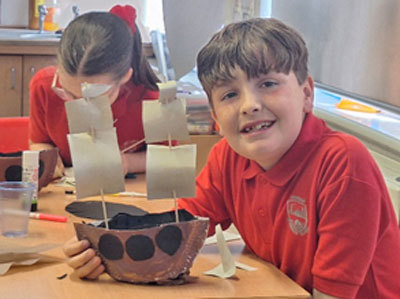
"I've learned to be more careful about the sources I use when I'm researching so that I get accurate and balanced information. It's difficult sometimes because you need to look really closely to see if there's bias and look really carefully at the text.”
Pupil, P4b
"I think the joy and value in teaching critical literacy firmly in a real life, relevant context is seeing the immersion of the children in their learning and witnessing the rapid acquisition of metaskills in all learners, irrespective of their starting point. They are learning real skills for life and seeking to really engage in current affairs, linking these to their learning in class and making meaning from the world around them.”
Class teacher
“Through object-based learning and creative exploration of The Watt Institution’s collections, pupils have been investigating colonialism. They have examined how certain objects were acquired, their origins, and their impact on Indigenous communities and ecosystems. Using their research as a foundation, the pupils have brought these hidden histories to life by writing scripts, drawing storyboards, creating voiceovers, and producing a variety of artworks.”
Staff member, Watt Institute
“As a parent it has been a joy to watch the project evolve over the course of this term. Seeing the film project unfold has been an absolute pleasure. Our daughter has come home full of the joy of learning. What’s been especially encouraging is how the children have been pushed to think creatively—not just in their writing, but through drawing, sculpture, and other artistic expressions. The variety of mediums has really allowed them to explore the subject matter in dynamic and meaningful ways.”
Parent P4b
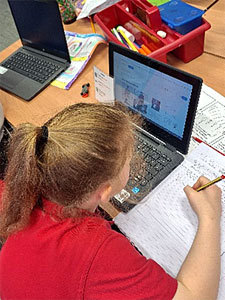
“The Watt Institute project has been a fantastic opportunity for the pupils to connect with local history. The children are so engaged in the learning, and my child has come home full of facts. I am delighted to see how this project has encouraged an interest in learning more about why and what influences the facts they have learned.”
Parent Council.