

Creating a literacy rich reading culture at Inverkip Primary and Nursery Class
Inverkip Primary School and Nursery Class is a non-denominational school serving the village of Inverkip. In May 2025 the school had 191 pupils across nine classes. The nursery class accommodates 30 children. Approximately 98% of children reside within the Scottish Index of Multiple Deprivation (SIMD) 6–10.
The improvement issue
School staff identified through self-evaluation the variability across the school in children’s reading habits and limited opportunities for children to be involved in the planning of literacy. Space across the school for children to enjoy reading was limited and there were only a few opportunities for children and staff to celebrate reading. Reading needed to be more visible across the school and children required opportunities to be leaders of literacy. The need for a school library was identified to support these areas for improvement.
What Inverkip Primary did
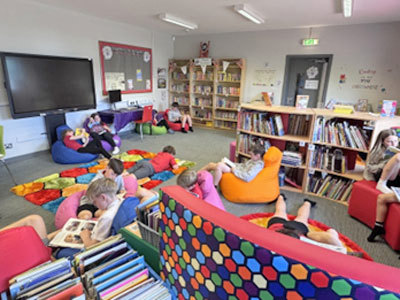
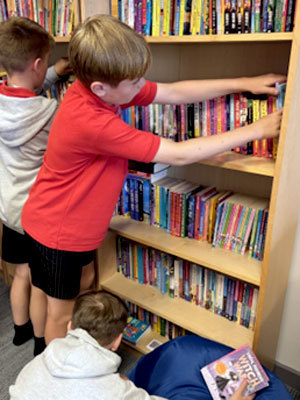
A P6 Literacy Committee was established and asked to design, build and lead the development of a new school library. The committee consulted all children in school and gathered their ideas of what a new school library should look like. They also engaged with the local community and planned a fundraising strategy. Children in the committee chose a diverse range of texts for the new library, which covered a broad range of genres and formats suggested by children from all stages. They developed systems for borrowing books and curating library displays. Children from the committee organised the official launch of the school library, arranging author visits, book reviews and reading promotions to promote a love of reading.
The P6 classroom provided a rich print environment, pupil led reading recommendations, regular ‘Everyone Reads In Class’ (ERIC time) and ongoing dialogic approaches. Ongoing career long professional learning (CLPL) around literacy alongside the sharing of emerging research and pedagogical approaches among the staff team helped to build capacity and consistency in the teaching of literacy approaches.
The school invested in CLPL through regular engagement with Inverclyde’s Literacy Framework. This provided a shared language for pedagogy and progression and helped staff align their practice with research informed approaches.
Staff embedded ERIC time in all classes and raised the profile of reading through assemblies, displays, and pupil-created content. Professional dialogue among staff centred on dialogic teaching, reading for pleasure pedagogy, and strategies to support reading stamina, choice, and motivation.
What the sustained impact has been
This initiative led to sustained, measurable improvements in the school’s reading culture, pupil engagement and staff confidence. Achievement of Curriculum for Excellence Levels (ACEL) data for 2024-25 evidenced that reading attainment had been sustained at 94% and writing attainment increased from 82% to 90.2%.
Staff engagement with the Inverclyde Literacy Framework improved confidence in dialogic teaching, reciprocal reading, and reading for enjoyment across all stages. The P6 Literacy Committee developed a strong sense of ownership and leadership, with pupils demonstrating pride, initiative and teamwork throughout the library project. Children show increased confidence when communicating with others. The library has become a vibrant hub for literacy, co-managed by pupils who curate displays, promote texts, and lead school-wide reading initiatives. The visibility of books and the social nature of reading has significantly increased, across the school and pupils independently choose, discuss and recommend texts.
Author visits and pupil-led promotions have further enhanced this positive reading culture. Pupil surveys indicate increased enjoyment of reading across the school, particularly among boys and those previously identified as reluctant readers. Staff have observed higher levels of sustained reading, richer peer dialogue, and greater pupil ownership during ERIC time.
Supporting information
Before P6, A would never pick up a book. She now has a thirst to read, which I’m so grateful for.”
Parent
“Reading is so important in my class. It builds strong vocabulary, helps children express themselves better in writing and encourages creative thinking. Books let children step into other people’s shoes, visit different worlds and understand different backgrounds and emotions. It helps them build kindness and emotional intelligence. Developing a love for reading is my goal -it’s a shared activity that is fun. I read to my class as often as I can and ensure we have a dedicated reading time every day. It’s an amazing feeling when a child is excited about a book they’ve read and can’t wait to share that with others. To quote Dr Seuss -“You can find magic wherever you look. Sit back and relax, all you need is a book.”
Class teacher
“My favourite things in P6 have been getting my Blue Peter Reading for Pleasure badge and working/organising in the school library. P6 has definitely encouraged me to read for pleasure a lot more than I had been doing.”
Pupil
“I love reading now. I’ve read over 40 books in P6!”
Pupil