

Resettlement support - Ukrainian Community Hub
The most recent available figures (year ending June 2021) show an estimated 22.5% of Aberdeen City’s population was born outside of the UK compared to 9.7% for Scotland. The Aberdeen City Local Outcome Improvement Plan and underpinning locality plans set out a vision for Aberdeen as ‘a place where all people can prosper’. The community learning and development (CLD) plan supports the delivery of this vision. It also provides a framework for greater collaborative working amongst organisations directly and indirectly delivering CLD services in the city.
The improvement issue
Community planning partners agreed to support UK and Scottish Government programmes to respond to the Ukrainian crisis in 2022. Initially around 1,800 Ukrainian refugees arrived in the city, creating a need to relocate vulnerable displaced individuals and families. This included some with family visas and others under the Homes for Ukraine sponsorship scheme.
There was a need to support individuals and families with varying degrees of trauma and mental health distress and helping them to overcome acute social, language and economic obstacles.
Community planning partners also recognised the need to coordinate support around engaging with the Ukrainian community.
What the setting did
Community planning partners in Aberdeen City worked collectively to support the UK Government’s Homes for Ukrainians and the Scottish Government’s Super Sponsor programmes. They began by establishing ‘Welcoming Hubs’ in hotels to provide resettlement support. This provided spaces for refugees and asylum seekers to collaborate, provide peer support and develop their own programmes.
Partners believed it was crucial to develop positive relationships with the Ukrainian community that would help foster trust, confidence and cooperation. This included developing opportunities and services that aligned to learners’ needs and preferences. The council’s community development team worked collaboratively across council, partners and volunteers to establish provision in a central location to support the resettlement programme. Together they selected Rosemount Learning Centre for the provision of community-based activities. This is a central hub for different services including creative learning, English for speakers of other languages (ESOL) support and foreign language classes. The centre provides access to classrooms and social spaces for people to integrate and participate in informal learning and to receive support. It also has good access to local bus routes, facilities and other service provision.
Partners supported volunteers to establish a steering group, which became the Ukrainian Association registered as a Scottish charitable incorporated organisation (SCIO). The Ukrainian Association had sole use of Rosemount Learning Centre to develop the Ukrainian Community Hub each Friday and Saturday. The purpose of the community hub was to assist new arrivals from Ukraine with integration into the community. The council also recruited 25 Ukrainian volunteers to help with food and clothing donations, translation, welcoming and developing a programme of support.
Community partners and volunteers were clear that community hub users were fully involved in decision making. They started by supporting the Ukrainian learners to communicate their needs and programme ideas.
The Ukrainian Community Hub volunteers and partners co-produced the provision of employability and ESOL services. This provided an effective interface to influence the provision and support Ukrainian refugees through their integration process. This included access to services including employment and training support, further education open days and tailored support to help Ukrainian school leavers. The comprehensive programme also provided and continues to provide access to English classes, which are taught by volunteer teachers who undertake ESOL assessments. Ukrainian families can access financial inclusion services, free bus passes and phone cards. Community partners also contributed to the overall programme including Mindfulness Crafts, Police Scotland community engagement and war crime reporting support, Citizens Advice and legal drop-ins and orientation activities delivered by Countryside Rangers.
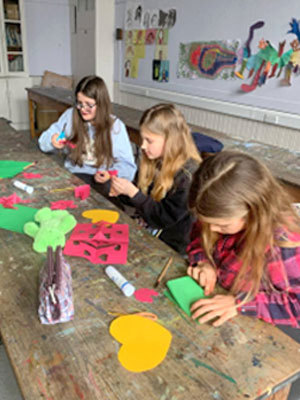
The CLD team worked with Ukrainian volunteers to help the Ukrainian Association to secure funding for a mental health support project. This initiative developed to become the ‘To Be OK In Anyway’ project to support those experiencing trauma, with support from a qualified Ukrainian psychiatrist and yoga therapist. This helped refugees experiencing crisis to work towards co-produced solutions. Active Schools and Aberdeen Football Club Community Trust organised weekly multi-sports activities to engage Ukrainian children prior to being allocated a place in school. Dance and music classes were also provided by Ukrainian volunteers. These activities were valued highly by participants. For example, a Ukrainian Tae Kwon Do World Champion volunteered their time to provide free classes on Sundays to children.
What the sustained impact has been
The establishment of the Ukrainian Association as a fully recognized charitable organisation has enhanced the coordination and effectiveness of services for Ukrainian refugees. The Ukrainian Community Hub has enabled the continuing provision of peer support and organised social, cultural and educational activities to support the Ukrainian community in Aberdeen city.
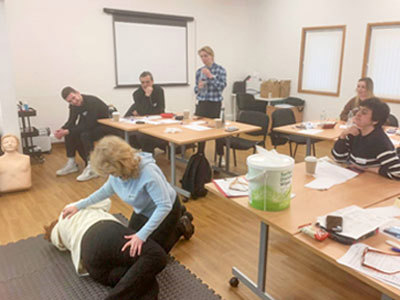
The Community Hub has facilitated meaningful dialogue and engagement to help define the crucial skills and responsibilities required for Ukrainian volunteers. This included trustee and governance training, keyholder responsibilities, and first aid training. This significantly enhanced their ability to further the development of the Ukrainian Community Association and School. This work supports them to sustain weekly activity and accompanying Easter, Summer and Winter programmes and events. Ongoing findings of the engagement inform the development of a holistic weekly programme of activities and support services. This enables more effective dialogue between the Ukrainian non-English-speaking arrivals and the service providers located in the community hub.
Volunteers have contributed to the Refugee Council’s Ukrainian Collective, which consists of Ukrainian volunteers who meet to discuss key challenges affecting their communities. They have proposed practical solutions, which informed and influenced the Scottish Government and other service providers approaches.
The community hub played a crucial role in supporting the successful integration as part of the resettlement programme. As a result, more than 1,800 Ukrainians have been successfully settled into housing, schools, and jobs through the support provided.
In June 2024, 64.5% of Ukrainian households reported themselves as self-reliant in providing support of their family and children including access to education. A further 15% stated they are close to self-reliance. The number of people who have reported an urgent need for support in this area has decreased to 5%.
Supporting information
“We know Aberdeen is hosting many Ukrainian refugees and are grateful for all the support in building a welcoming Ukrainian Community Hub”.
Chair of the Ukrainian Community Hub Association.
“With the support of Aberdonians and the City Council, we are able to run the Ukrainian Hub and host the Ukrainian School in the Rosemount Community Learning Centre, helping hundreds of refugees and supporting over 100 children in adjusting to their new lives in Scotland.”
Chair of the Ukrainian Community Hub Association.
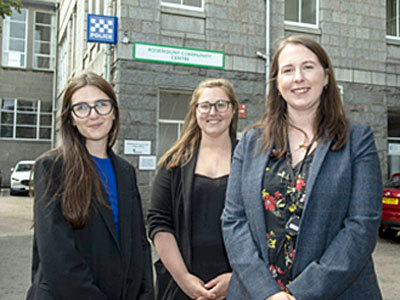
Left to right: Daria (Ukrainian Association Chair), Miranda Radley (ACC Councillor) and Emma Roddick (Migration and Refugees Minister)
Also see the STV link below from 2022
STV News - Ukrainian women living in Scotland open community hub offering support to Ukrainians
Aberdeen City Council - Common Good Fund to support Ukrainian refugees and local organisations
Press and Journal - 'Stop the war': People gather in Aberdeen to show support for Ukraine
Aberdeen City Council - Support for Ukrainians
Facebook Page - Ukrainian Community Hub